Scuba diving lets you breathe underwater, and this guide explains the equipment, your first dive, and the choice between an introduction and certification. You can try the experience with an instructor or take a course to begin diving as a hobby. The right starting point depends on what you want from your time beneath the surface.
On this page
What scuba diving involves
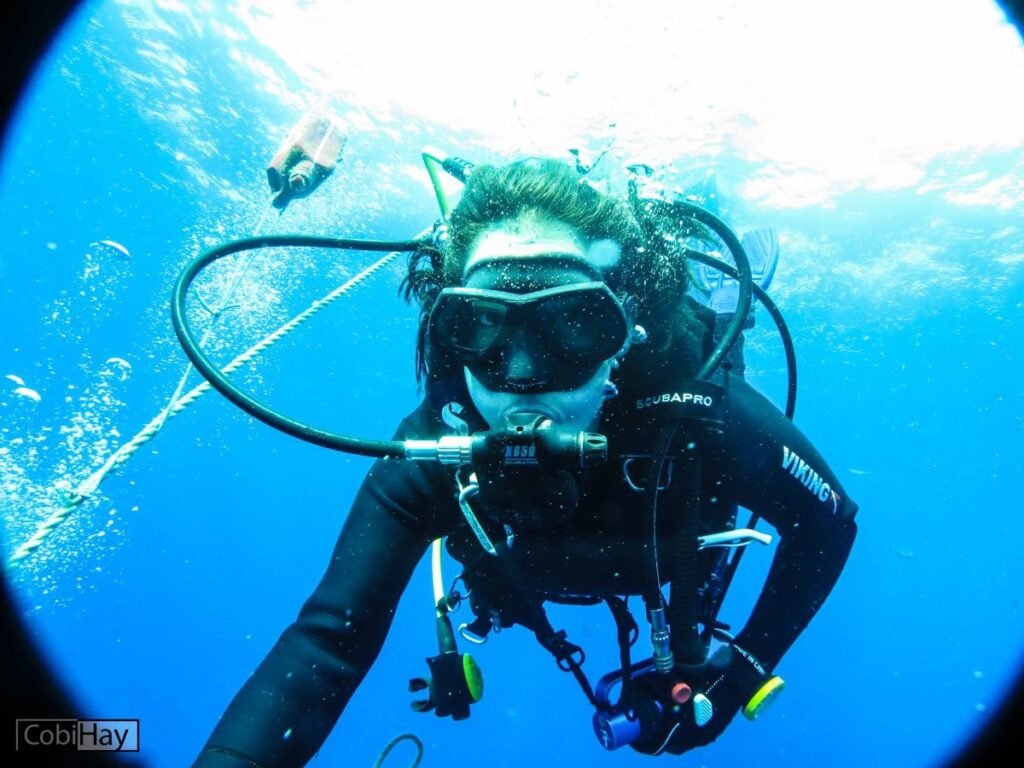
On most recreational dives, you carry a tank of compressed air on your back and breathe through a regulator. Bringing your air with you means you can stay underwater longer than on a breath-hold dive. That gives you time to watch the marine life around you, rather than catching only a glimpse before returning to the surface.
Scuba diving became more accessible after Jacques-Yves Cousteau and Emile Gagnan developed the Aqua-Lung in 1943. Building on earlier technology, their system supplied air when a diver inhaled. The History of Diving Museum’s account of the Aqua-Lung explains that development.
Try an introductory dive
An introductory dive offers a taste of scuba diving without beginning a full certification course. With an instructor and full scuba equipment, you make a shallow dive and explore a site under guidance. It can be an affordable way to try something new during a short vacation.
You must stay with the instructor, so the experience has limits. Think of it as a guided introduction: a chance to get familiar with breathing underwater and see what attracts people to the activity. If your immediate aim is to experience a dive, this is one way to begin.
Take a certification course
If you want to become a certified diver, start with a scuba course. You will learn the fundamentals, become familiar with the equipment, and spend time underwater with an instructor. Course length varies. Certification comes after you meet all the knowledge, skill, and dive requirements.
This is the other route into scuba diving: making time for the learning as well as the experience. A course gives you a starting point for a continuing hobby, while an introductory dive lets you sample the activity. Neither choice requires you to decide your whole diving future before your first experience.
Where diving can take you
Many people keep scuba diving as a vacation or weekend hobby. The northern Red Sea coast has coral reefs, while Mediterranean dive sites include shipwrecks and even submarines. Destinations such as the Maldives and Thailand sit alongside less familiar possibilities, including the Great Lakes in the United States and purpose-built diving pools in central European cities.
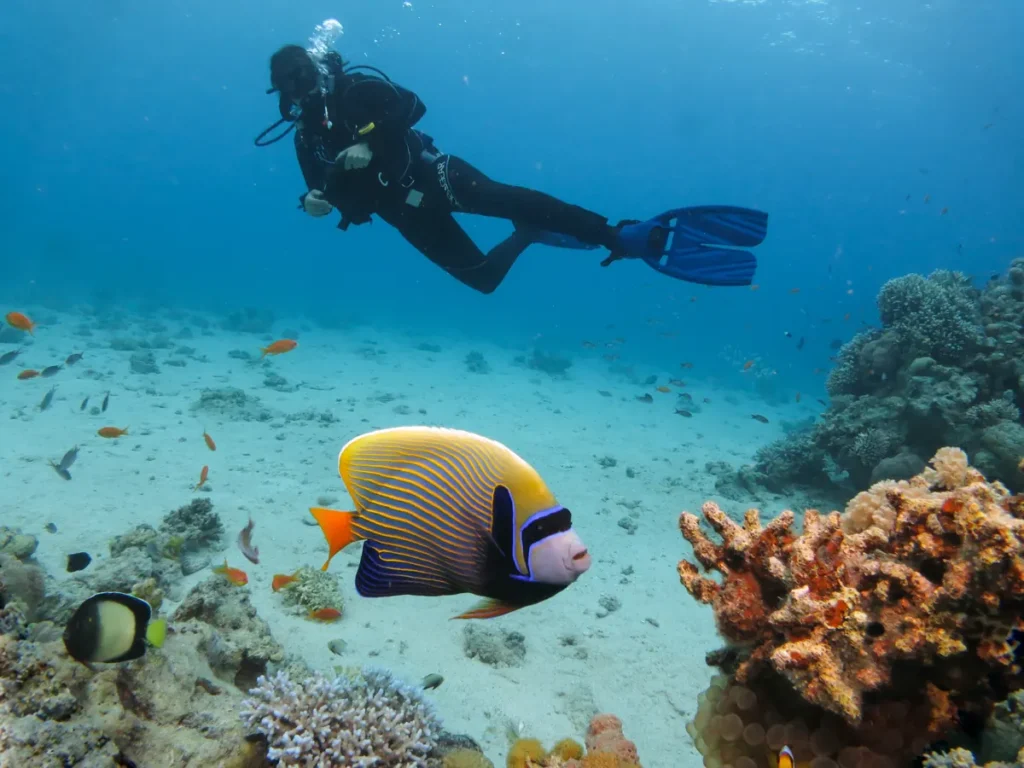
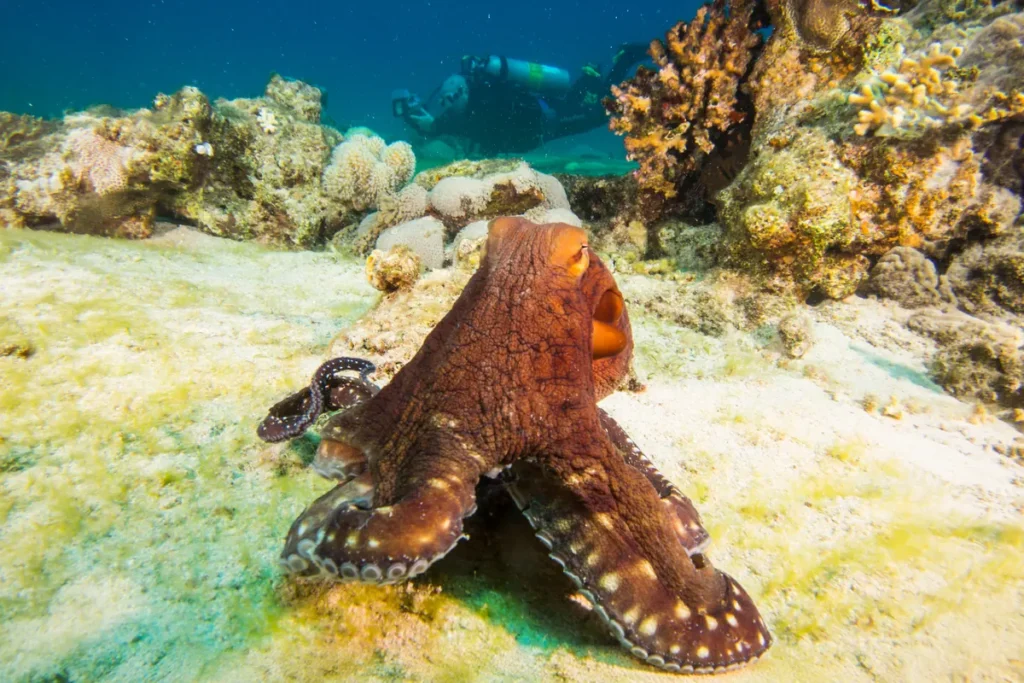
The animals can become as much of a reason to return as the places themselves. An emperor angelfish, an octopus, or another small reef resident gives you something to watch closely. Our marine life identification guide for new divers is a useful companion when you want to put names to what you see.
Keep learning and record your dives
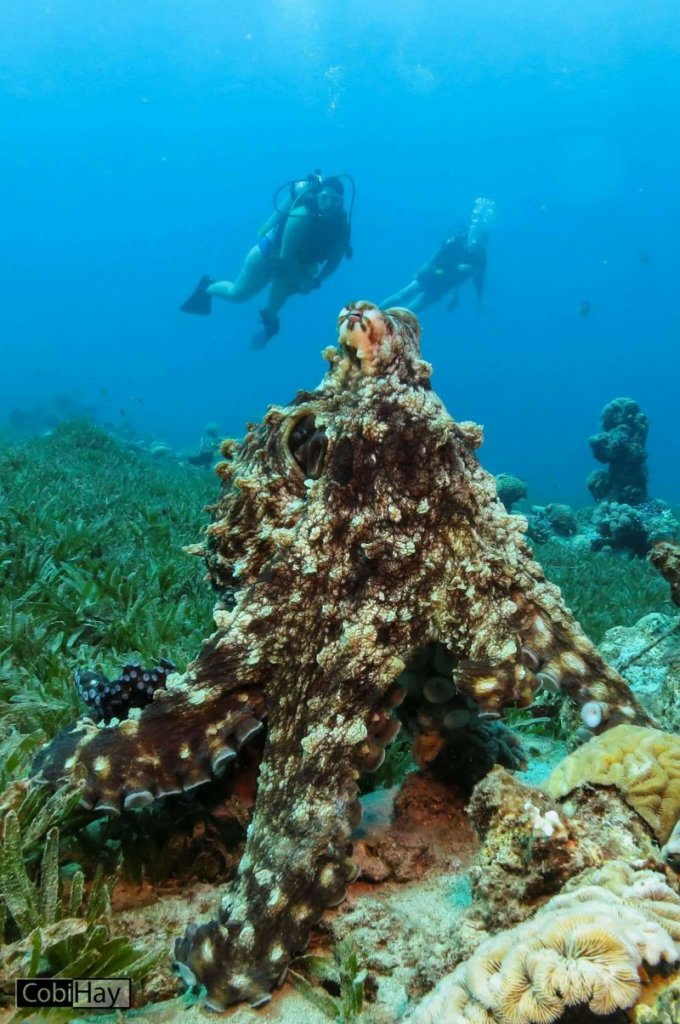
Scuba diving also opens a way into underwater photography and video. A compact camera or a professional setup can record moments from a dive, perhaps even an encounter with a curious dolphin. A photograph can hold the contrast between a small animal close to the camera and divers farther away, as this octopus scene shows.
Further certifications let you develop particular interests:
- Deep diving, wreck diving, and underwater navigation.
- Photography, video, and marine life identification.
- Rescue training, followed by divemaster and instructor pathways for those considering diving as a career.
Technical diving offers another path, involving deeper and longer dives, more complex equipment, and more extensive knowledge. For now, your first decision is smaller: choose the introduction or course that matches your aim. Scuba diving leaves plenty of room to discover what interests you next.