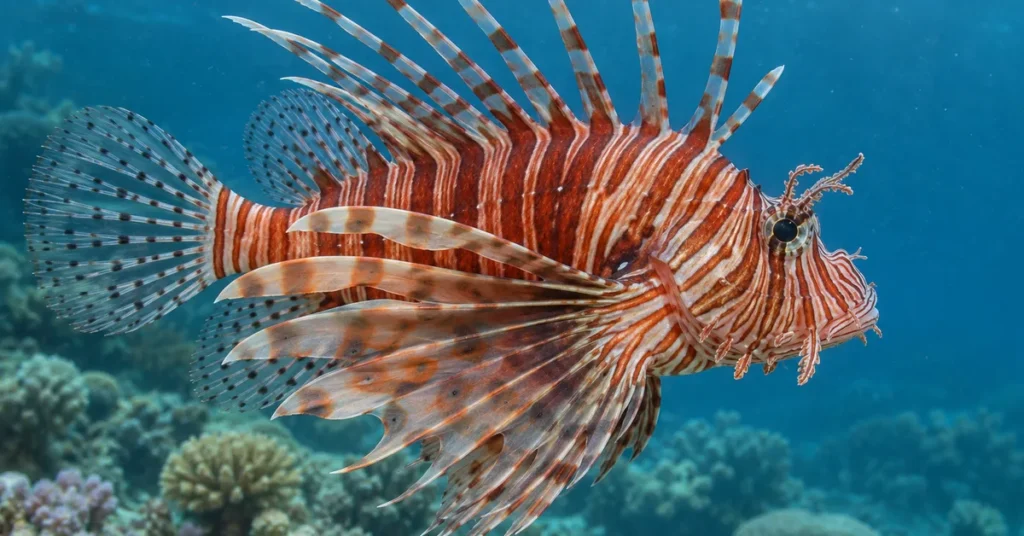
**Dangerous Red Sea fish** can make every underwater encounter sound alarming, but the reviewed source says that most Red Sea species pose no threat to humans.1 The exceptions described include fish that can injure people with venomous spines, sharp blades, or defensive behavior around eggs.1 The source covers the Red Sea generally and does not provide local sighting or frequency data for individual dive areas.1
On this page
Dangerous Red Sea Fish: What Divers Should Know
The word “dangerous” covers very different hazards here: venomous spines, a blade near the tail, and aggressive nest defense.1 A useful question for divers is therefore not only which species they see, but which part of the fish may cause injury and under what conditions the source describes that risk.1
Several injuries in the source involve extremely close contact: stepping on a camouflaged stonefish, disturbing a triggerfish tending eggs, or placing a hand inside a moray eel’s hole.1 It also identifies fish with spines or blades capable of causing wounds, making a safe distance relevant because it helps prevent contact with those structures.1 Divers who want broader identification context can also consult this marine life identification guide for new divers.
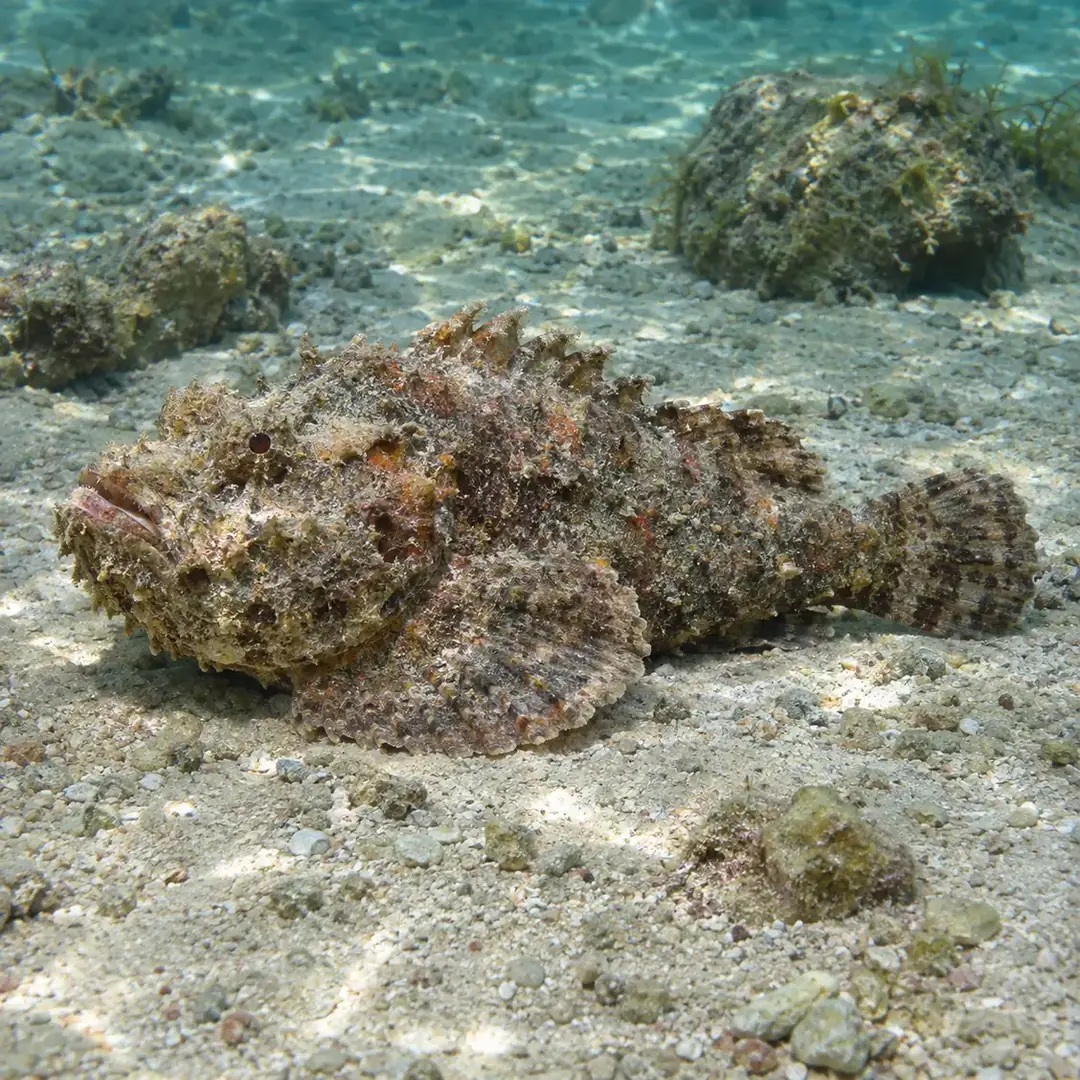
Stonefish: Camouflage and Venomous Dorsal Spines
Stonefish have venomous spines along their backs, and the source states that these spines can penetrate a rubber-soled shoe.1 Because the fish is extremely well camouflaged, the described danger does not necessarily involve intentionally approaching a clearly visible animal.1
The source’s central precaution is to avoid stepping on a stonefish.1 Its camouflage means that a quick attempt to identify a fish-shaped outline is not enough before placing a foot on the bottom.1 The source also describes the venom as potentially fatal, so an injury from these venomous spines should not be treated lightly.1
Titan Triggerfish: Defensive Behavior Around Eggs
A Titan triggerfish guards its nest aggressively when eggs are present.1 The source says attacks can be severe and may leave wounds requiring stitches.1 This condition matters: the behavior is linked to guarding a nest containing eggs and is not presented as a description of every triggerfish during every encounter.1
The source also names the Yellowmargin triggerfish as another large triggerfish that should not be disturbed while tending eggs.1 In both cases, the practical message is to keep a safe distance and avoid turning a defended nest into a close encounter.1
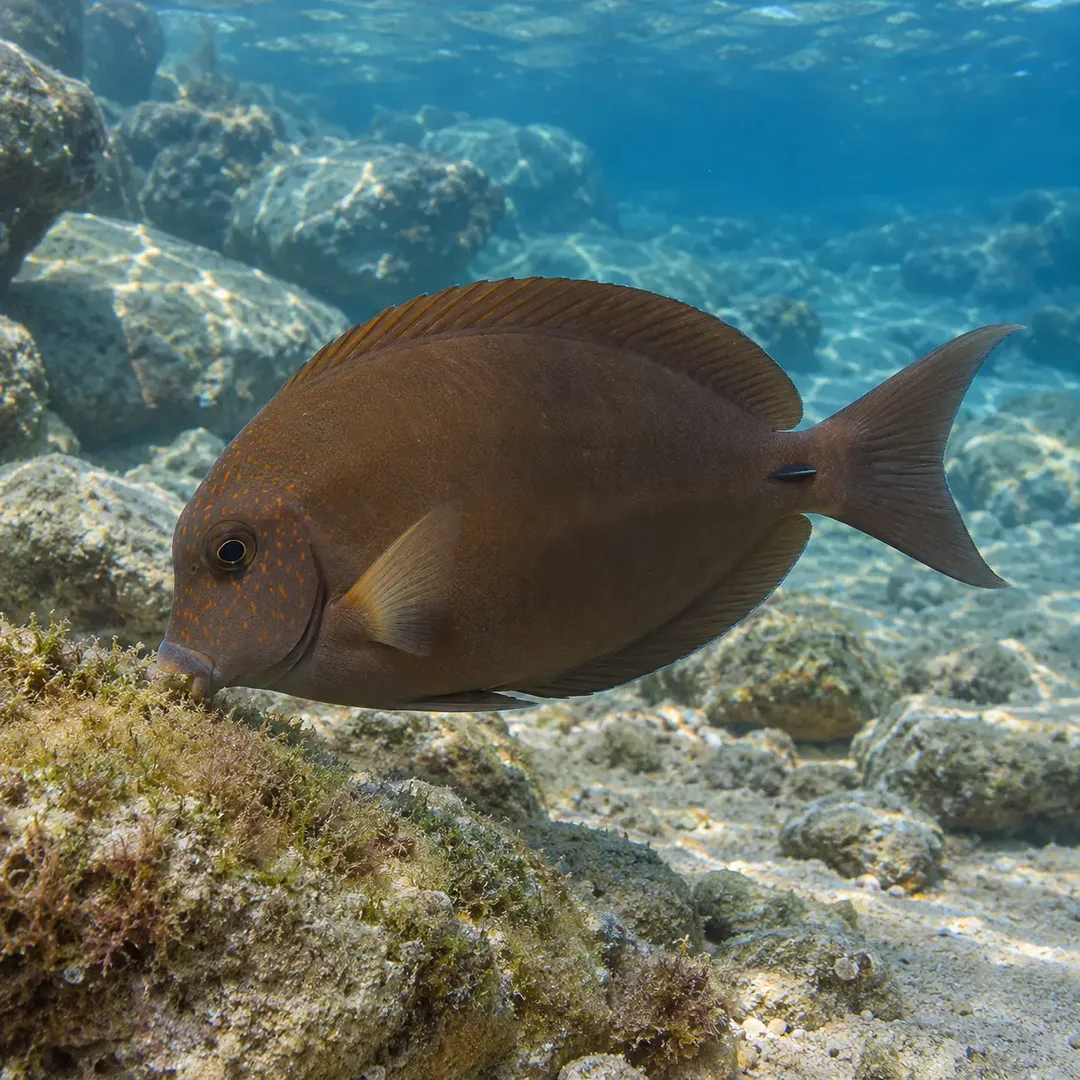
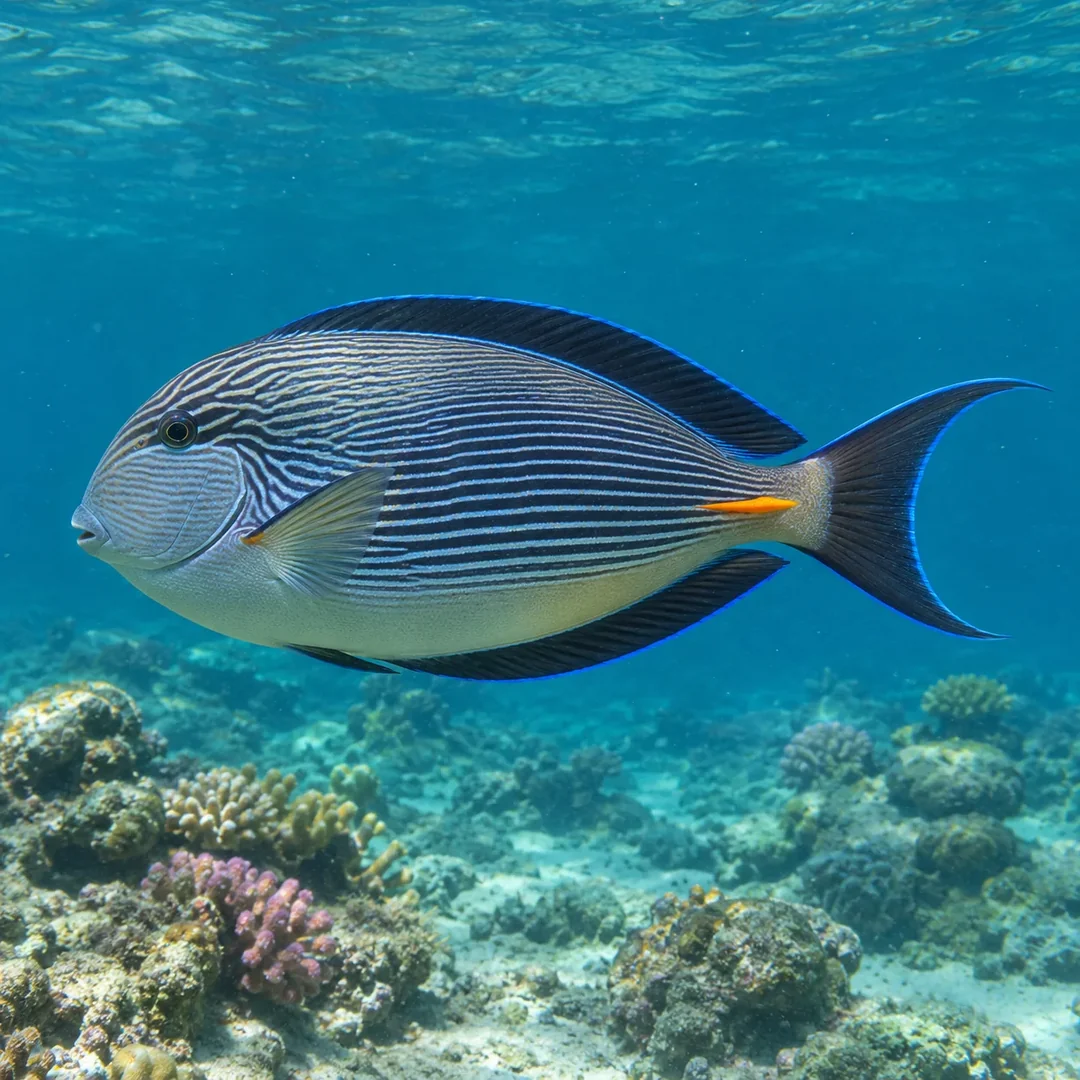
Surgeonfish: A Blade at the Base of the Tail
Surgeonfish have sheathed or fixed blades at the base of the tail that can inflict deep wounds.1 Unlike venomous spines on the back, this hazard is positioned near the tail, so even a fish that appears calm is not something to touch.1
Knowing where the blade is located explains why keeping a safe distance from the whole fish is more useful than watching only its mouth.1 The source gives no measured safe distance, so it does not support a single numerical rule for surgeonfish encounters.1
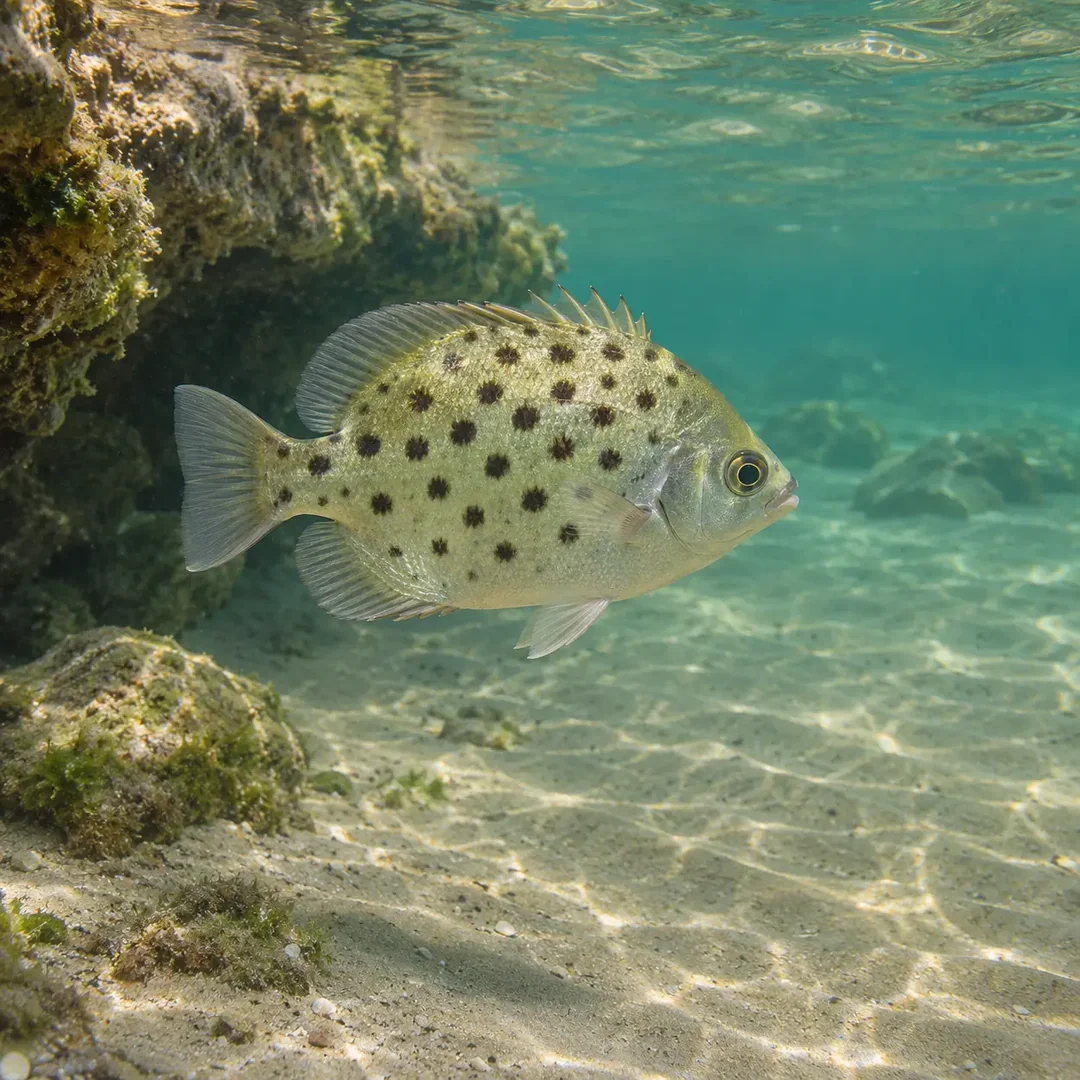
Rabbitfish: Venomous Spines on Several Fins
Rabbitfish have venomous spines in their dorsal, pelvic, and anal fins.1 These spines can inflict painful wounds, meaning the hazard is not confined to one point on the fish’s body.1
The source gives no reason to chase, hold, or move a rabbitfish in order to observe it.1 Instead, the presence of venomous spines on several fins reinforces the value of leaving enough space to prevent contact.1
Safety and Responsibility Underwater
A list of **dangerous Red Sea fish** should not make every animal seem threatening, because the source emphasizes that most Red Sea species pose no danger to humans.1 Understanding the exceptions means recognizing the injury mechanism: avoid stepping where a camouflaged stonefish may be present, do not disturb a triggerfish guarding eggs, and do not touch surgeonfish blades or rabbitfish spines.1
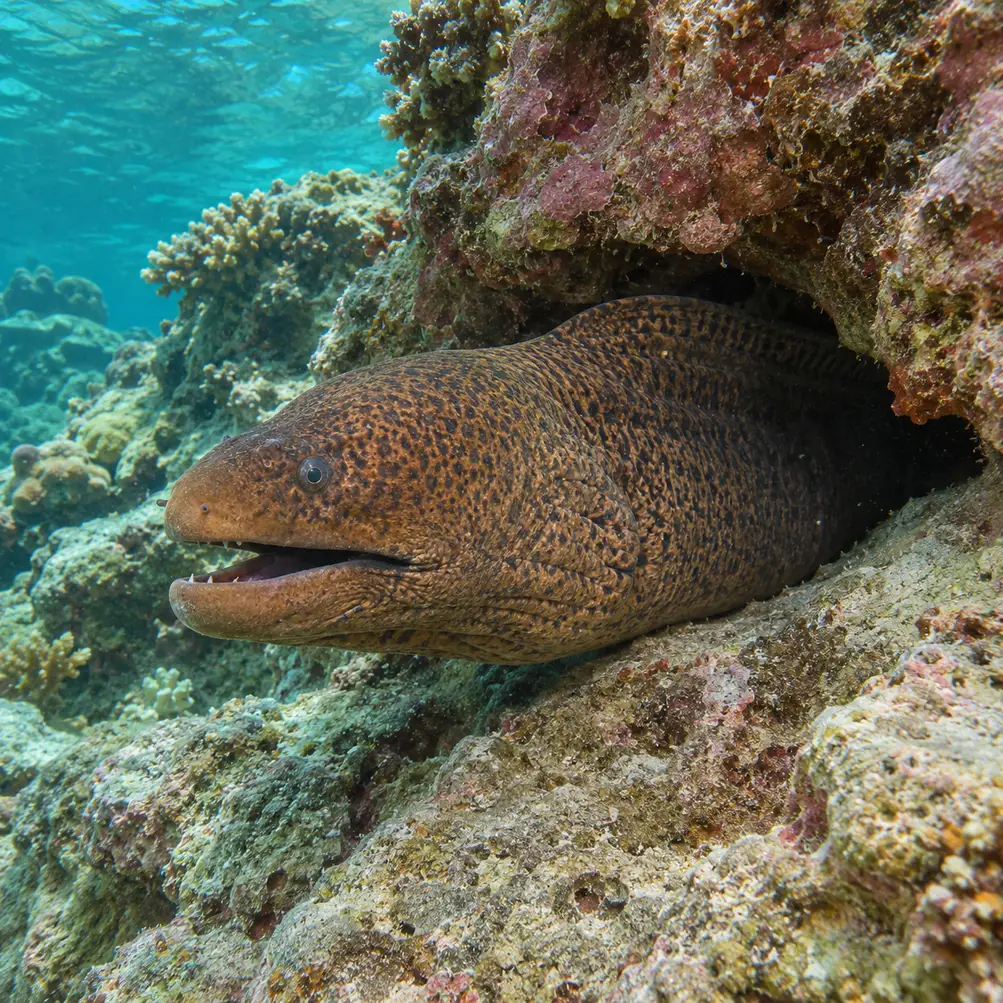
The source adds that most moray eel bites occur after divers put a hand into the hole where an eel lives.1 This example supports the same principle of maintaining a safe distance and keeping hands out of holes linked by the source to possible injury.1
The source does not provide first-aid, diagnostic, or medical-treatment instructions for injuries caused by these fish.1 This article therefore focuses only on recognizing the described hazards and preventing contact, rather than recommending treatment.1
Frequently Asked Questions
Are most Red Sea fish dangerous to humans?
No. The source states that most Red Sea species pose no threat to humans, while identifying several notable exceptions.1
Why can a stonefish be difficult to notice before approaching it?
The source describes stonefish as extremely well camouflaged and specifically warns people to avoid stepping on them.1
When is a Titan triggerfish described as especially aggressive?
The source describes aggressive nest defense when eggs are present and says that attacks may cause wounds requiring stitches.1
Does the source prove that every fish listed appears at every Red Sea dive site?
No. The source discusses hazardous species in the Red Sea but does not provide site-specific distribution, sighting, or frequency data.1 The list is therefore best read as a guide to hazards described for the wider Red Sea, not as a promise that divers will encounter every species at a particular site.1