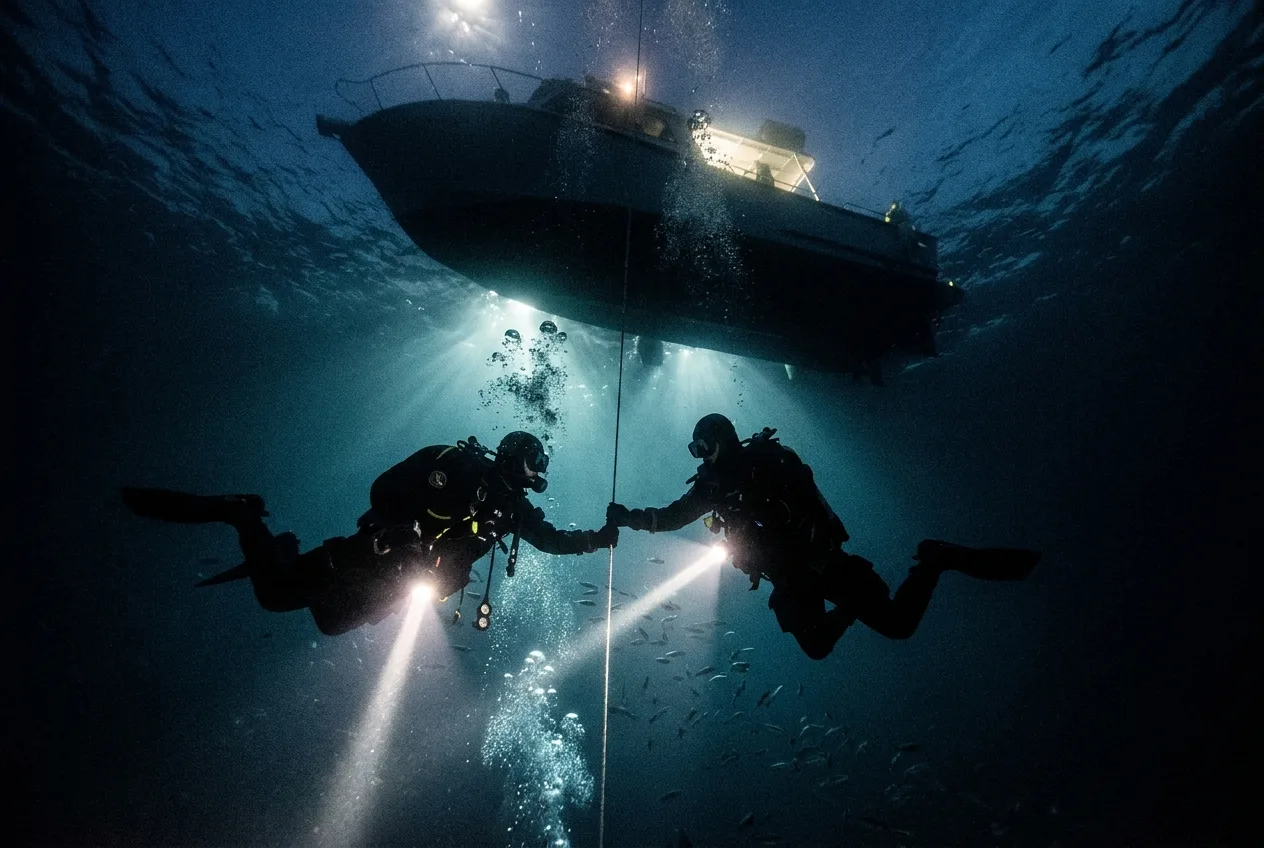

These night diving tips cover lights, buddy signals, navigation, and wildlife etiquette so you can prepare for the reef after dark. Familiar equipment and a clear plan help you spend more attention on what changes underwater: animals emerging from shelter, colors in your light beam, and scenery that looks different from its daytime form.
On this page
What changes during night diving
As the sun sets, animals that hide during daylight emerge. Your dive light reveals colors and details within its beam, while familiar landmarks may look different or disappear from view. The reef offers another experience after dark, but finding your way and communicating with your buddy need deliberate preparation.

Night diving equipment and lights
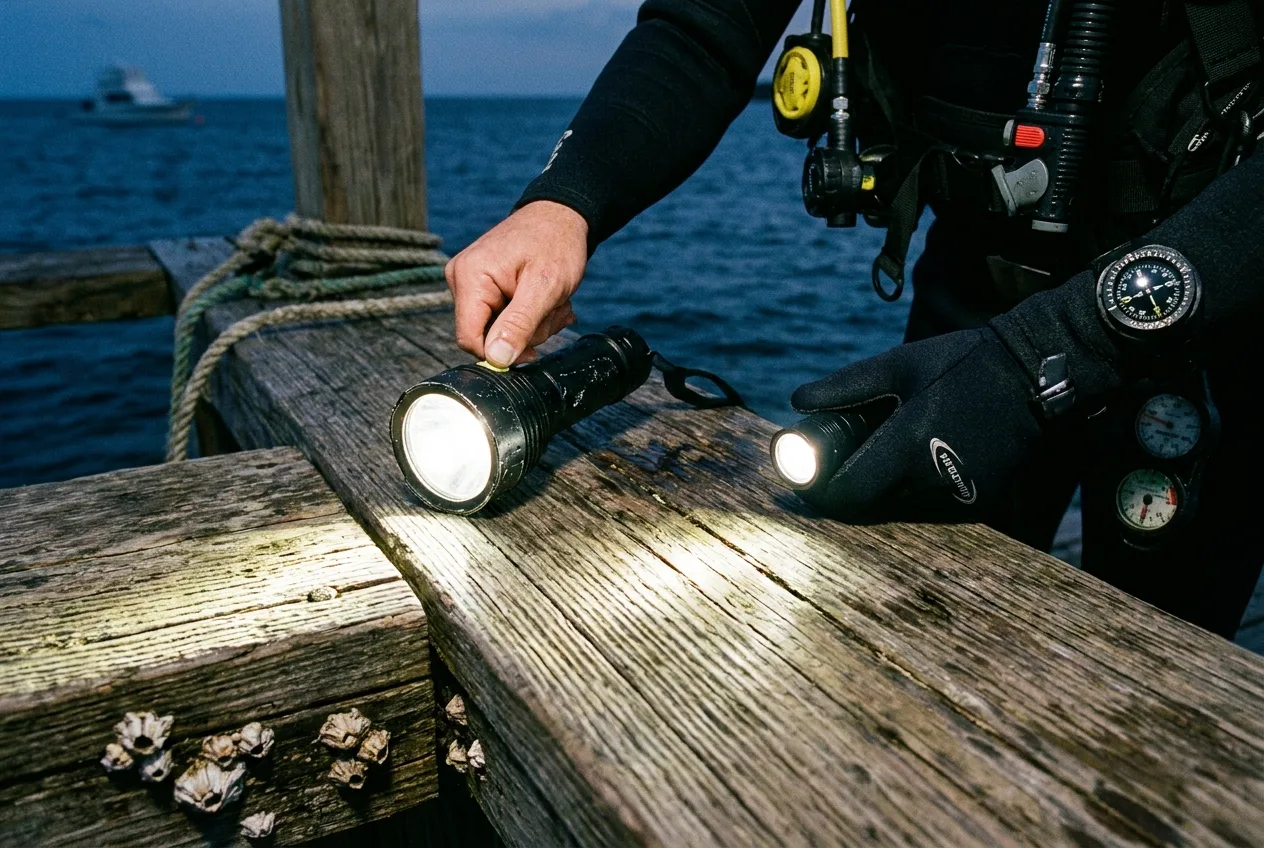
Begin before you reach the water. Use equipment you know and feel comfortable with, and save a new mask for another dive. Every diver needs a powerful, reliable primary light and a smaller backup for emergencies. Make sure the batteries are fully charged before entering.
A chemical glow stick or electronic marker attached to your regulator or cylinder can help your buddy recognize you in the dark. Before night diving, check the lighting alongside the rest of your equipment:
- Primary dive light ready to use.
- Smaller backup light available.
- Batteries fully charged.
- Marker light or glow stick positioned to help your buddy identify you.
Agree on signals with your buddy
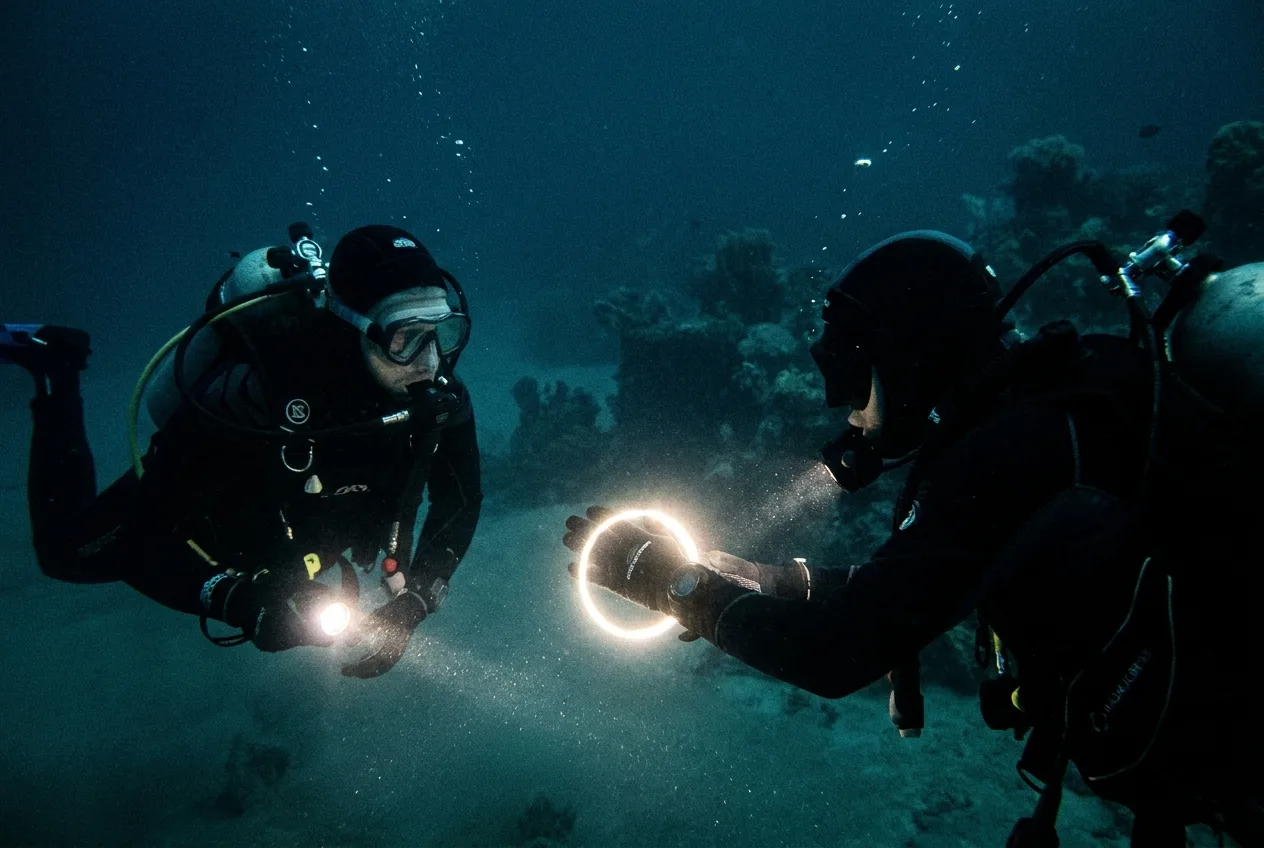
Give hand signals within your light beam so your buddy can see them. Light signals also help: trace a circle on your palm for “OK,” or move the beam quickly up and down to draw attention or indicate a problem. Practice with your buddy before entering the water, so you both understand what each movement means.
Night diving communication depends on seeing the signal clearly. Keep the light away from your buddy’s face; a bright beam can dazzle and disorient another diver. For more about this specialty, read PADI’s introduction to exploring after dark.
Plan the route and return
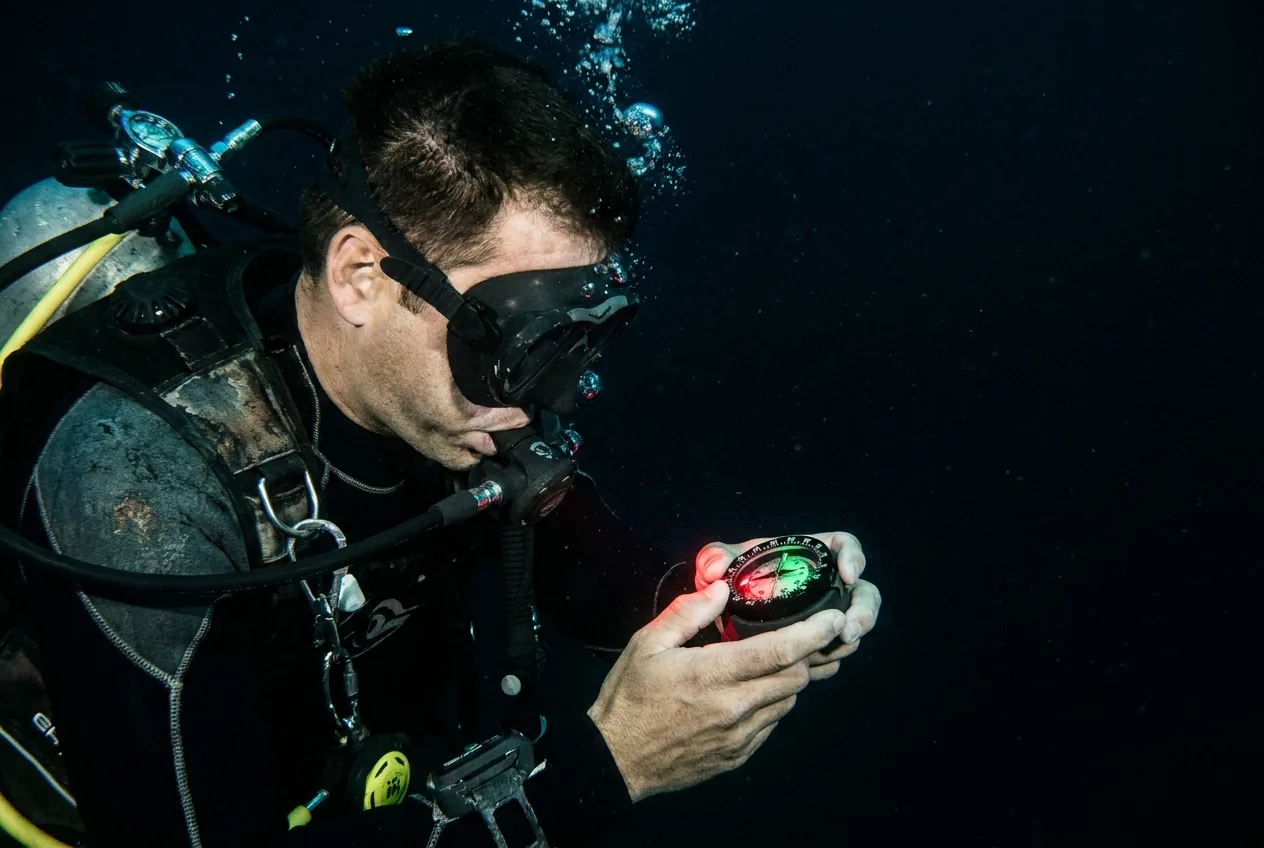
Familiarity with a site does not make every landmark visible at night. Plan your route in advance and use a compass. Keep your buddy and dive leader in sight rather than relying only on scenery you remember from daylight.
Many night dives begin from shore, so know the route back. A reciprocal compass course or depth contours can help you stay on track. Include that return in your plan before you enter: it is part of the dive, not something to work out once the landmarks become hard to recognize.
Give wildlife room and careful lighting
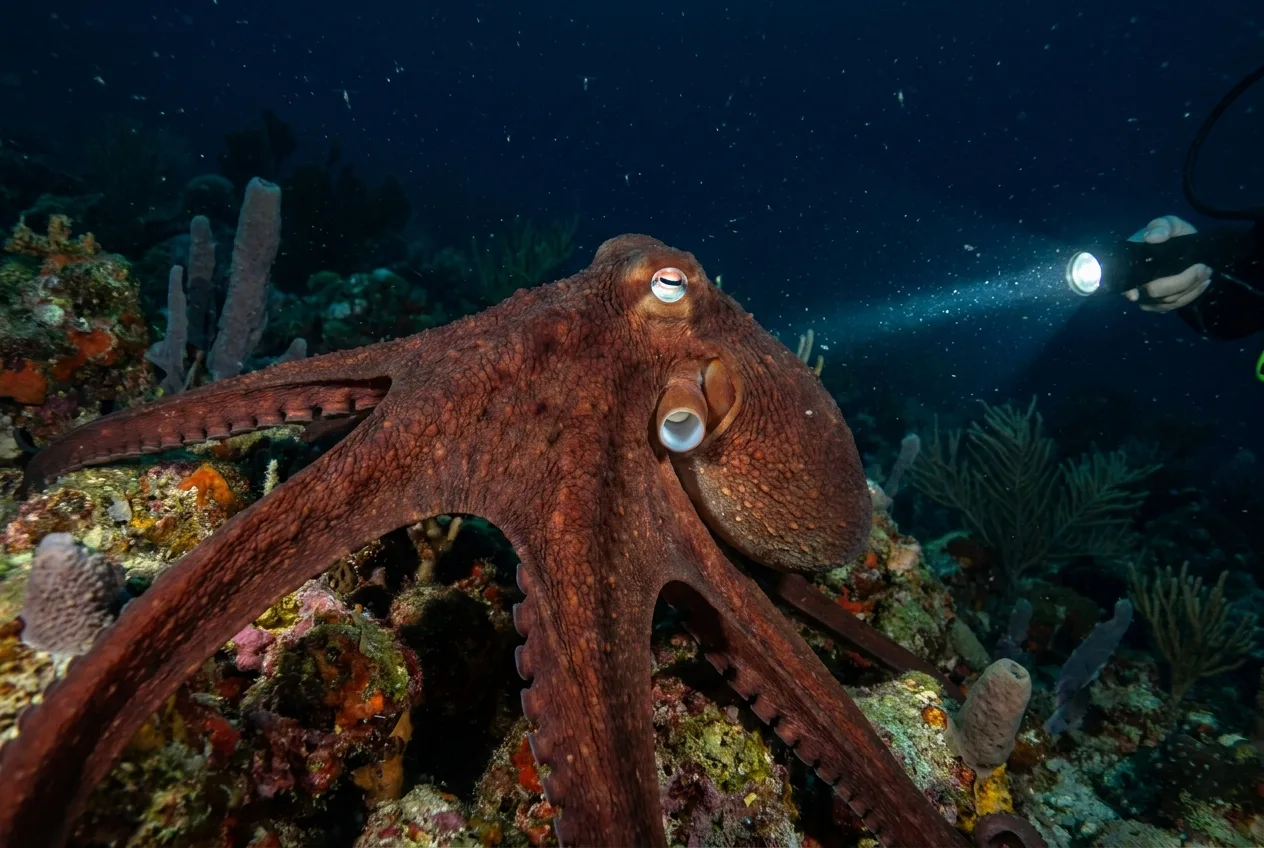
Octopuses, crabs, cuttlefish, and nudibranchs are among the animals you may meet while night diving. Give them space and aim your beam beside them rather than directly at them. The light is there to help you observe without disturbing what you have come to see.
Not every octopus is a nighttime hunter. The big blue octopus, also called the day octopus, Octopus cyanea, usually hunts in daylight. Our day octopus photograph offers a closer look at that species.
If identifying an animal is part of the pleasure for you, keep our marine life identification guide for new divers for later reading. There are more underwater stories on the diving blog.
Follow the plan and keep your bearings
Complete a thorough buddy check before entering the water. Stay relatively shallow and follow your dive plan. Night diving calls for care with both your own bearings and the light you direct around other people.
If you feel anxious or disoriented, stop, breathe, and focus on your light beam. The preparation, agreed signals, and planned route all support the same aim: staying oriented while you observe the reef. For questions about this article, contact 2DIVE.