
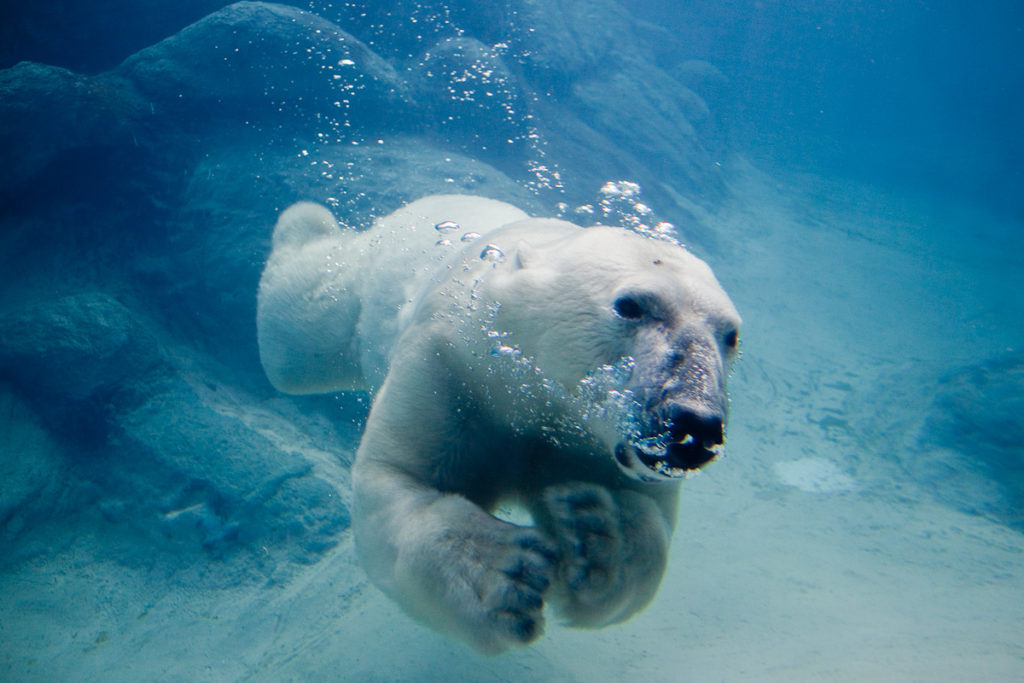
Polar bears survive Arctic cold through insulating fur and fat, broad paws, patient hunting, energy-saving rest, and carefully timed reproduction. Here is how those adaptations work together, and why sea ice matters to their lives. The world’s largest land predator is also a marine mammal, built for a life closely tied to the water.
On this page
How polar bears stay warm
The pale coat looks white or cream from a distance, giving the animal the name “white bear” in many languages. Its hollow hairs are translucent, while the skin underneath is black. Specialized fur and thick body fat provide insulation, and a compact build helps retain heat.
Small ears and a short tail limit heat loss. A water-repellent layer of oil adds protection from the cold, while stiff hair on the paws provides insulation and grip. The pale coat also helps the bear blend into the snow and ice where it hunts.
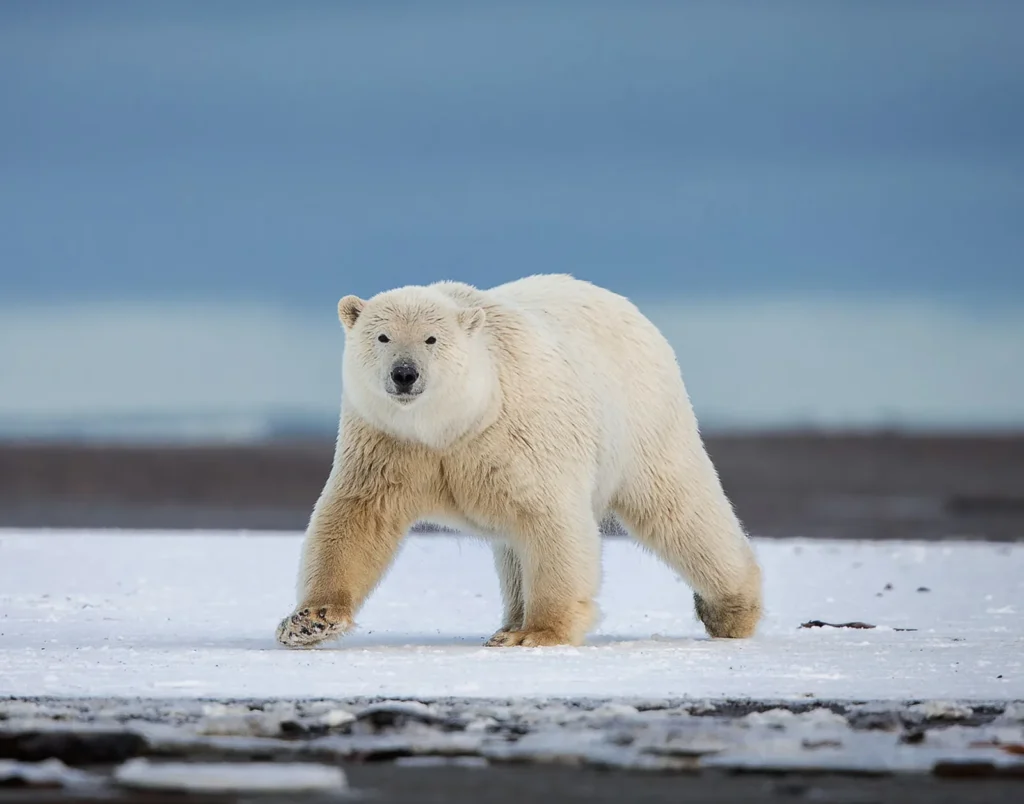
Although closely related to brown bears, polar bears occupy a specialized ecological niche. Their bodies suit freezing temperatures, travel over snow and ice, swimming, and hunting seals. Those features connect their appearance to the way they find food.
Broad paws for ice and water
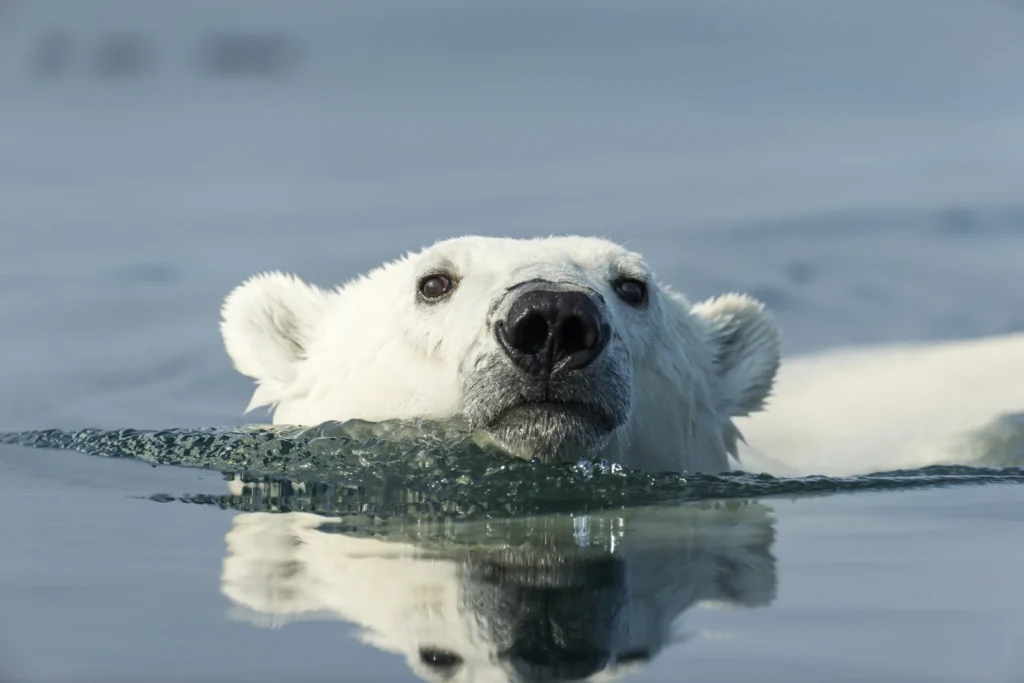
Polar bears have muscular bodies, long necks, and powerful limbs. Their broad paws carry them across land and propel them through water between ice floes. On deep snow, the paws spread the animal’s weight. On thin ice, a bear may move on its knees and elbows to distribute that weight and avoid breaking through.
Adult males typically weigh 350 to 600 kg, while adult females usually weigh 150 to 290 kg. Newborn cubs are tiny by comparison. The contrast is clear in the photograph of cubs in the snow.
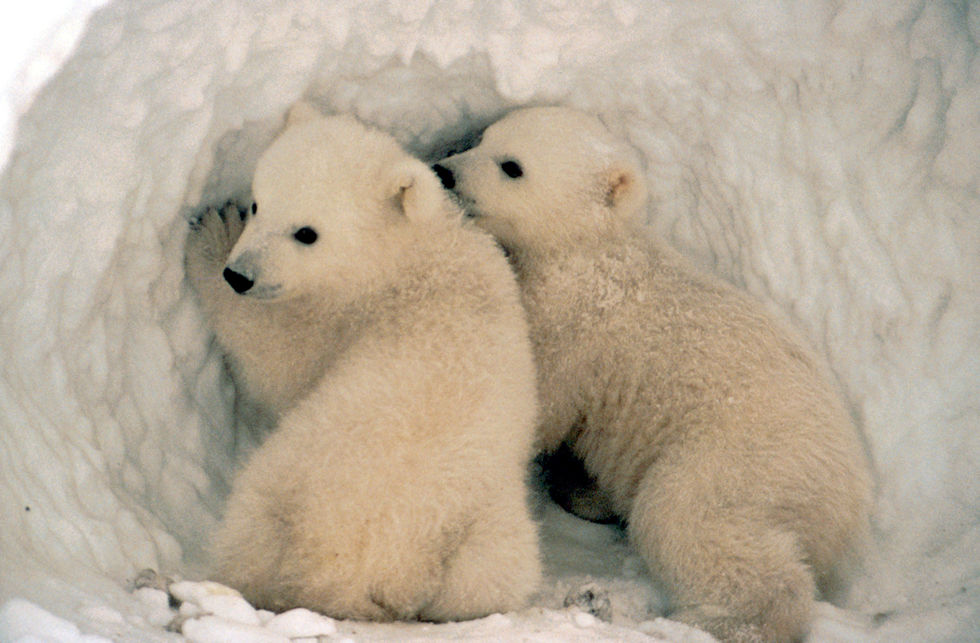
Polar bear cubs. Photo: U.S. Fish and Wildlife Service, public domain.
Polar bears can travel long distances across land and ice, but prefer to stay near the sea. Their scientific name, Ursus maritimus, means “sea bear.” The U.S. Fish and Wildlife Service’s species profile describes this marine mammal’s dependence on sea ice and marine prey.
Patient hunting and stored energy
Seals are the main prey of polar bears. A bear may wait beside a breathing hole, ready to catch a seal as it comes up for air. Chasing prey costs a large animal considerable energy, so ambushes suit its size, camouflage, and strong swimming ability.
After a successful hunt, the bear eats skin and fat and leaves meat for other animals. Those leftovers help other Arctic species survive. Between meals, a bear can live on stored body fat while waiting for another opportunity.
Seals dominate the diet, but these predators also take other food when available. Birds, rodents, shellfish, crustaceans, deer, sheep, and fish are among the foods described in this account.
Rest and social life
Polar bears conserve energy through rest. Alongside 7 to 8 hours of regular sleep, they nap whenever possible. Most remain active through winter; pregnant females spend it in maternity dens, giving birth and nursing their cubs.
Males tend to live alone and can be aggressive toward other males. They may also attack people. Females are more tolerant of one another. During the breeding season, competition between males can lead to fights, injuries, and broken teeth.
Timing reproduction
Polar bears mate in spring and early summer. Implantation is delayed until fall, and depends on the female having enough fat to support herself and her cubs through denning. Stored energy therefore matters for both the adult’s survival and the young she will nurse.
Why sea ice loss matters
Polar bears are classified as Vulnerable on the IUCN Red List. Trends differ among subpopulations: some are declining, others are stable or increasing, and some lack enough data. Those differences matter when describing the species’ condition.
Global warming reduces Arctic sea ice, eroding habitat and hunting grounds. For an animal that hunts from floating ice, the loss affects the places where it finds its main prey.
To continue exploring marine wildlife, read our guide to whale sharks, another close look at an animal whose size draws attention before its way of life becomes clear.