
Coral reef partnerships explain how corals build living space, how small animals find shelter, and why larger fish allow cleaners close to their mouths. Follow five of those relationships, from algae inside coral tissue to a goby sharing a burrow with a shrimp. They give you something specific to look for on your next dive or snorkel.
On this page
Coral reef foundations: corals and algae
Corals and sea anemones belong to the class Anthozoa, a Greek name meaning “flower animals.” Their colors and forms make the comparison easy to see. Beneath that flower-like appearance, many reef-building corals depend on a partnership with algae living inside their tissues.
The algae supply nutrients and contribute to the coral’s color. In return, the coral provides shelter and materials used in photosynthesis. This exchange helps many reef-building corals thrive in clear, nutrient-poor water. Coral polyps also catch plankton and other prey with their tentacles.
NOAA’s explanation of corals and their algae describes this relationship. It is a form of symbiosis in which both partners benefit, and it supports the living structure around them.
A colony can begin when a free-swimming larva, called a planula, settles on a suitable surface and becomes a polyp. The colony grows as polyps multiply. Reef-building corals produce limestone skeletons, creating more places for life to take hold.
Growth rates depend on species and conditions: branching corals can grow much faster than massive forms. Other corals settle on surfaces already created and start their own colonies. Over time, this slow building process gives a coral reef its crowded, layered character.
Crabs and their coral hosts
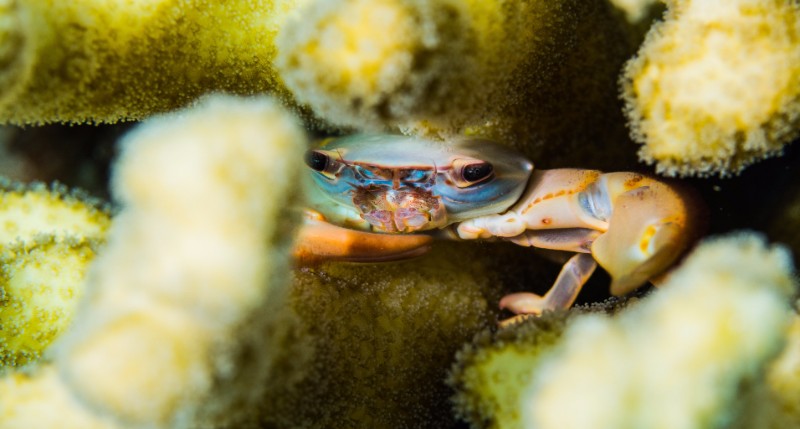
Crabs, shrimp, worms, and nudibranchs find shelter among coral branches. Some residents form close relationships with the animals providing that shelter. Small crabs living among the stinging branches of Acropora coral, for example, clean their hosts and eat parasites that threaten them.
This is another example of symbiosis with benefits on both sides: a place to shelter for the crab and cleaning for its immobile host. The photograph below shows how small a resident can be beside the coral around it.
Nearby damselfish gather among corals and retreat into the reef when a larger fish, hungry eel, or passing shark approaches. They feed on tiny invertebrates, drifting plankton, and even parasites that trouble larger fish. Shelter and food connect these small residents to the wider coral reef community.
Cleaner wrasses and larger fish
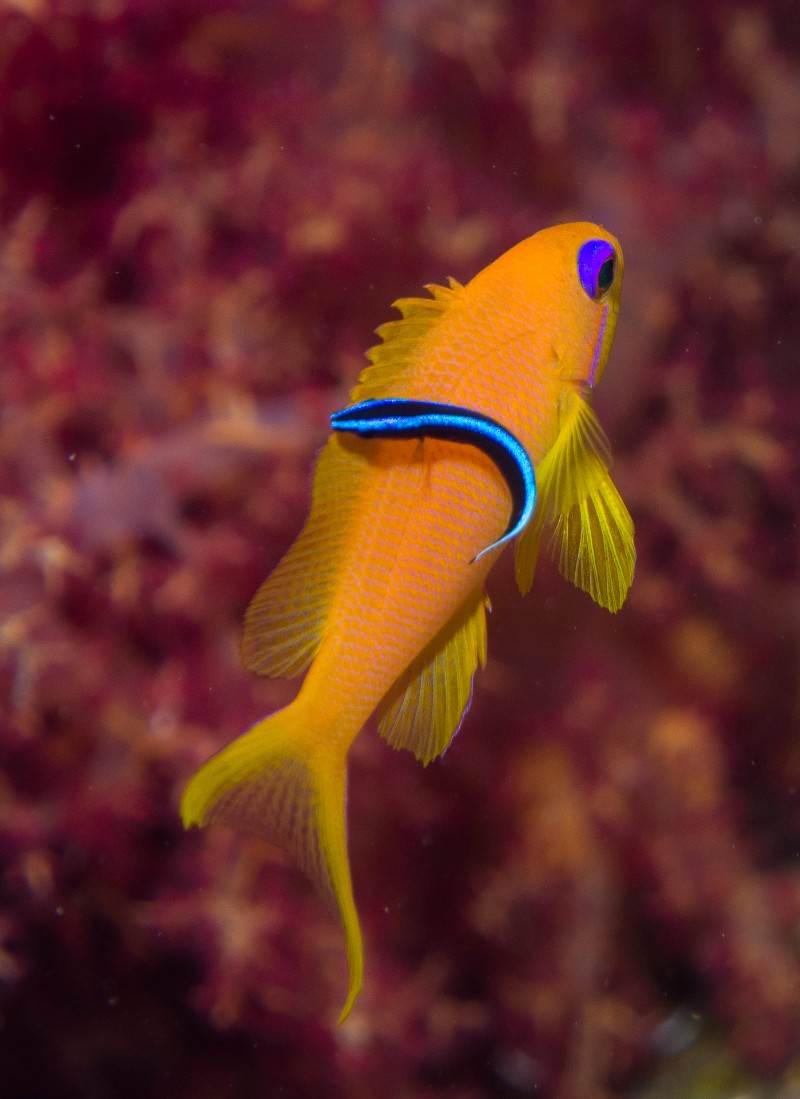
Cleaner wrasses feed on parasites from larger fish, including giant moray eels and groupers that might otherwise eat them. At a cleaning station, those clients wait and open their mouths. The small cleaner can then pick food from between their teeth.
The contrast makes this coral reef partnership especially interesting to watch. A fish that looks vulnerable beside a large mouth can be allowed close enough to work inside it. The photograph of an anthias with a cleaner wrasse shows the relationship at a smaller scale.
Predation continues around these partnerships. Larger fish eat smaller ones; triggerfish and pufferfish feed around the coral. An octopus may spread its arms to catch small fish before they escape. These are feeding relationships within the same community.
Reproduction adds another layer of activity. Some reef fish release eggs into the water, while others, including many damselfish, attach eggs to a surface and guard them.
Anemonefish and sea anemones
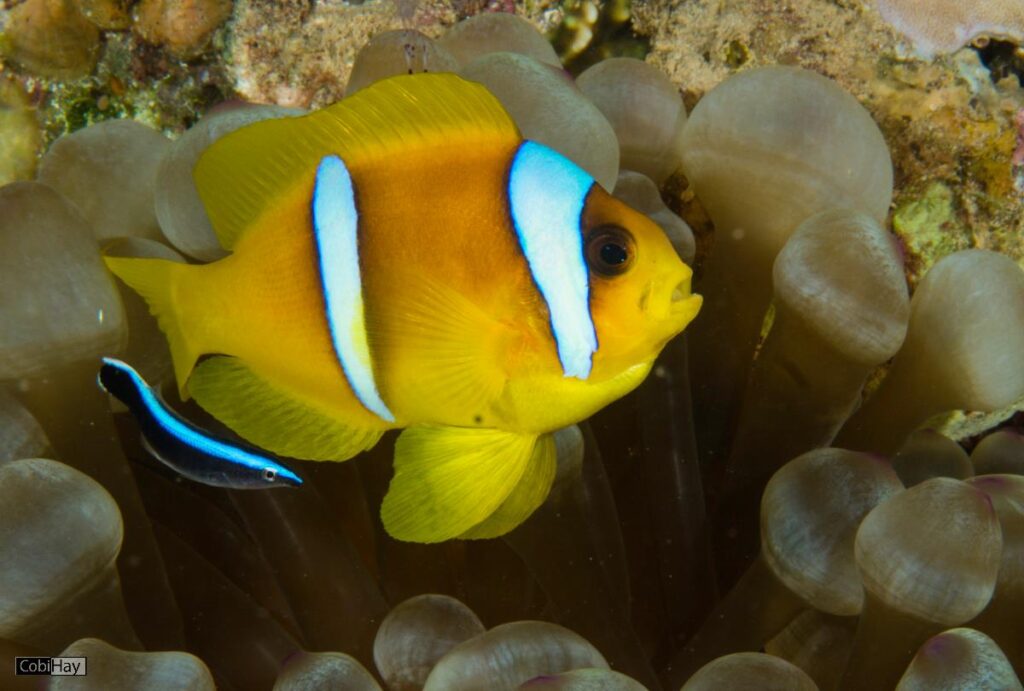
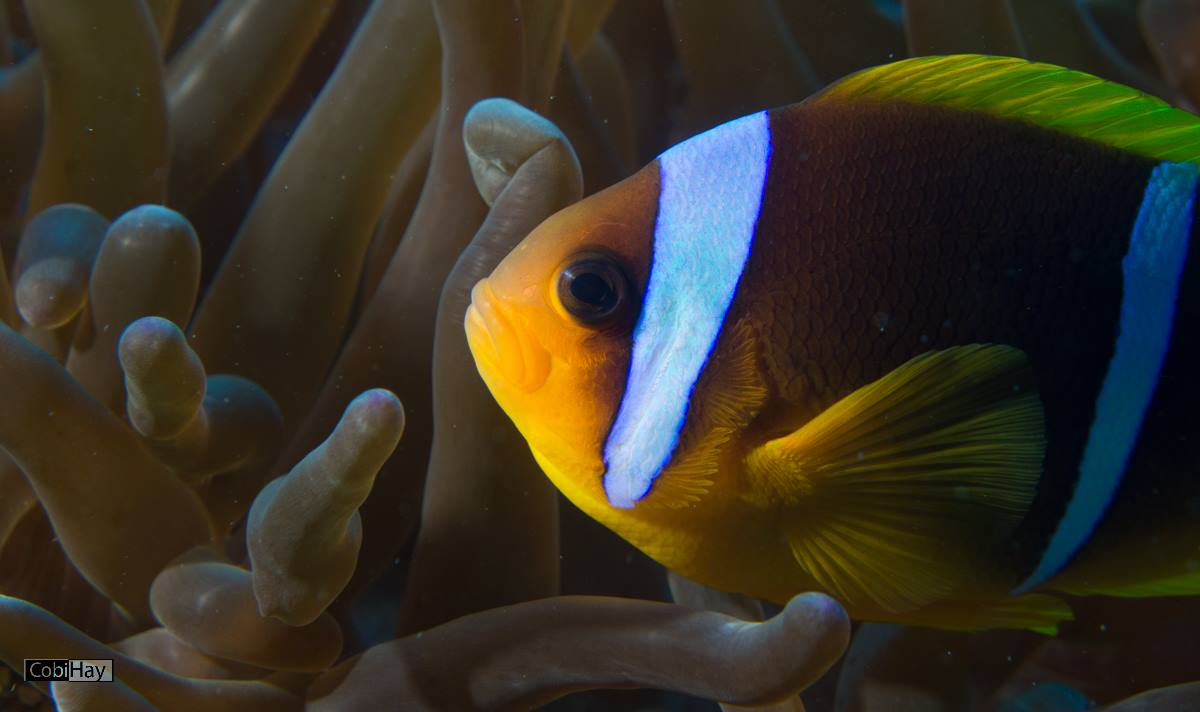
Anemonefish live among the tentacles of sea anemones, distant relatives of corals. They feed their hosts, protect them from predators, and drive away fish much larger than themselves. This coral reef partnership combines shelter with active defense.
Beneath the anemone, hundreds of tiny red eggs can cling to a small rock. Parents guard that next generation alongside their stinging companion. The anemone shelters other animals too: transparent shrimp hover above it, while crabs hide among the tentacles and clean away leftover food.
A goby and a shrimp share a home
Look into the reef’s shade and you may spot a watchman goby’s head at the entrance to a sandy burrow. Its tail stays inside the neatly dug home, which is reinforced with small stones. Watch patiently for a shrimp keeping an antenna in contact with the fish.
The goby keeps watch and catches food while the shrimp digs and maintains their shared home. Signals tell the shrimp when it can venture out and when danger means retreat. This symbiosis divides the work between an animal watching outside and one maintaining the burrow.
These examples are only part of coral reef life. Some crabs carry small anemones on their backs for protection, and fish protect one another by day and night. Those connections help sustain the community, but also make it vulnerable: disturbing one relationship can affect more than one animal.
Our marine life identification guide can help you name the animals you notice. I also look for these colors and small details through my camera, from an octopus photograph on canvas to the wider collection of underwater photographs for the living room.