
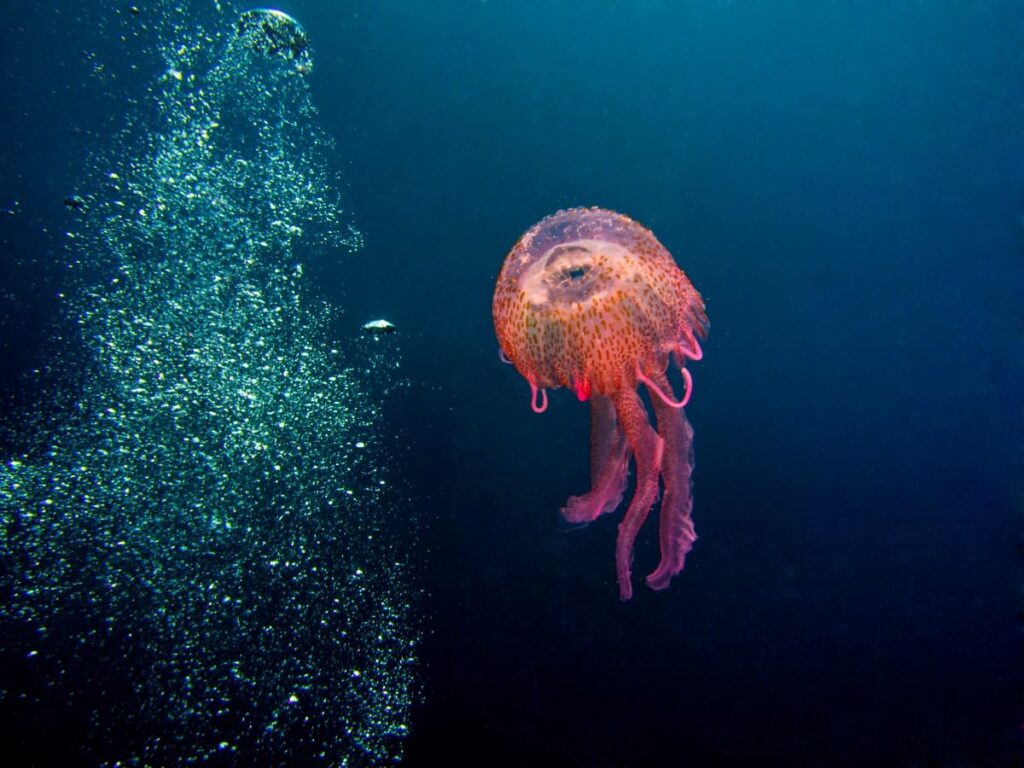
Jellyfish use a pulsing bell, a nerve net, and stinging cells to move, sense their surroundings, and catch food. This guide explains those features, then looks at seven types and the Portuguese man-of-war, a colony often mistaken for one. Knowing the differences makes the animals more interesting to observe and their risks easier to understand.
On this page
How jellyfish bodies work
A jellyfish is an invertebrate, usually marine, related to corals and sea anemones. These animals belong to the cnidarian group. Their gelatinous bodies have no head, central brain, heart, or ears, although sensory structures differ between groups. Box jellies, for example, have eyes.
Fossils preserve recognizable jellyfish from about 505 million years ago. Their forms vary widely, but most have a bell, oral arms, and hunting tentacles. The smooth, umbrella-shaped bell provides the familiar outline. By pulsing it, the animal propels itself through the water, although currents strongly influence where it goes.
Beneath the bell are the mouth and digestive cavity. Food enters and waste leaves through the same opening. Cells lining the cavity help break food down, while a layer of jelly separates it from the outer surface. Hunting tentacles usually hang from the bell’s edge.
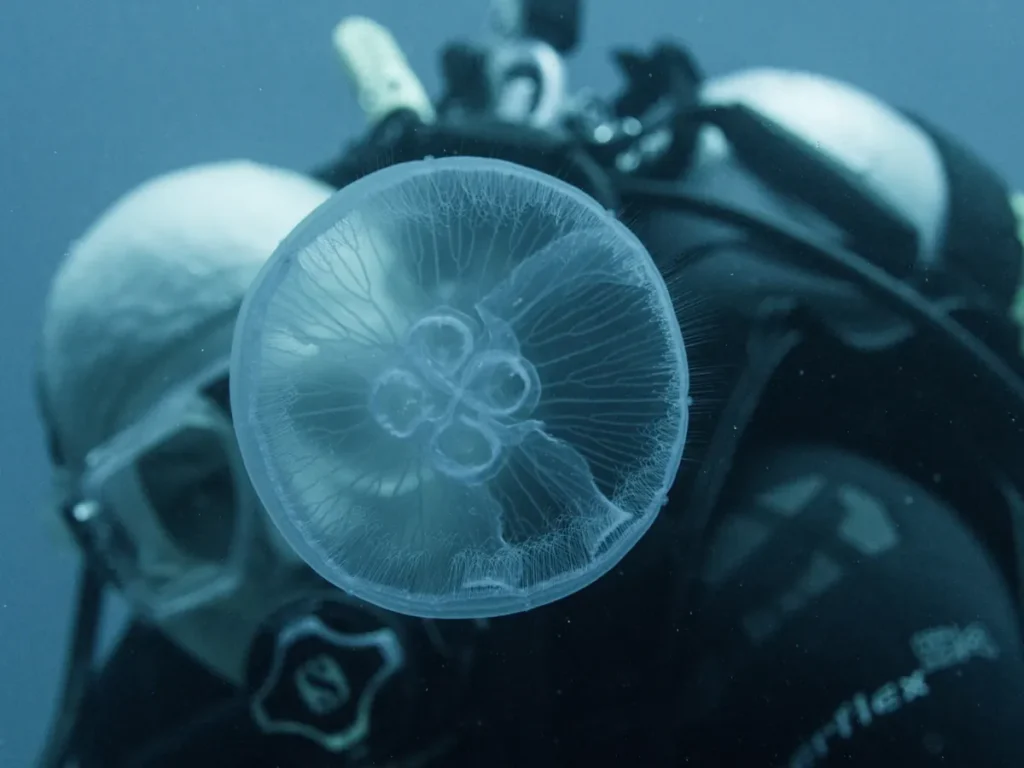
The photograph shows a translucent moon jellyfish in front of a diver’s mask. Fine lines radiate through the bell around four curved central shapes. The contrast between its clear bell and the mask behind it makes the body structure visible.
Sensing, feeding, and stinging
Jellyfish have a simple nervous system called a nerve net, spread through the outer layer, or epidermis. The Smithsonian’s guide to jellies explains this network and the sensory structures associated with it.
Many have structures that respond to light and darkness without forming a true image. Some also have structures that help them respond to gravity. Box jellies have more complex eyes, another reason to avoid treating every transparent, bell-shaped animal as identical.
Touch or chemical cues can trigger capsules inside stinging cells. A tiny venom-bearing thread discharges, helping stun, paralyze, or kill prey. These cells serve feeding as well as defense. The animals mainly eat other invertebrates, protozoans, and small fish.
Stings vary by species. Some cause severe pain or scarring; certain box jellyfish can cause fatal injuries. A delicate appearance does not tell you how dangerous an animal might be. The Portuguese man-of-war can also sting painfully, despite belonging to a different kind of cnidarian colony.
Seven types and one lookalike
Crystal jelly
The crystal jelly gives off a faint glow. Its green fluorescent protein, GFP, has become an important tool for observing cells and biological processes.
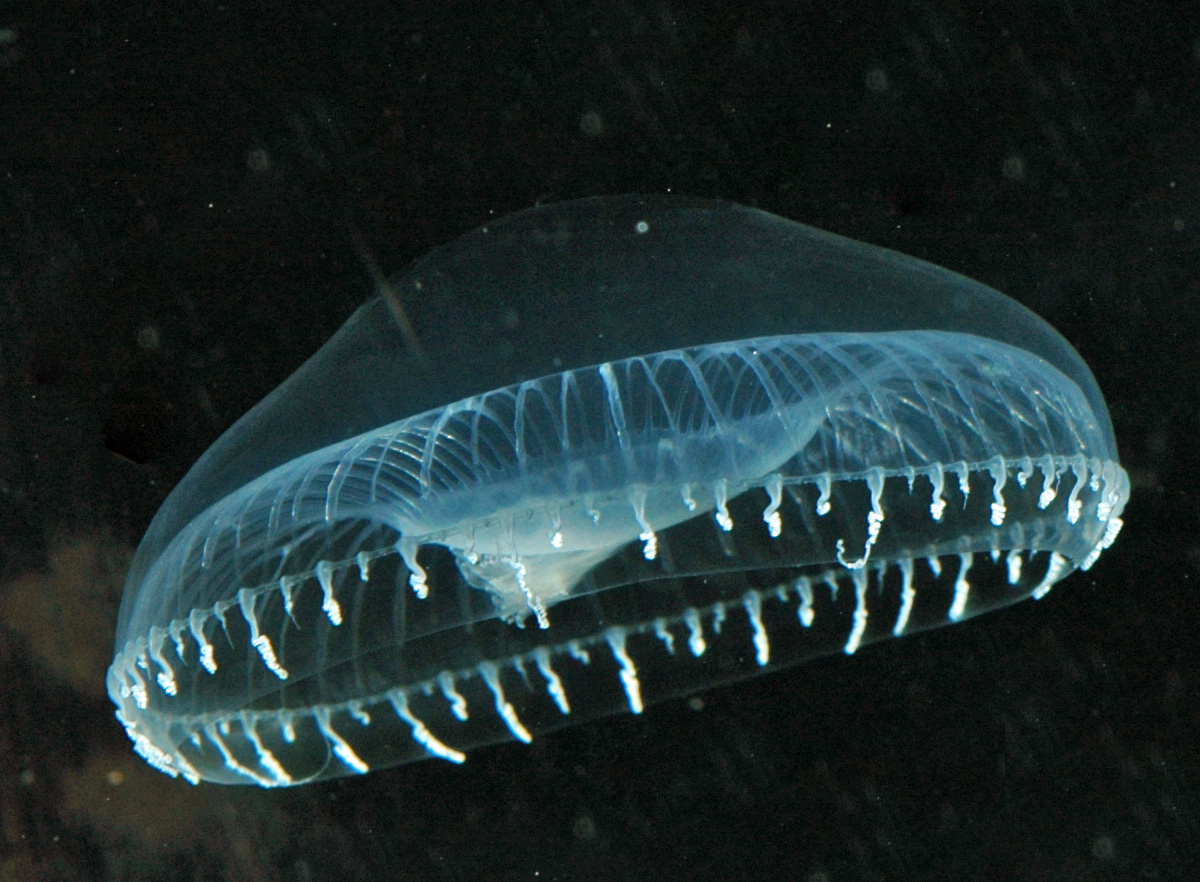

Read more about the crystal jelly and GFP.
Australian box jellyfish
Chironex fleckeri, also called the sea wasp, is particularly feared for its sting. Its almost transparent body can be difficult to see, and its long tentacles may reach a person before the animal is noticed. The combination of transparency and dangerous stinging cells makes appearance a poor guide to risk.
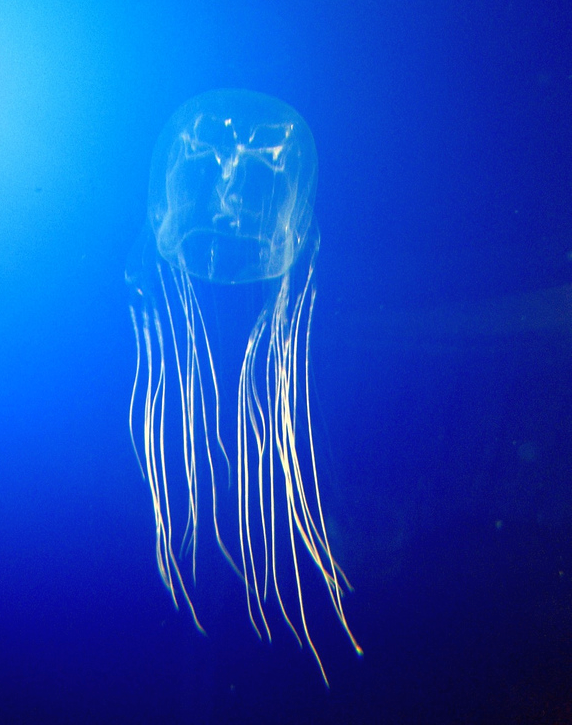

Read the linked report on the Australian sea wasp.
Stauromedusae off Costa Rica
Researchers found pink stalked jellyfish near hydrothermal vents off Costa Rica at depths greater than 2 kilometers. Vent fluid reached 335 degrees Celsius, but the animals lived in cooler surrounding water. That distinction matters: the fluid’s temperature was not the temperature of the animals’ habitat.
The original account links to the Costa Rica vent discovery.
Flower hat jelly
This small, colorful animal resembles a hat topped with a glowing pink flower. It occurs in waters off Brazil and Argentina, as well as Japan. Bright colors make it conspicuous even though it is small, a contrast with the nearly transparent sea wasp.
See the linked description of the flower hat jelly.
Nomura’s jellyfish
Found mainly off Japan, this is one of the largest types. Its bell can reach about 2 meters across and its weight about 200 kg. Those measurements describe a very different animal from the small flower hat jelly, despite their shared gelatinous appearance.
Read more in National Geographic’s report on Nomura’s giant jellies.
Nomad jellyfish
This species reached the Mediterranean through the Suez Canal and was reported along its eastern coast in the 1970s. It has since spread farther across the sea. Large blooms occur in summer and have also been recorded in winter.
These gatherings disrupt swimming, fishing, and tourism. They can damage ship engines and power-station turbines, while stings can be painful and seriously affect sensitive people. Their impact extends from swimmers in the water to coastal infrastructure.
Read more about Rhopilema nomadica.
Lion’s mane jellyfish
The largest jellyfish known to science favors cold northern waters: the Arctic, North Atlantic, and North Pacific. The largest recorded example had a bell 2.3 meters across and tentacles 37 meters long. Animals sheltering among those tentacles make these jellies floating islands of life.
Explore the linked account of the lion’s mane.
Portuguese man-of-war
This jellyfish lookalike is a siphonophore colony made up of organisms called zooids. Each has a specialized role and depends on the others. A gas-filled float holds the colony at the surface, while a sail-like crest catches the wind. Its resemblance to a sailing warship gives it its common name.
It lives mainly in warm seas, with an increasing Mediterranean presence reported in the original account. Read more about the Portuguese man-of-war.
Looking more closely
For help recognizing other underwater animals, see our marine life identification guide for new divers. A jellyfish’s bell and trailing tentacles also draw my eye as a photographer; my ocean photographs for the bedroom explore those quieter underwater forms.