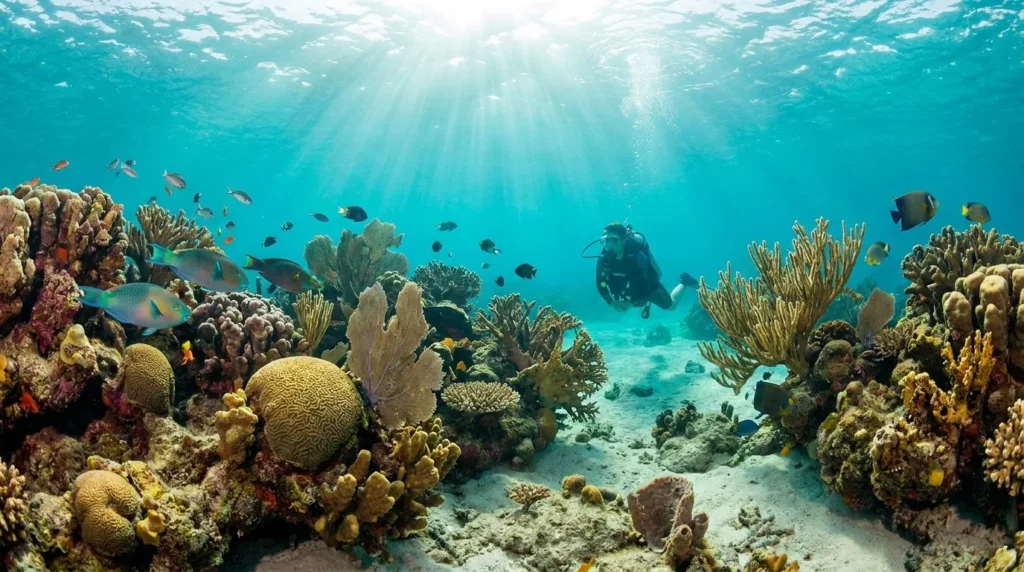
This guide to dangerous marine animals explains how stonefish, lionfish, box jellyfish, cone snails and sea snakes can harm people, and why watching without touching matters. Some hide in plain sight; others make an obvious subject for a photograph. In each case, giving the animal space protects both the diver and the marine environment.
On this page
Dangerous Marine Animals: Observe Without Contact
Color and beauty do not tell you whether an animal is safe to touch. A plain-looking rock may be a camouflaged fish, while an ornate shell may hold a venomous predator. Treat observation as the purpose of the encounter, rather than a first step toward handling the animal.
Maintain neutral buoyancy and watch where you put your hands. For help recognizing the life around you, read our marine life identification guide for new divers.
1. Stonefish: Camouflage and Defensive Spines
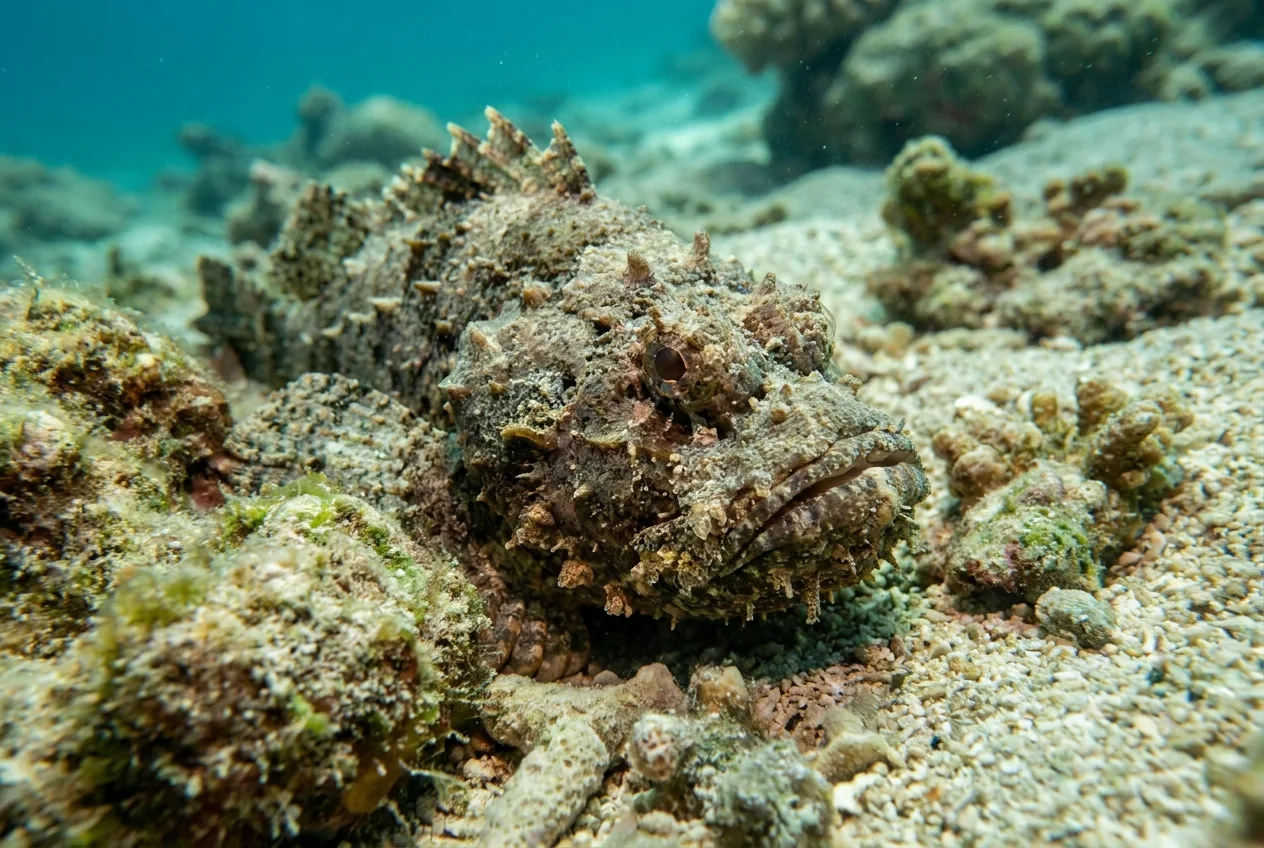
Stonefish (Synanceia) are considered the world’s most venomous fish. Their camouflage resembles rocks or dead coral, and an animal buried in sand or tucked among rocks can be difficult to spot.
Along the back are 13 sharp spines connected to venom glands. Accidentally stepping on a stonefish can cause extreme pain, tissue death, paralysis and, in severe cases, death. The danger is easy to overlook precisely because the fish blends into its surroundings.
The devil scorpionfish pictured in this photograph is a relative, not the same animal. Photographs allow a close look at these subjects without contact.
2. Lionfish: Give the Spines Room
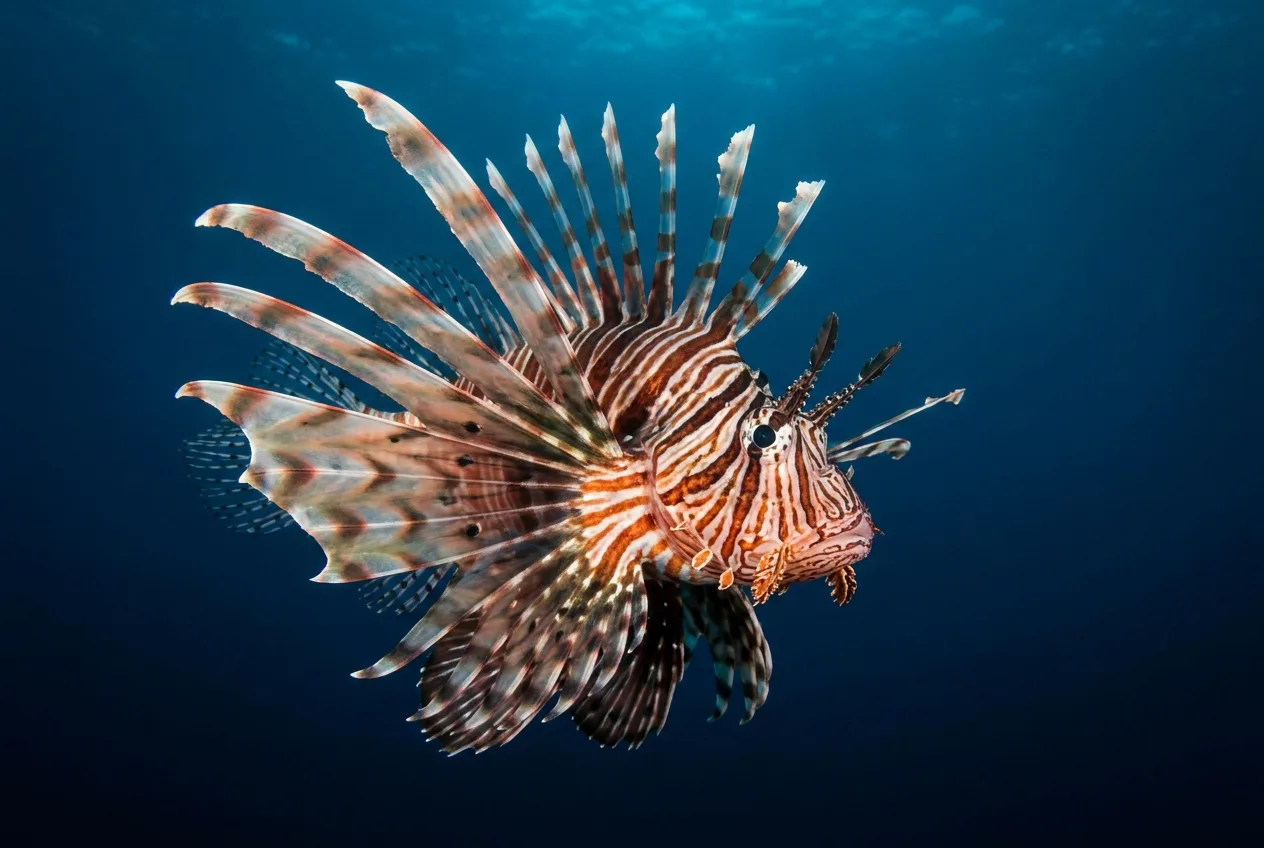
Lionfish (Pterois), including devil firefish, spread their fins like a fan. Spines on the back and fins carry venom, and a sting can cause severe pain, nausea, breathing difficulties and, rarely, paralysis.
These fish are not aggressive, but a threatened lionfish may turn its spines toward the threat. Keep your distance rather than moving closer because the animal appears calm. Its appearance makes it a compelling subject to watch, not one to touch.
3. Box Jellyfish: A Hard-to-See Hazard
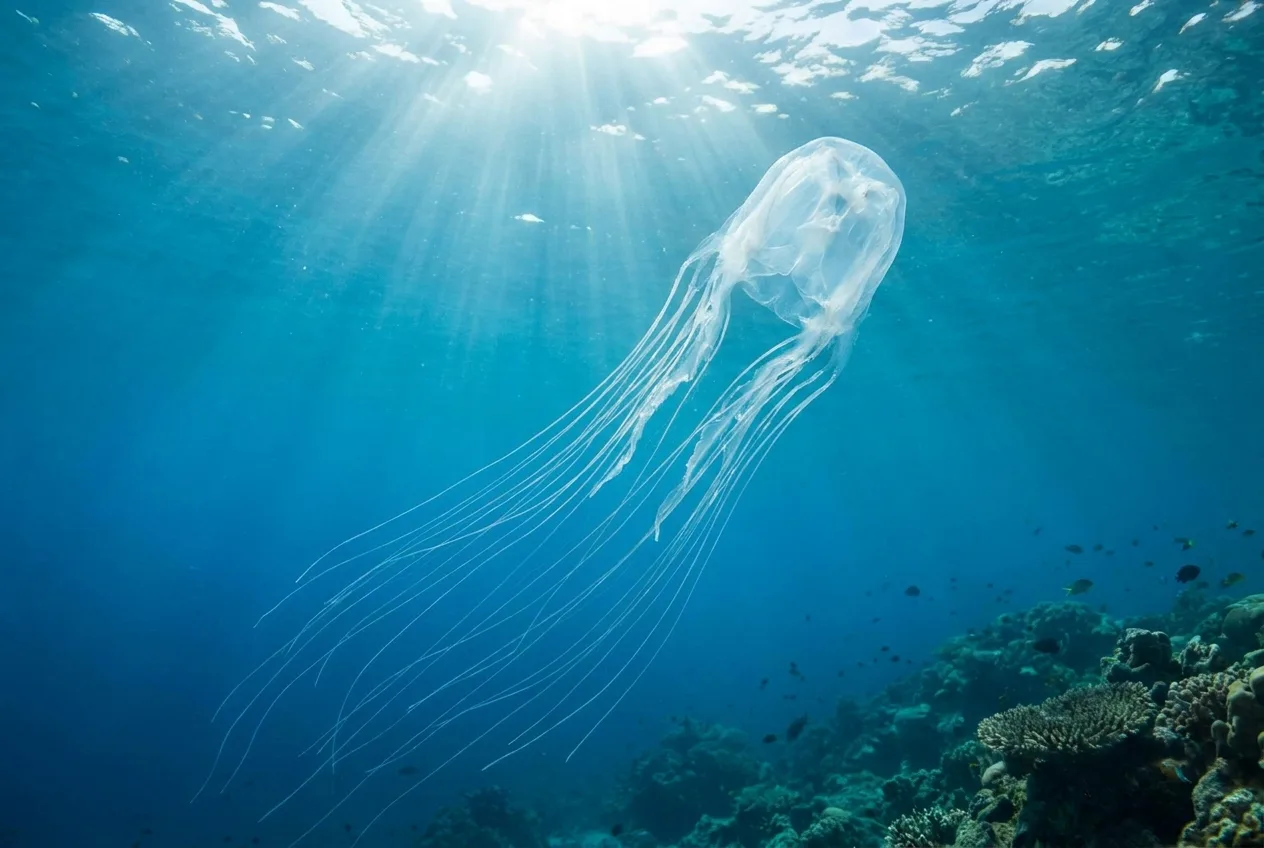
The box jellyfish Chironex fleckeri is found mainly in the Indo-Pacific. Its nearly transparent body can be difficult to see, while the long tentacles carry stinging cells called nematocysts.
Contact releases potentially lethal venom that attacks the heart, nervous system and skin cells. A severe sting can cause death within minutes. Check local jellyfish warnings before entering the water; visibility alone is not a useful measure of this hazard.
4. Cone Snails: Leave Living Shells in Place
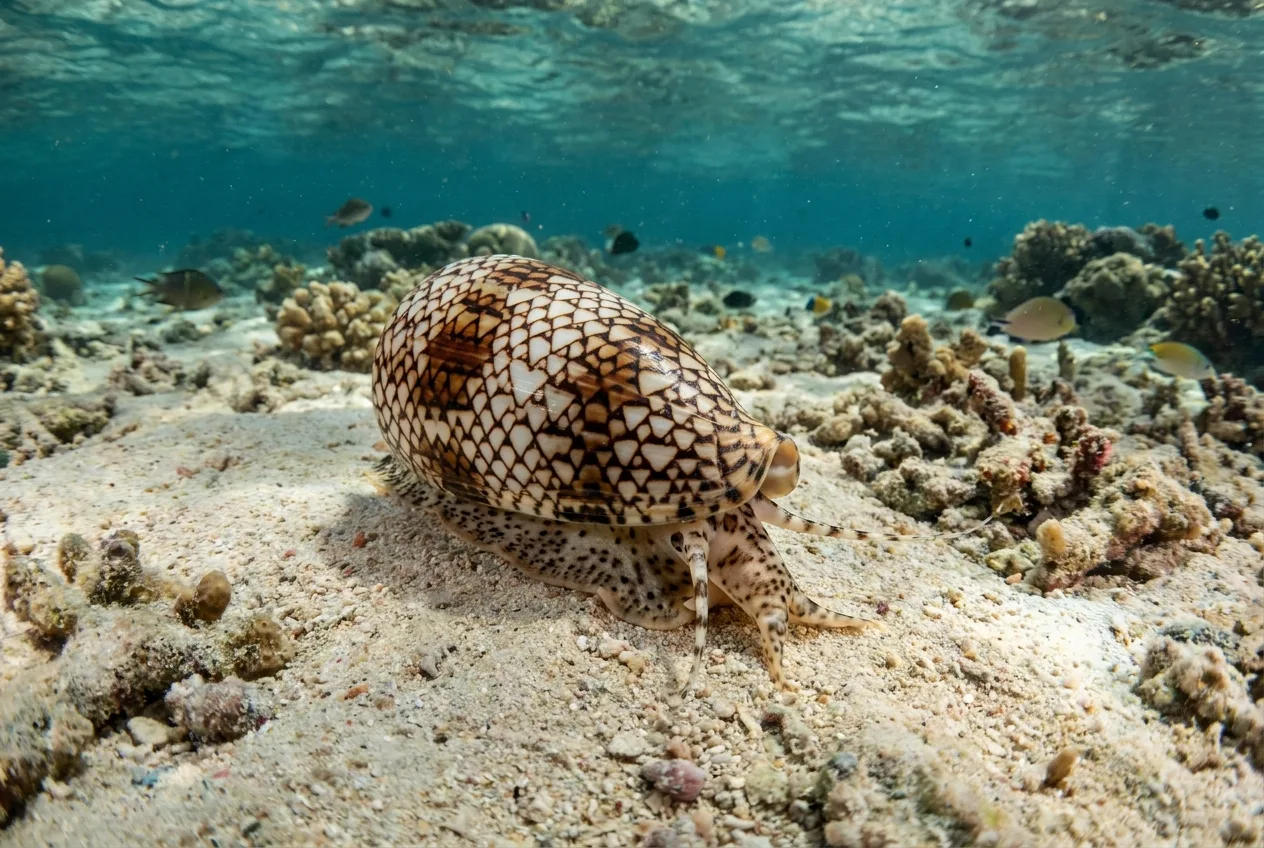
A cone shell can look harmless, but inside is a predatory snail. It fires a tiny harpoon carrying conotoxins, a complex mixture of toxins. The venom can paralyze muscles, including those used for breathing, and can be fatal.
There is no antivenom; treatment supports breathing until the toxins wear off. Never pick up a shell from the seabed that appears to contain a living animal. Its small size and attractive pattern do not make it safe to handle.
5. Sea Snakes: Leave an Open Route
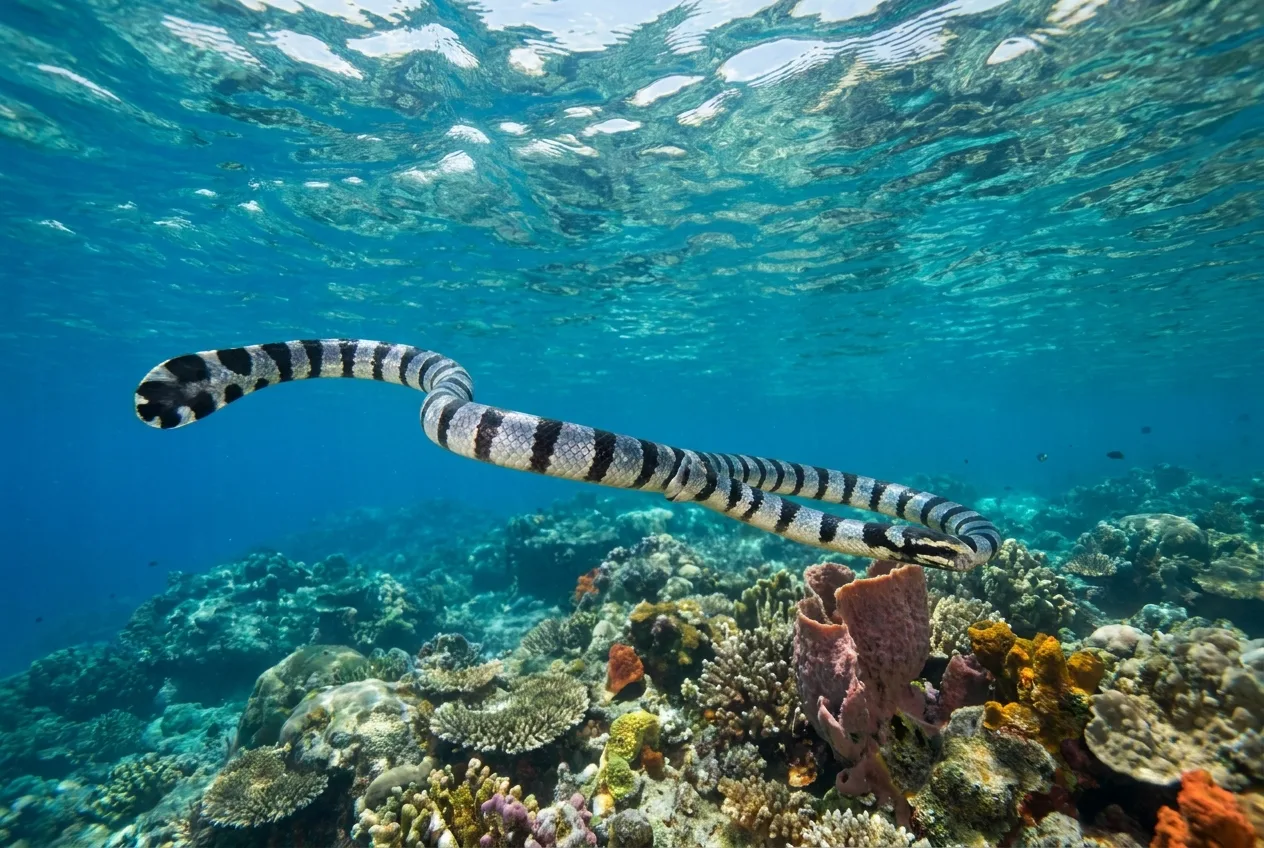
Sea snakes are reptiles adapted to life in water. Most are not aggressive toward people and prefer to move away, but their venom can be potent. Bites are rare and usually occur when fishers remove snakes from nets or a diver blocks access to a rock crevice.
They also need to surface to breathe. Never obstruct that route. Give the snake room to continue its movement and enjoy watching from a distance.
Keep Observation Separate from Handling
Recognizing dangerous marine animals helps you understand the encounter without crowding the animal. Hold your position, keep your hands clear and leave space for wildlife to move.
For first-aid guidance, use specialist resources such as DAN’s hazardous marine life reference. Continue learning on the 2DIVE diving blog, or contact 2DIVE about the articles.