

This dive mask guide explains how to check the seal, compare lens designs, and care for your mask without damaging its surfaces. Start with the way it sits on your face. A comfortable fit and a clear view let you pay attention to the reef instead of leaks, fogging, or pressure against your skin.
On this page
1. Put Dive Mask Fit Before Features
A dive mask can offer useful features and still be wrong for your face. The seal needs to feel comfortable all the way around. Look at fit before choosing between a low-volume design, an uninterrupted single lens, or a model that accepts prescription lenses.
Keep fit and lens care separate in your mind. A good seal helps with leaks; suitable preparation and anti-fog care address fogging. Tightening a strap is a common response to a poor seal, but it is not the starting point for checking fit. Begin without the strap so you can assess how the mask itself sits.
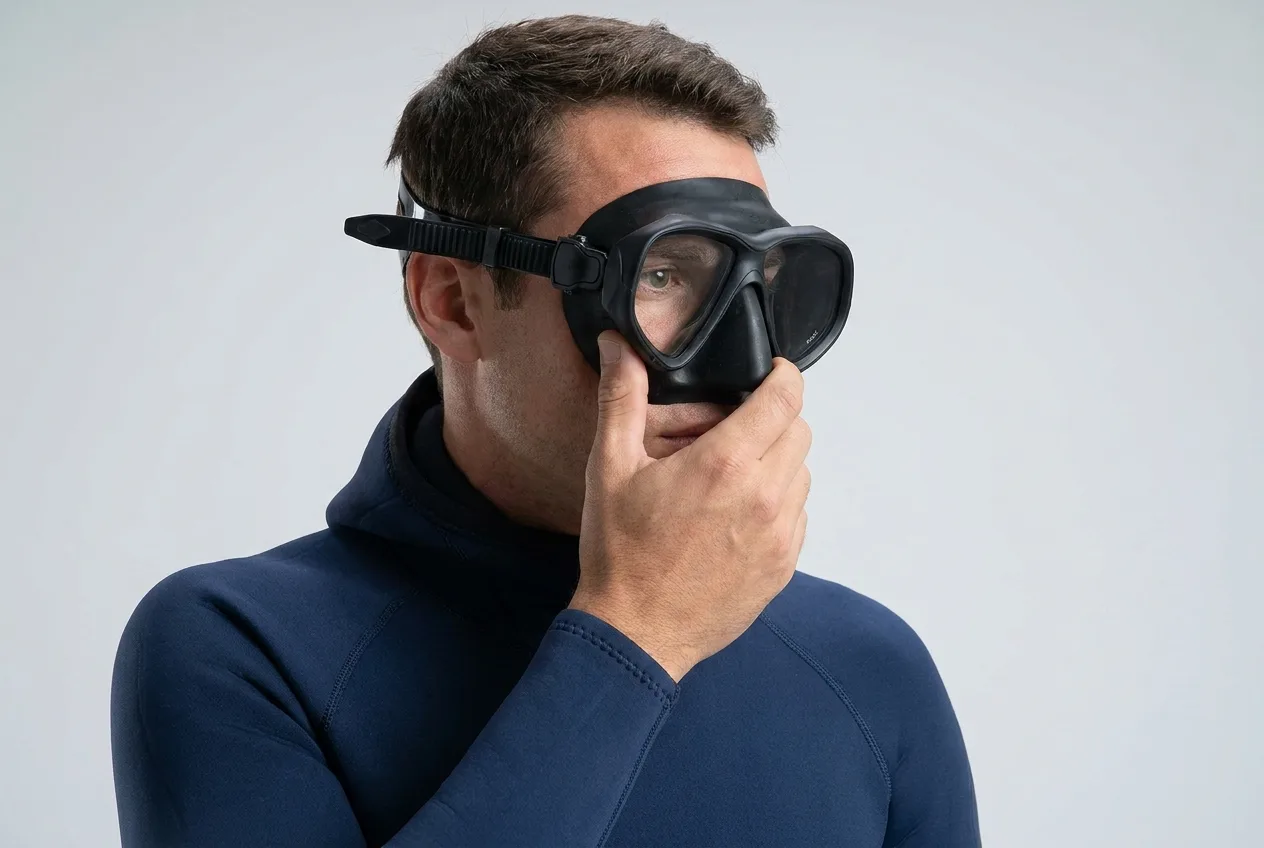
2. Test the Seal Without the Strap
Try this dive mask fit test on land. Work through it gently, then pay attention to the silicone skirt rather than judging the result only by whether the mask stays attached.
- Place the mask gently against your face without using the strap.
- Inhale lightly through your nose, pause your breath, and take your hands away.
- If the mask stays in place, treat that as a promising fit.
- Check the skirt at your upper lip, temples, and forehead. It should feel comfortable, with no gaps.
The word “promising” matters: staying in place is one part of the check. Comfort and contact around the skirt matter too. If you are choosing a gift for a scuba diver, remember why a dive mask is difficult to buy as a surprise: the person wearing it needs the right personal fit.
3. Compare Volume and Lens Options
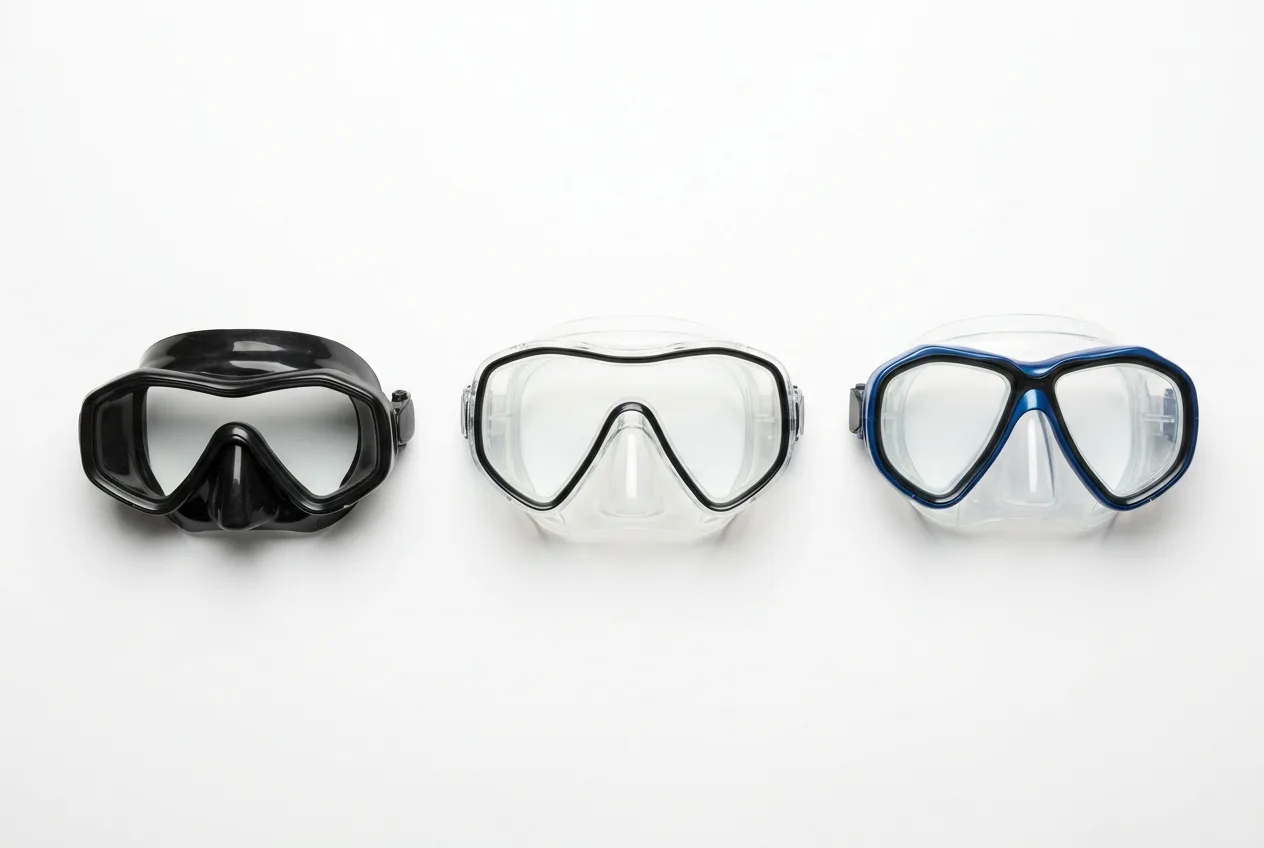
Once you have assessed the seal, compare what each dive mask design offers. These features answer different needs, so choose the ones relevant to your diving.
- Low-volume masks: These sit closer to your face, need less air to equalize, and are easier to clear of water. They are popular with freedivers and underwater photographers.
- Single-lens masks: An undivided lens gives you an uninterrupted view, with no frame across the center.
- Dual-lens masks: Some accept compatible prescription lenses. Check the specific model before choosing it for that reason.
For more on choosing a dive mask and comparing lens options, see PADI’s mask-selection guide. The useful question is what the design offers your eyes and face, alongside a comfortable seal.
4. Match Anti-Fog Care to the Lens
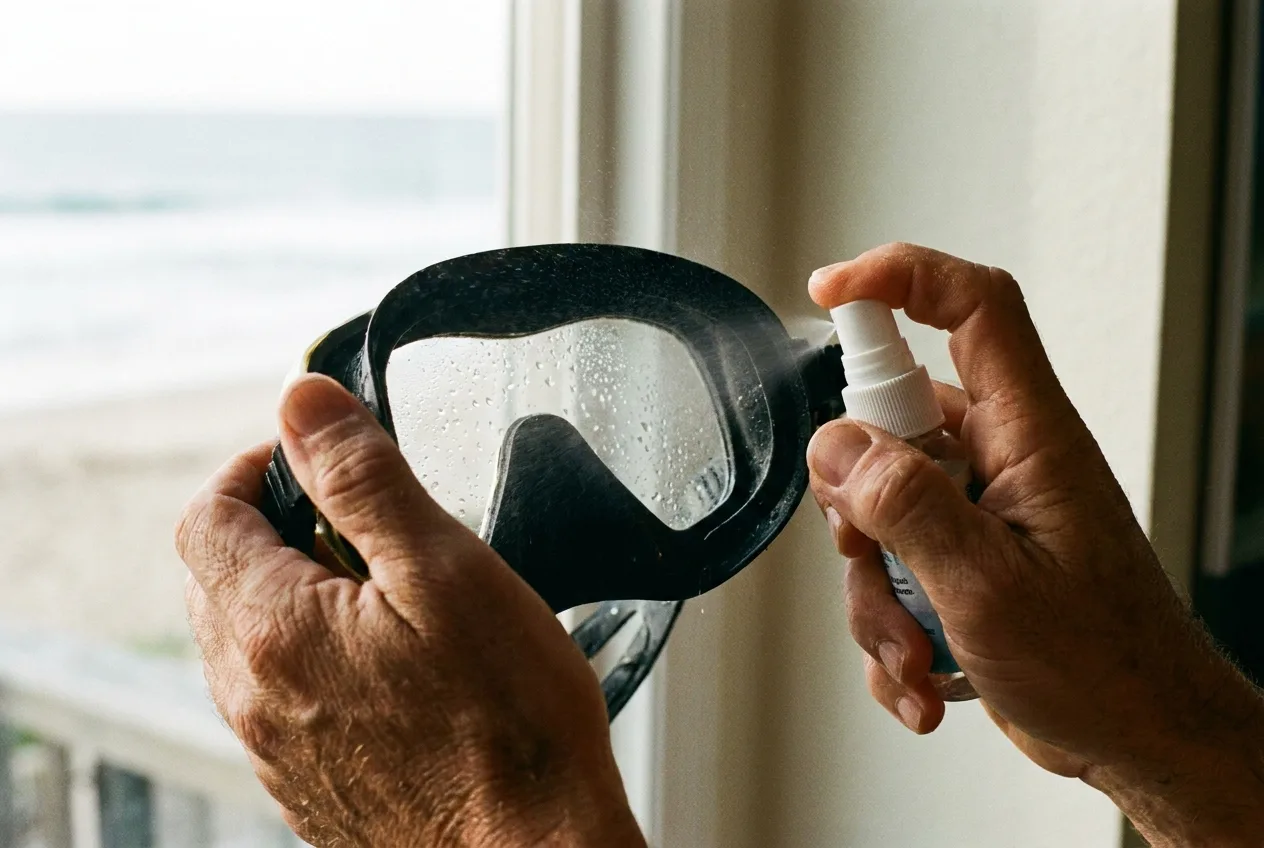
Follow the manufacturer’s preparation and anti-fog instructions for your dive mask. Coated lenses may need different treatment, so advice for another model may not apply to yours.
Do not use toothpaste, abrasives, or a flame unless the manufacturer explicitly permits that treatment for the model. Choose an anti-fog product compatible with both the lens and its coating. Check that compatibility before applying it: preventing fog is useful only if the treatment also respects the lens surface.
5. Rinse, Dry, and Protect Your Dive Mask
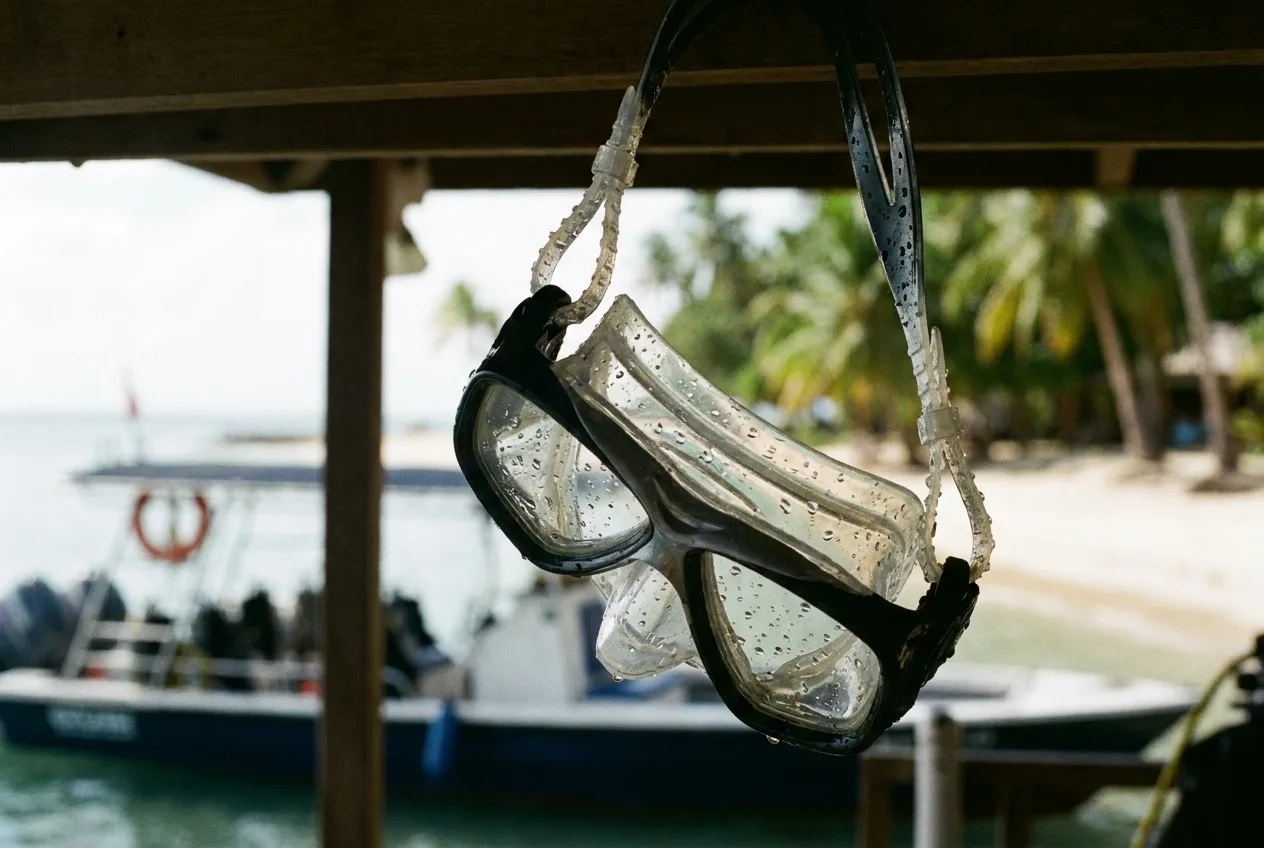
After each dive, rinse the mask thoroughly in fresh water and let it dry in the shade. Salt and sunlight can damage silicone and plastic. Store it in its original case to protect the lens from scratches, and check the strap and buckles regularly for wear.
Make those tasks part of your wider dive-trip preparation. Choosing a comfortable mask is the first decision; keeping its lens, skirt, strap, and buckles in good condition is the continuing job.
More reading: diving guides and stories. For questions about the 2DIVE shop, contact customer support.