
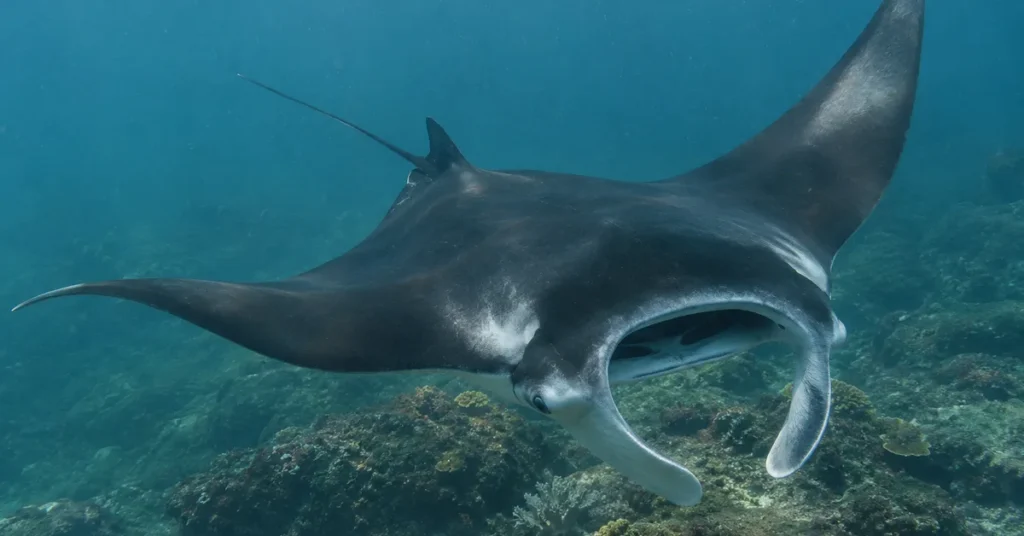
Plan manta ray diving at Nusa Penida with a clearer understanding of what happens at Manta Bay and Manta Point. A study published in May 2019 examined how reef manta rays use these two sites within the Nusa Penida Marine Protected Area in Indonesia. Nearby sites can serve different roles in the animals’ lives, which changes the context of a possible encounter.1
On this page
The researchers found that Manta Bay is used mainly as a foraging ground, particularly by juvenile mantas, and may also serve as a nursery.1 Manta Point, by contrast, is used primarily for cleaning and courtship, making it a social and reproductive site.1
Manta ray diving: understand the site before the trip
The study is not a travel guide, and it does not guarantee a manta encounter on any particular holiday.1 It describes patterns observed during the study period, showing that different mantas used the sites in different ways while displaying high fidelity to each location.1
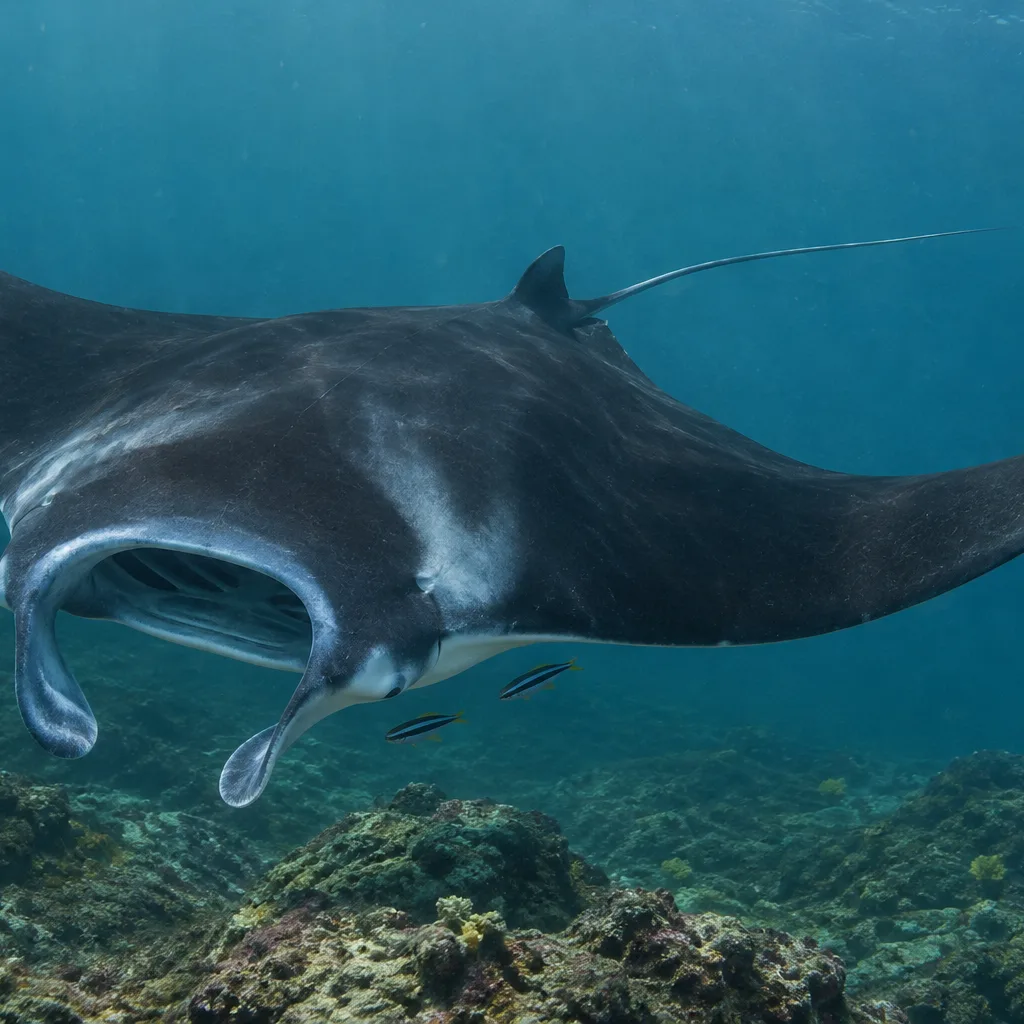
For manta ray diving, ask what the animals use the site for, as well as whether they are likely to be there.1 Choosing between Manta Bay and Manta Point is not simply choosing between two points on a map: according to the research, it may mean choosing between a feeding area used by juveniles and a site where adults mainly gather for cleaning and courtship.1
The researchers also recorded movement between the locations: some identified mantas traveled between both sites, even though each displayed a distinct pattern of use.1 The distinction should therefore be understood as a dominant pattern within the studied population, not an absolute boundary.1
Manta Bay and Manta Point serve different roles
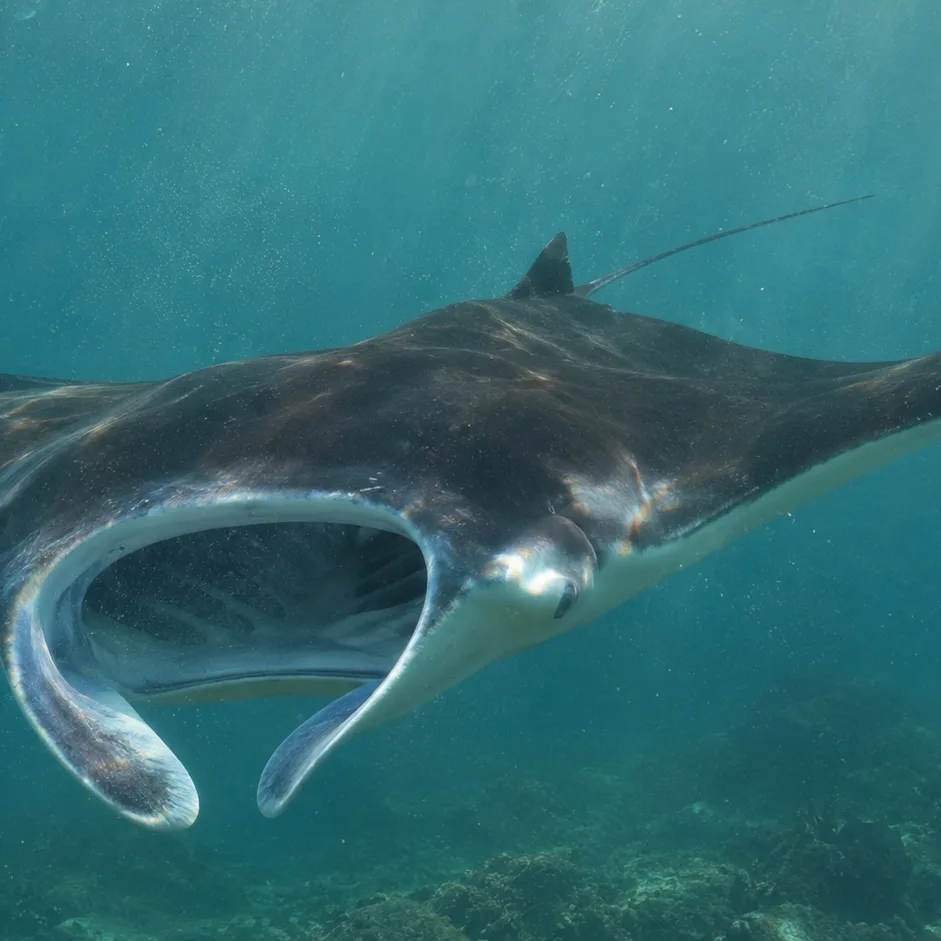
Activity at Manta Bay was associated mainly with foraging, and juveniles were especially prominent there.1 The researchers suggested that the location could also function as a nursery, but presented this as a possibility rather than a final conclusion.1
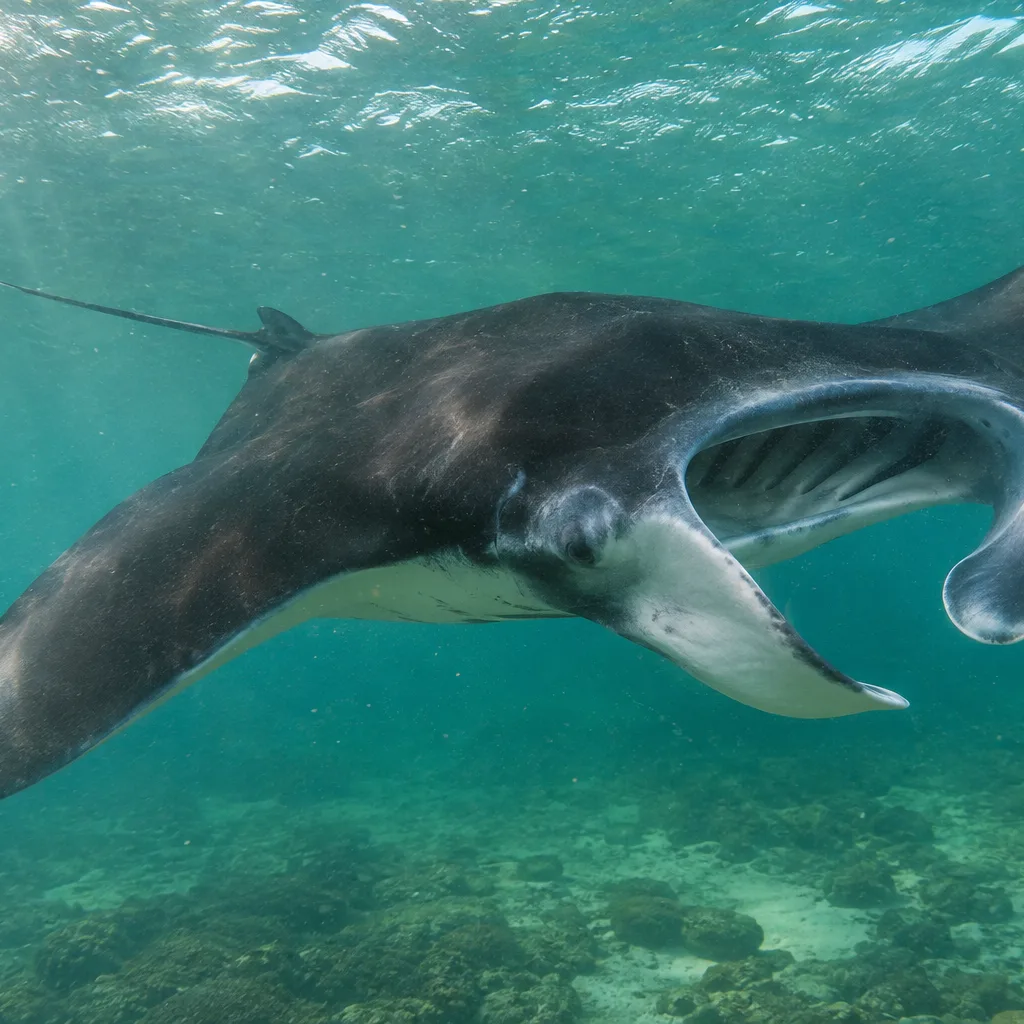
Few immature individuals were observed at Manta Point, while mature females formed a notable part of the local community and were sighted frequently.1 Behaviours recorded there were linked primarily to cleaning and courtship, leading the researchers to describe it as a social and reproductive site.1
This difference gives divers useful context for what they may see underwater.1 A manta moving through a feeding ground is not using the habitat for the same purpose as one visiting a cleaning station or engaging in courtship, and the research stresses that tourism management should account for these differences.1
Turn the research into useful booking questions
When researching a destination, divers can ask which site is being offered and what is known about its role for manta rays.1 The study supports asking specific questions about Manta Bay and Manta Point rather than treating the entire area as one uniform manta encounter site.1
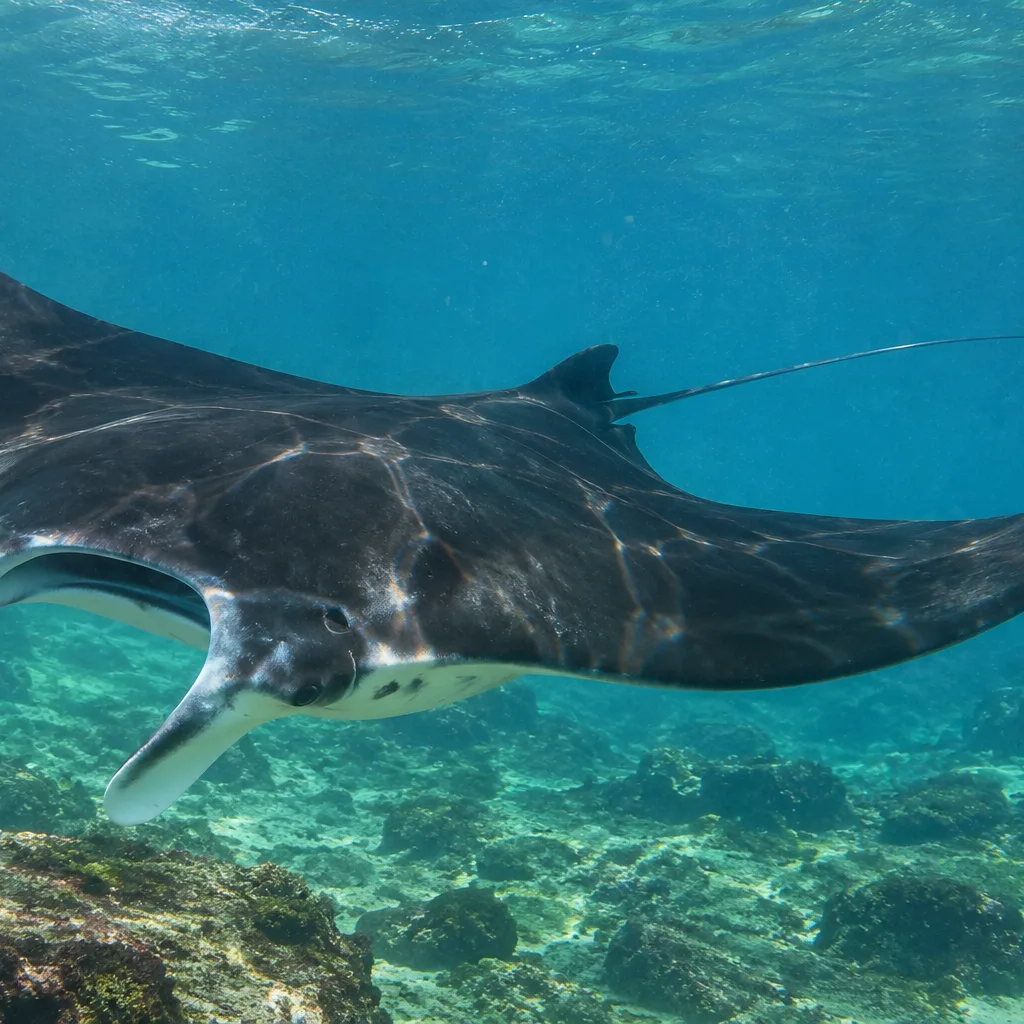
It is equally important to distinguish a research pattern from a tourism promise.1 Discovery curves showed that additional individuals continued to be identified throughout the study years, describing a dynamic population rather than a fixed list of mantas that could be predicted in advance.1
Annual sightings peaked in May during the study, coinciding with reproductive activity.1 This is a finding from the research period, not a guarantee that visiting in a particular month will produce a sighting or a specific behavior.1
Protection needs management at each site
One conclusion of the research is that declaring a marine protected area does not, by itself, guarantee that a species’ needs are protected.1 Achieving conservation goals requires understanding how animals use each habitat and managing tourism and other threats to reduce disruption to their biology and behavior.1
The researchers proposed considering limits on boat numbers and interactions with mantas, especially during important reproductive periods.1 They also recommended strict enforcement of fishing restrictions after fishing-gear entanglement was identified as a threat to the studied population.1
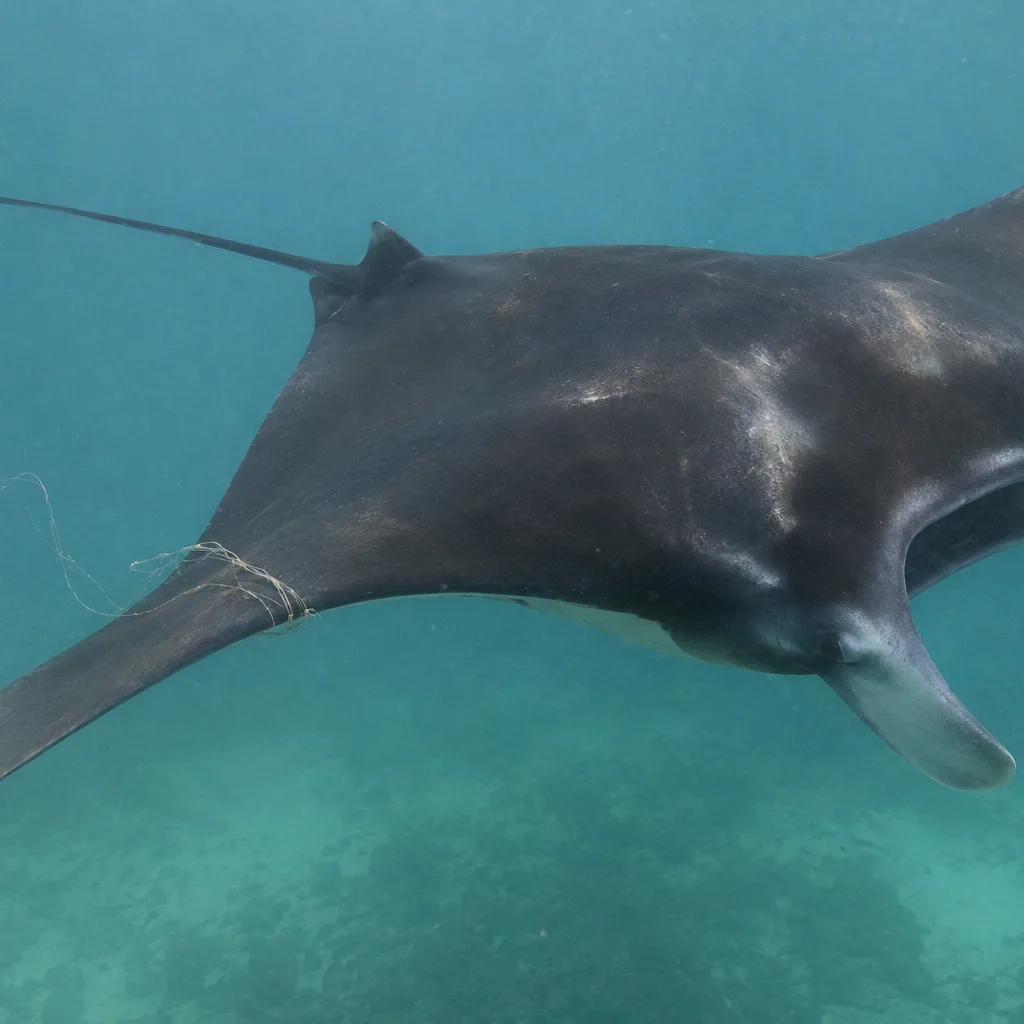
From a diver’s perspective, a destination’s quality is not measured solely by the chance of seeing a manta ray.1 Management that accounts for feeding, cleaning, courtship, and reproduction helps the area continue supporting the population over time.1
Plan manta ray diving around the animals’ needs
The research explains why these habitats matter, but it does not set approach distances, water-entry procedures or movement rules for a dive.1 Its contribution to responsible encounters lies in showing the sites’ potential sensitivity to disturbance and recommending management of boat numbers and interactions, particularly during reproductive periods.1
On a diving holiday in such an area, questions about how encounters are managed matter as much as questions about the likelihood of seeing mantas.1 The findings support treating Manta Bay as a feeding ground and Manta Point as a cleaning, courtship, and reproductive site rather than regarding them as interchangeable stops on a holiday.1
Frequently asked questions
Do Manta Bay and Manta Point serve the same purpose for manta rays? 1
Not according to the main pattern identified by the study.1 Manta Bay was used mainly for foraging, especially by juvenile mantas, whereas Manta Point was used primarily for cleaning and courtship by adult mantas.1
Does the research guarantee a manta encounter in a particular month? 1
No.1 The study reported that peak annual sightings and reproductive activity coincided in May during the research period, but it does not guarantee a sighting during any particular holiday.1
What is the main lesson for divers planning a trip to Nusa Penida? 1
Divers can assess each site according to its role in the mantas’ lives and ask how boats and interactions are managed there.1 The research shows that two nearby sites can support the same population in different ways, so responsible planning begins with understanding that distinction.1