
Neutral buoyancy becomes easier to troubleshoot when you separate weighting, body position and BCD use. These five checks and practice points explain why you may sink, rise or struggle to descend, and how the source guidance approaches each problem.
On this page
Neutral buoyancy: where to start
Neutral buoyancy starts before you descend. Correct weighting, a relaxed body position and patient use of your buoyancy control device (BCD) lay the groundwork for better control underwater.12
Start by noticing the problem: difficulty leaving the surface, a rapid descent, or repeated movement up and down. Weighting, trim and BCD adjustments can each be involved. Separating those possibilities gives you a clearer starting point than treating every depth change as a need for more air in the BCD.12
1. Check your weight and keep reserve gas intact
For the initial check, float upright and still in water too deep to stand in. Wear all your equipment, empty your BCD and breathe normally. With the right weighting, you should float around eye level and begin to sink slowly as you exhale.1

The source says the most accurate check uses an empty or nearly empty tank. If you check at the start of a dive with a full tank, account for it becoming lighter as you use the gas. Check again at the end of the dive with your reserve gas still available, rather than emptying the tank.1
2. Recognize the signs of too much weight
Carrying extra weight does not make you safer. It can cause a rapid descent and leave you repeatedly adding and venting air to hold your depth.1

The source lists common signs of excess weight: sinking like a stone, constantly moving up and down, repeatedly adjusting the BCD and sometimes holding your breath to stay off the bottom.1
3. Check why you cannot descend
Difficulty descending does not always mean you need more weight. Rapid breathing, hand movements and unnecessary fin kicks can also keep you at the surface.1
According to the source, if your BCD is empty and your breathing is calm but you still find yourself swimming head down and feet up to descend, you may be carrying too little weight.1
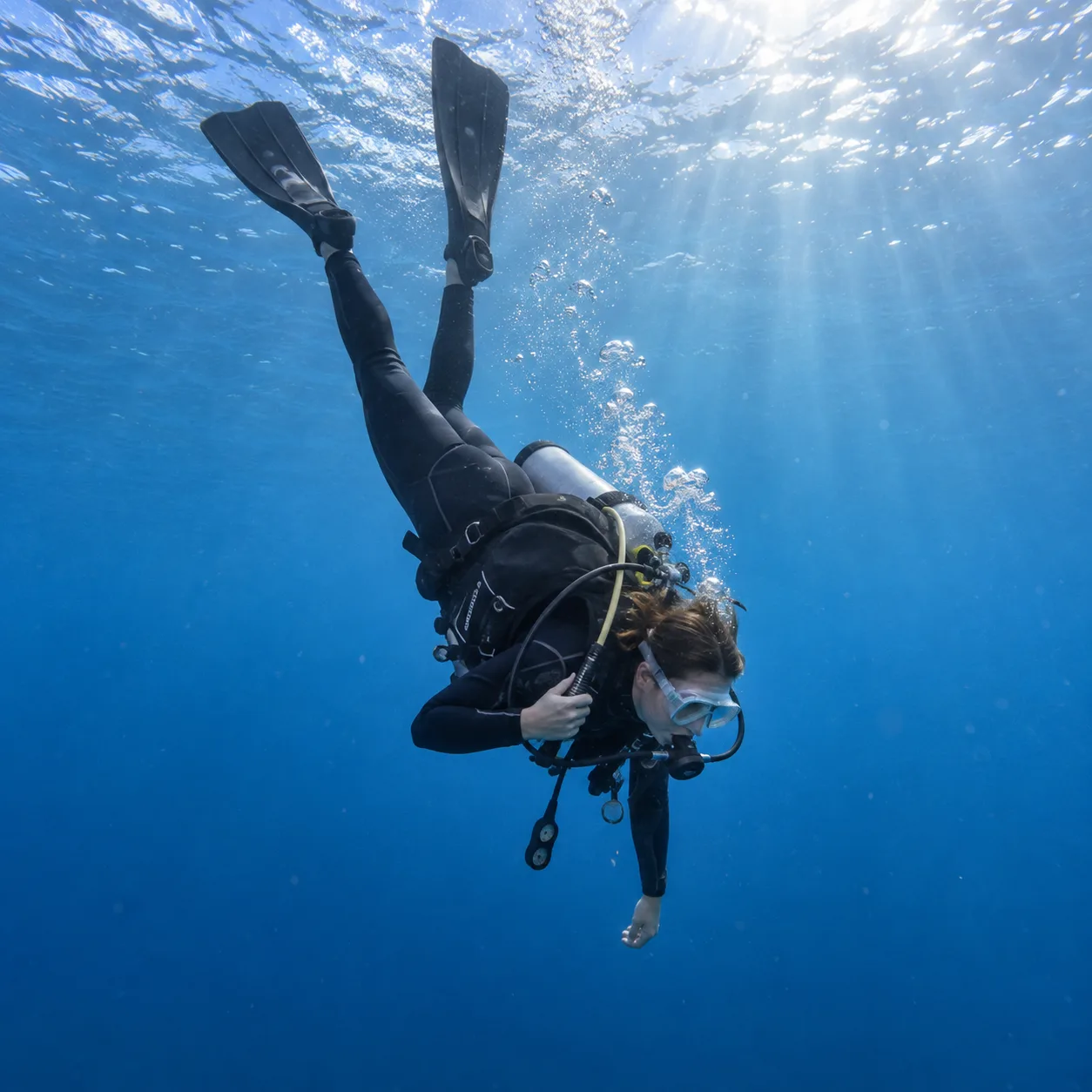
4. Use horizontal trim for efficient swimming
A horizontal, streamlined position makes swimming more efficient, uses less energy and helps you maintain a steadier depth as you move.1
When your feet point down, each fin kick can push you upward. The air in your BCD then expands, increasing your positive buoyancy.1
5. Practice skills while holding depth
According to PADI Pros, skills should be taught in the buoyancy state appropriate to their use. Underwater, that usually means neutral buoyancy in a diving position, rather than kneeling by default.3

The source adds that even new students can begin working toward neutral buoyancy and a diving position, provided the instructor remains in control and adapts the practice to the environment and the divers’ abilities.3
Put the checks together
Check your weighting at the start of a dive trip, after changing equipment or tanks, or when switching between fresh and salt water. At the end of the dive, confirm that you can stay neutrally buoyant with a nearly empty tank and your gas reserve intact.1
During the dive, make one small BCD adjustment and wait a few seconds to feel its effect. Adjust again only if needed.2
Maintain horizontal trim, use your fins to move forward rather than correct your depth, and let your breathing and small BCD adjustments work together instead of fighting the water.12
For the wider set of habits that go with depth control, see our guide to essential scuba diving skills, including buddy checks and communication.