This underwater white balance guide shows you how to use a white reference for more natural color, when to take a new reading, and when to switch to strobes. If a red fish looks blue-gray on your screen, start by considering the light reaching your subject and the way your camera interprets it.
On this page
Why Underwater White Balance Changes with Depth
Water acts as a color filter. Warm colors such as red and orange are absorbed first as you descend. By 5 meters, much of the red has disappeared; at 10 meters, orange and yellow begin to fade too. Blue and green dominate the scene, and a camera can record a blue cast that your eyes barely notice.
White balance tells the camera what should look white in the available light. That reference helps it render the other colors more naturally. The starting point is the light at your present depth, which is why a useful setting near the surface may need changing farther down.
In shallow water, down to about 15 meters, custom white balance can help you capture natural colors without flash. Most modern cameras support it. The process gives the camera a reference instead of leaving it to interpret the scene on its own.
Set Custom White Balance in 4 Steps
Use these steps when you are photographing with natural light. Keep the white surface well lit, and remember that the reading belongs to those lighting conditions.
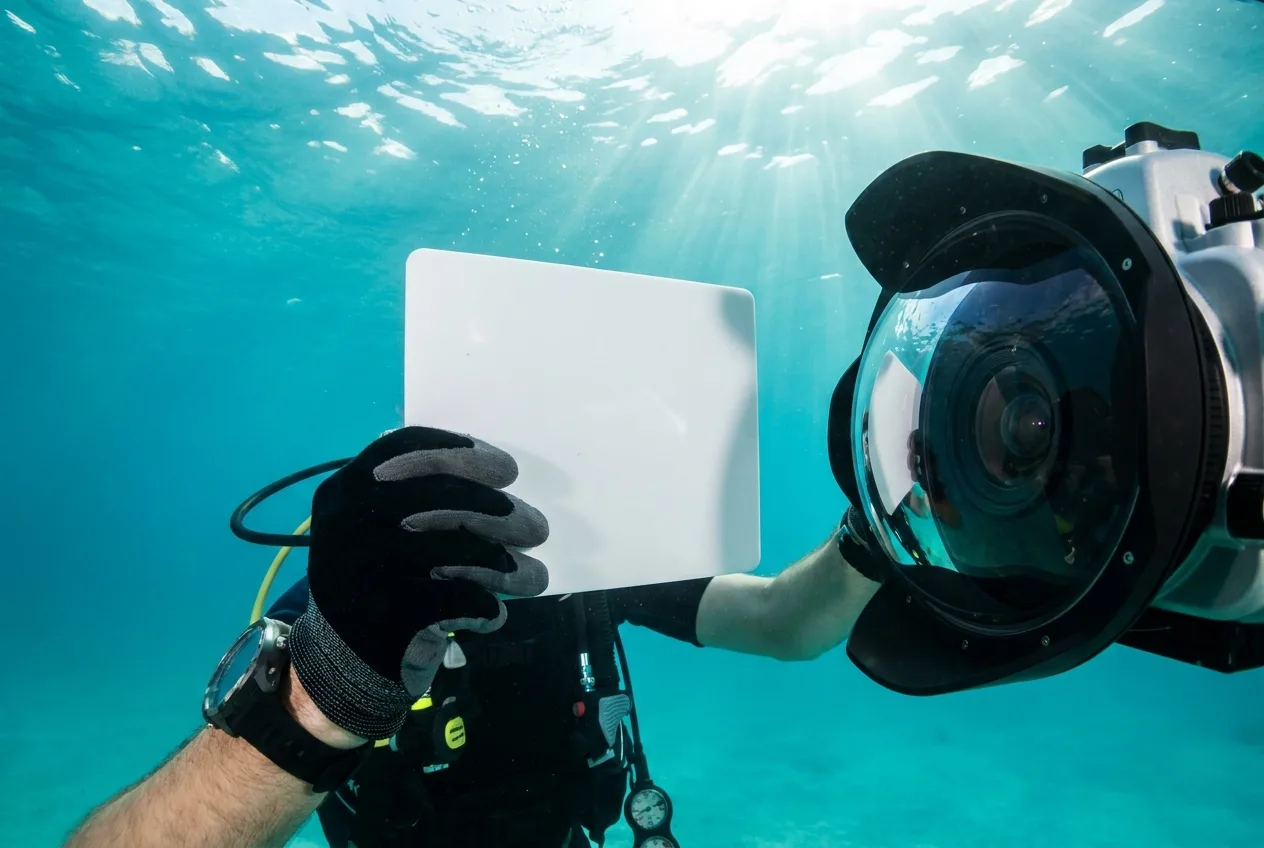
- Choose a white reference. Bring a small dive slate or white plastic sheet. The aim is to give the camera a neutral white surface from which to take its reading.
- Fill most of the frame. Point the camera at the reference and make sure natural sunlight lights it. Give the camera the white surface to read, rather than a frame dominated by the surrounding blue water.
- Select the custom setting. Find Custom White Balance in the camera menu and take a reading. The camera records the white surface and uses it as its reference for the available light.
- Reset after a depth change. If you ascend or descend several meters, take another reading. The light changes with depth, so your reference needs to reflect where you are now.
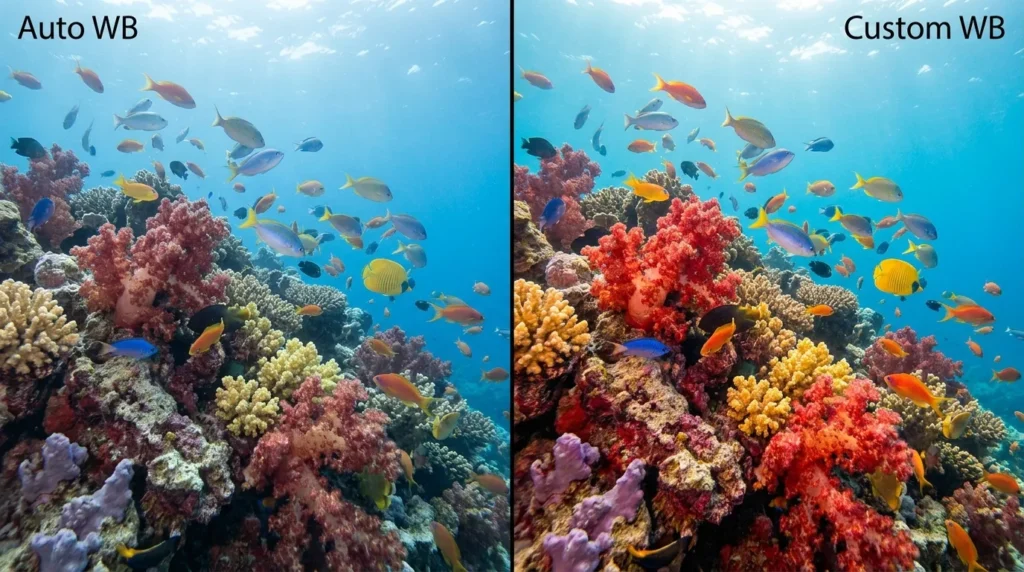
Custom white balance can produce brighter, more natural color, closer to daylight. For a fuller explanation of the technique, read the Underwater Photography Guide’s white-balance article.
See the Difference in a Coral Hind
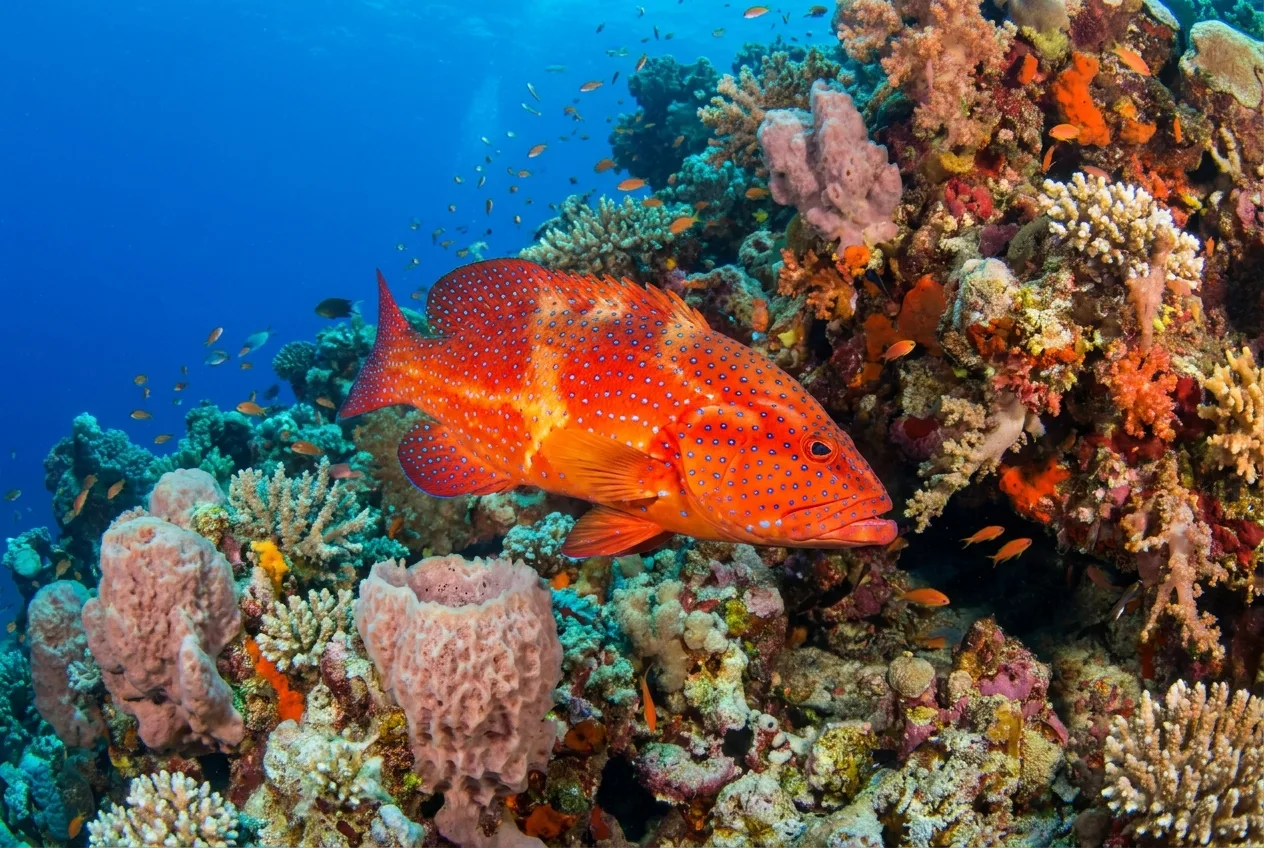
A coral hind, Cephalopholis miniata, offers a useful reef example. This colorful Red Sea fish can look dull and brown without suitable white balance. With careful adjustment, its reds and oranges become more apparent. It is a concrete way to see what a color adjustment changes in the photograph.
The coral hind and cleaner wrasse photograph is available among the underwater canvas prints if you would like to live with those reef colors at home.
Choose Between Natural Light and Strobes
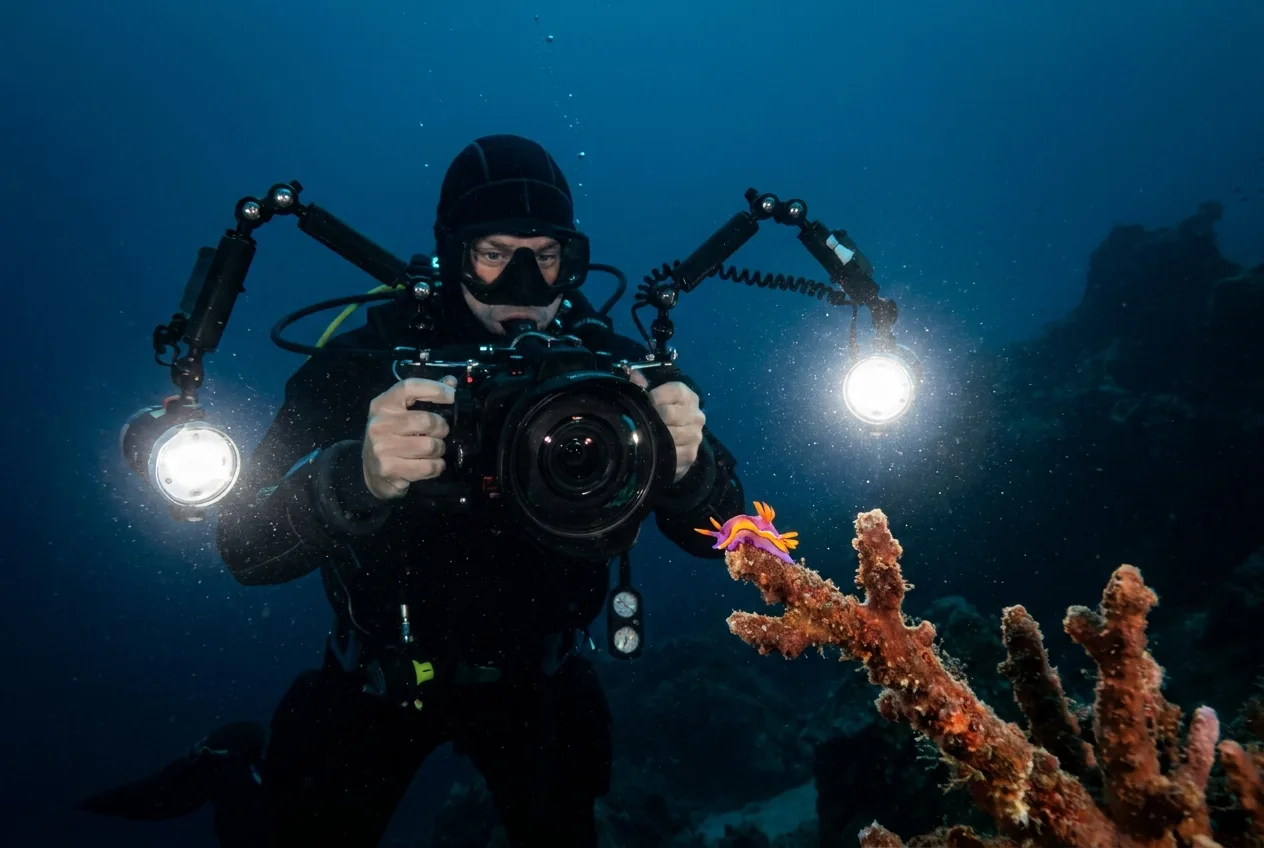
Custom white balance works with the natural light available. Deeper underwater, or with small subjects photographed up close, sunlight may not provide the light you need. External flashes, known as strobes, light the subject with a full spectrum that includes reds and yellows.
That changes the choice of setting. When using strobes, select automatic white balance, or AWB, or the flash preset. A custom white balance reading for natural light is no longer needed for the strobe light.
- Natural-light photograph: Take a white-reference reading and repeat it when your depth changes.
- Strobe-lit subject: Use AWB or the flash preset and let the strobes provide the color.
Underwater white balance is therefore a choice tied to the light you use. Begin with that distinction, then choose the setting. You can find more photography reading on the diving blog, or send questions through customer support.