
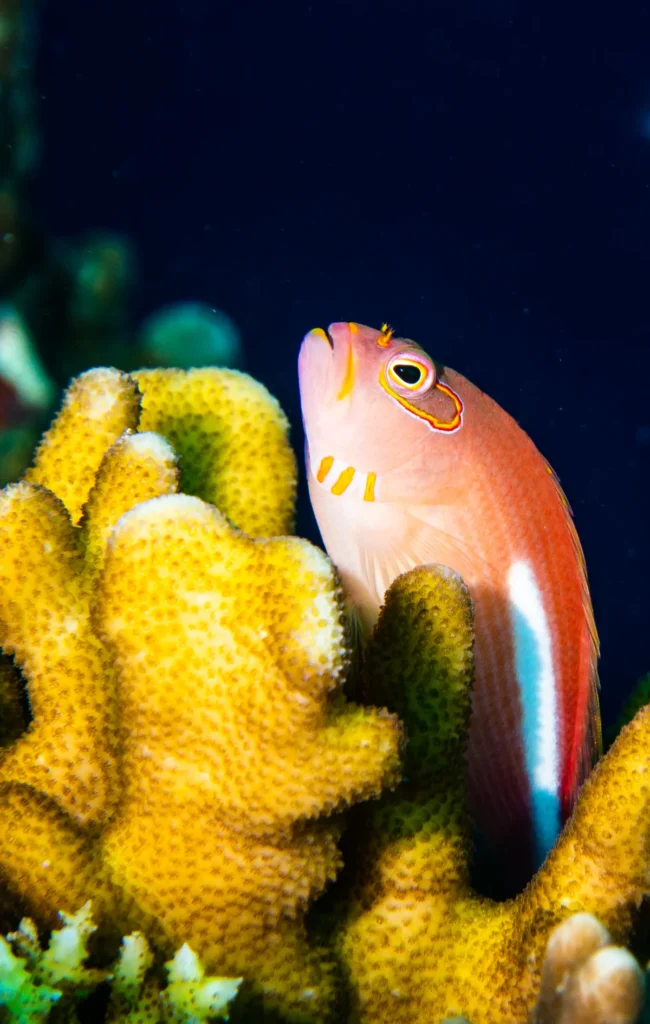
Our Palau diving story follows seven memorable stops from our 2019 trip, from the blue light of Blue Holes to the golden jellyfish of Jellyfish Lake. We traveled across the Pacific for reef walls, wrecks, and caves, then spent our final day on land. These are the places, people, and moments we brought home.
On this page
The Long Journey to Palau
Some places stay with you from the first photograph. Palau was that place for us: a blue-green dot in the Pacific Ocean that seemed almost as distant as the moon. We kept thinking we would go one day. In 2019, we finally made the journey.
Getting there took almost a full day, around 24 hours of flights, transfers, security checks, airline meals, and attempts to sleep in awkward positions. Our route went through Moscow. We spent several hours in a vast airport filled with travelers and the scents of tea and alcohol, before continuing over what felt like an endless sea.
Those details belong to that trip. The routes, services, site access, and conditions described here reflect our 2019 visit. In 2020, the pandemic closed borders and grounded planes. Later, the war between Russia and Ukraine changed travel through Moscow. Looking back, part of the memory is how ordinary such a long journey felt before those changes.
We arrived before dawn at Palau’s small airport. First came the heavy humidity, then the smell of salt. After so many hours in transit, that was the moment our vacation began.
Wild Dive planned and supported the trip, arranging boat days and local dive-center connections. That support helped turn a distant idea into days on the water.
Small Islands in a Vast Ocean
Palau is an archipelago of more than 300 islands between the Philippines and Guam. Forest-covered rock islands rise from turquoise water. Below them, coral reefs and visibility stretching tens of meters made the seascape as compelling as the photographs that first drew us there.
On land, traffic drives on the right, while many cars are secondhand Japanese imports with right-hand steering. That took some getting used to. Soon the roads themselves held our attention: narrow strips of pavement stretching over the water between green islands.
We met the team at Fish and Fins on our first day. The dive center was well organized, the equipment was excellent, and the welcome felt personal. We also thought they made the best coffee on the islands. It was a small pleasure we remembered alongside the dives.
Our base was Palau Hotel in central Koror. Clean, comfortable rooms, friendly staff, and tropical views made it an inviting place to rest and think about the next day.
Our Palau Diving Days: Lagoon and Outer Reef
The water during our Palau diving trip was around 28 to 30 degrees, and visibility on good days reached beyond 25 meters. Inside the lagoon, we found gentle dives with crevices, small fish, and marine plants. The outer reefs brought walls, stronger currents, and encounters with sharks, tuna, and manta rays.
Those differences gave the trip its rhythm. A quiet wreck dive and a current-swept reef wall offered different subjects and different demands. If you are thinking about how to organize days on the water, our guide to choosing a liveaboard itinerary offers related reading.
Entering caves or wreck interiors requires appropriate overhead training, equipment, and gas planning. The sites below are part of our travel account; their appearance in the story is not a substitute for that preparation.
Blue Holes: Sunlight Through the Reef
We began early at Blue Holes, descending through four small openings in the reef into a vast cavern. Sunlight entered through the openings and formed blue beams across the vaulted space. The scale of the cavern and that light remain among my clearest memories of Palau.
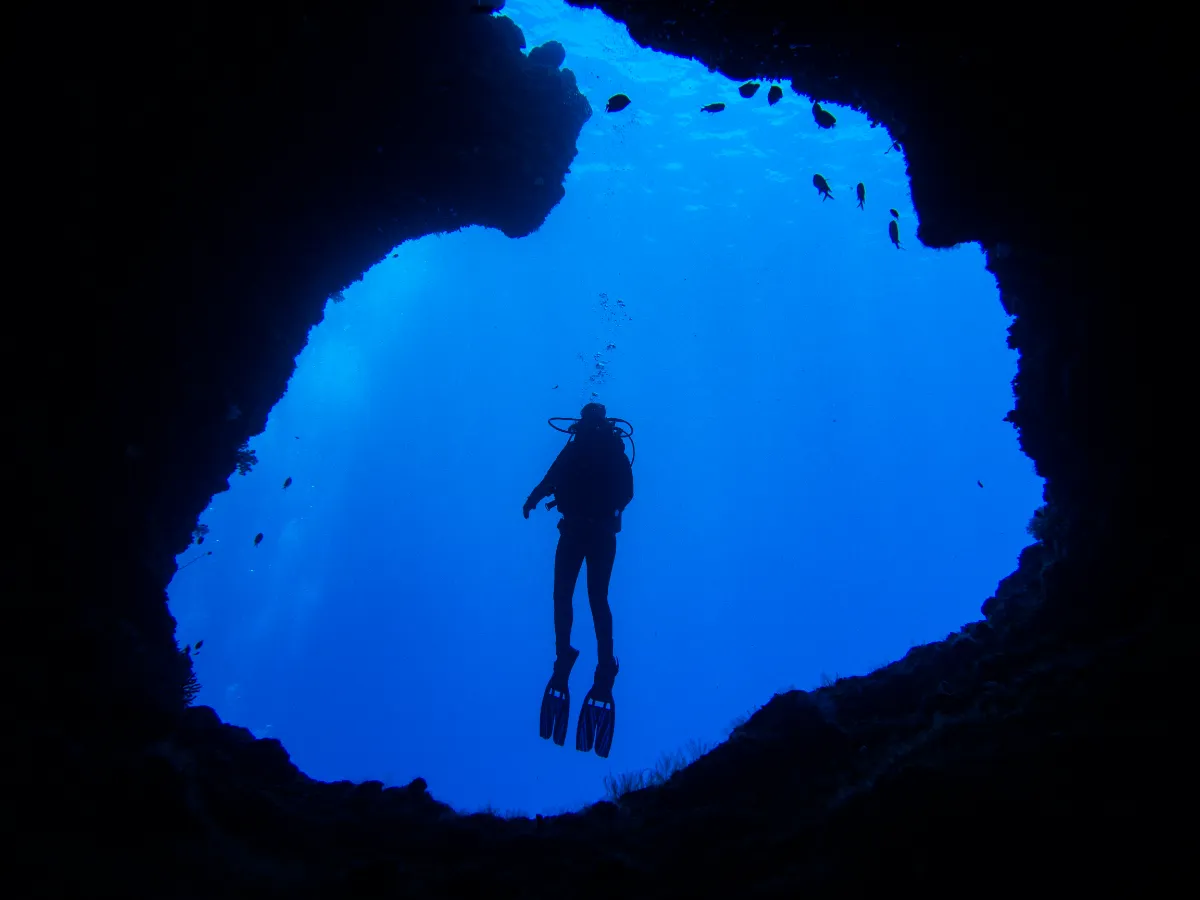
From the exit, we reached the outer wall, which leads toward Blue Corner when the current is right. The aerial view helps explain the openings we had passed through: small entrances above a much larger underwater space.
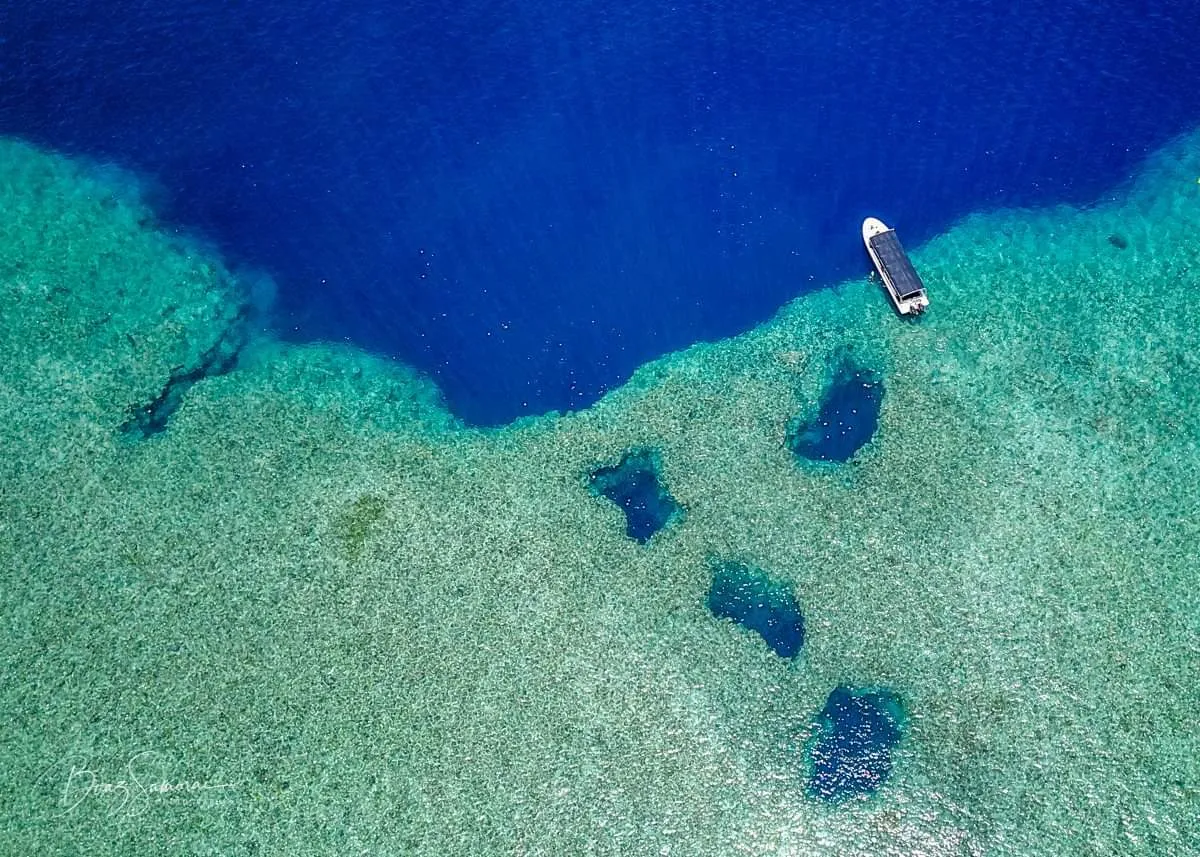
Blue Holes from the air. Drone photograph by Boaz Samorai.
Blue Corner: Current and Big Fish
At Blue Corner, we entered along the outer wall and used a reef hook to hold position in the strong current. That describes our visit; divers should follow site rules and avoid contact with living coral.
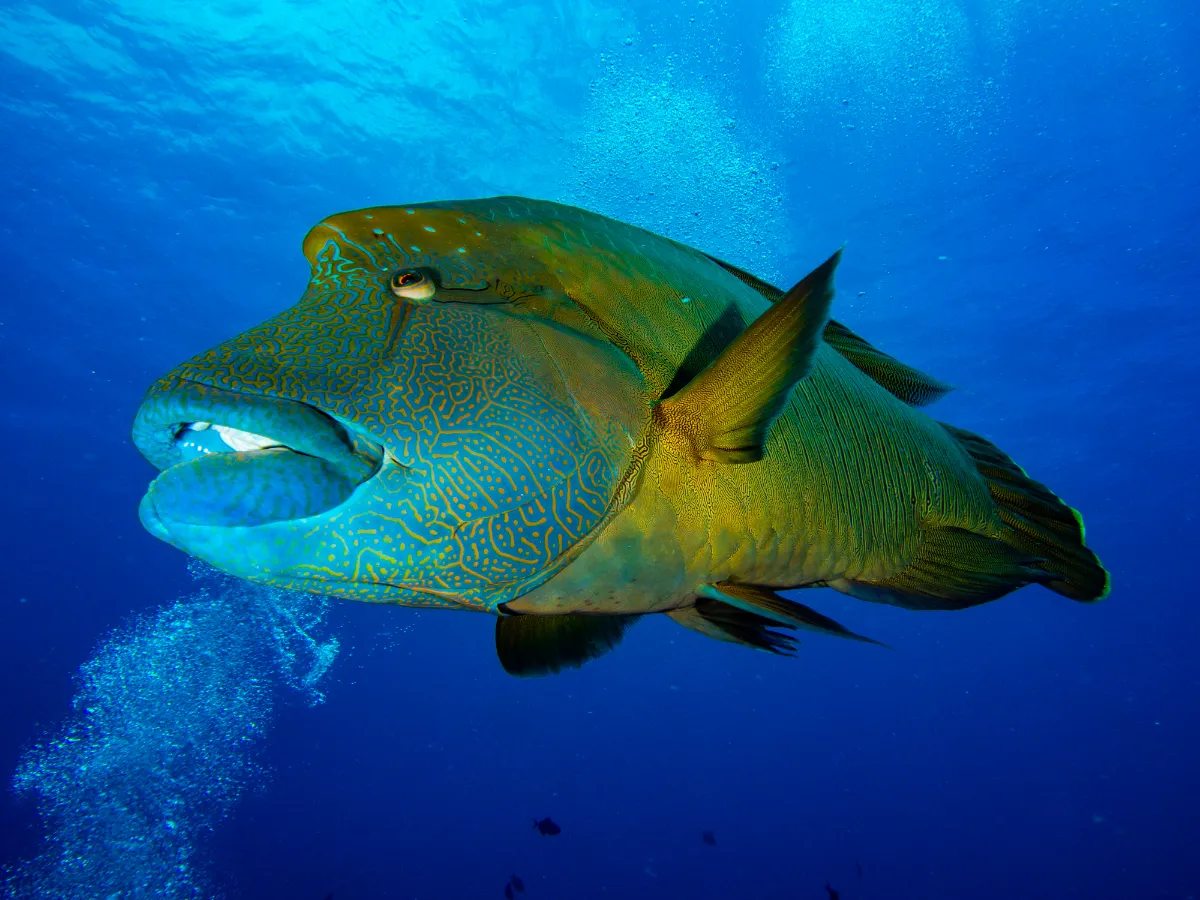
Gray reef sharks, barracuda, and curious Napoleon wrasse moved around us. After the blue light inside the cavern, this was a different scene: open water, current, and large fish in motion. It felt like standing inside a wildlife documentary, with the ocean setting the pace.
Helmet Wreck: A Night Dive in Malakal Bay
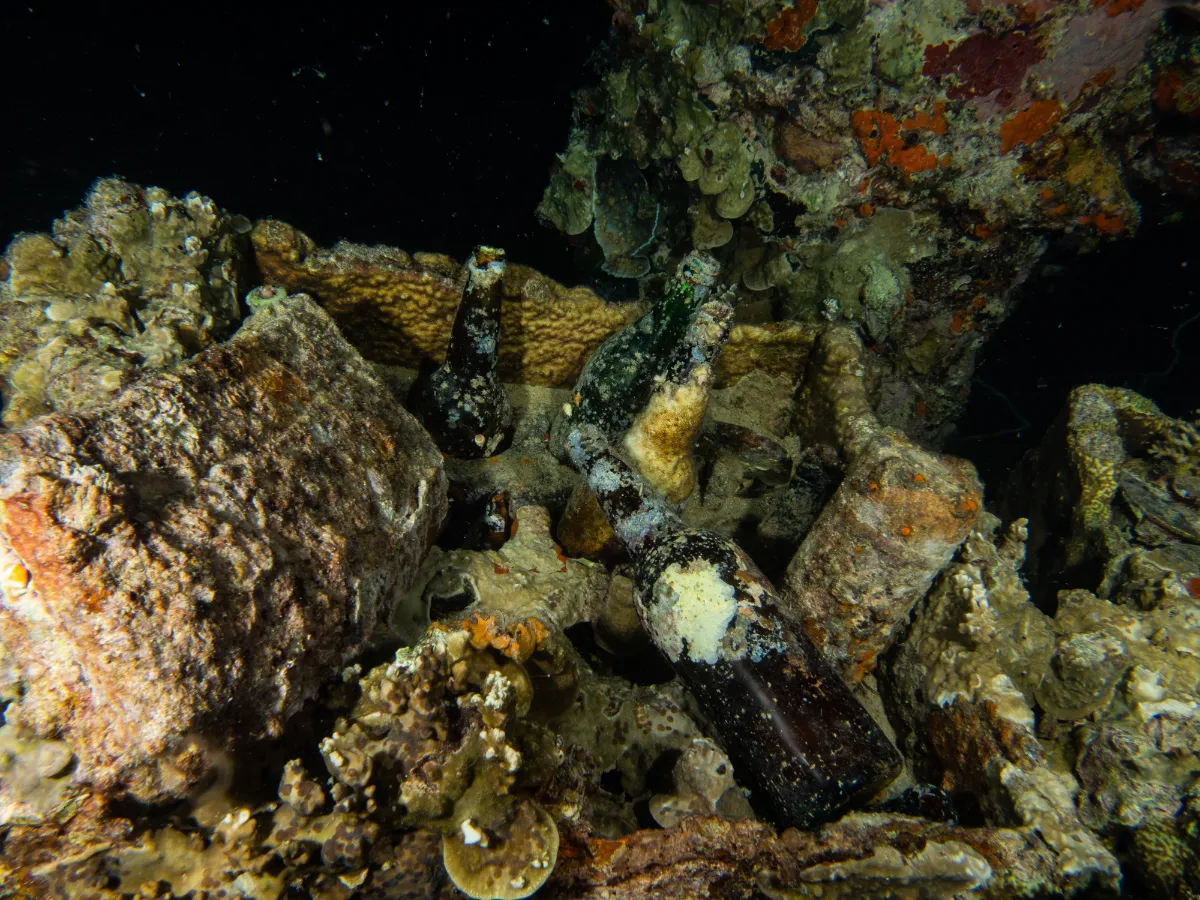
At night, we descended to Helmet Wreck, a small ship in Malakal Bay at about 28 meters. Our dive lights revealed helmets on the deck, open ammunition boxes, and rusting nets. Each beam picked out a different detail against the darkness.
The photograph of old glass bottles covered in coral holds another part of that scene. The reef encounters had drawn our attention outward; here, the details of the wreck held it close. This became one of the trip’s most memorable dives.
Jake Seaplane: A Quiet Daytime Wreck
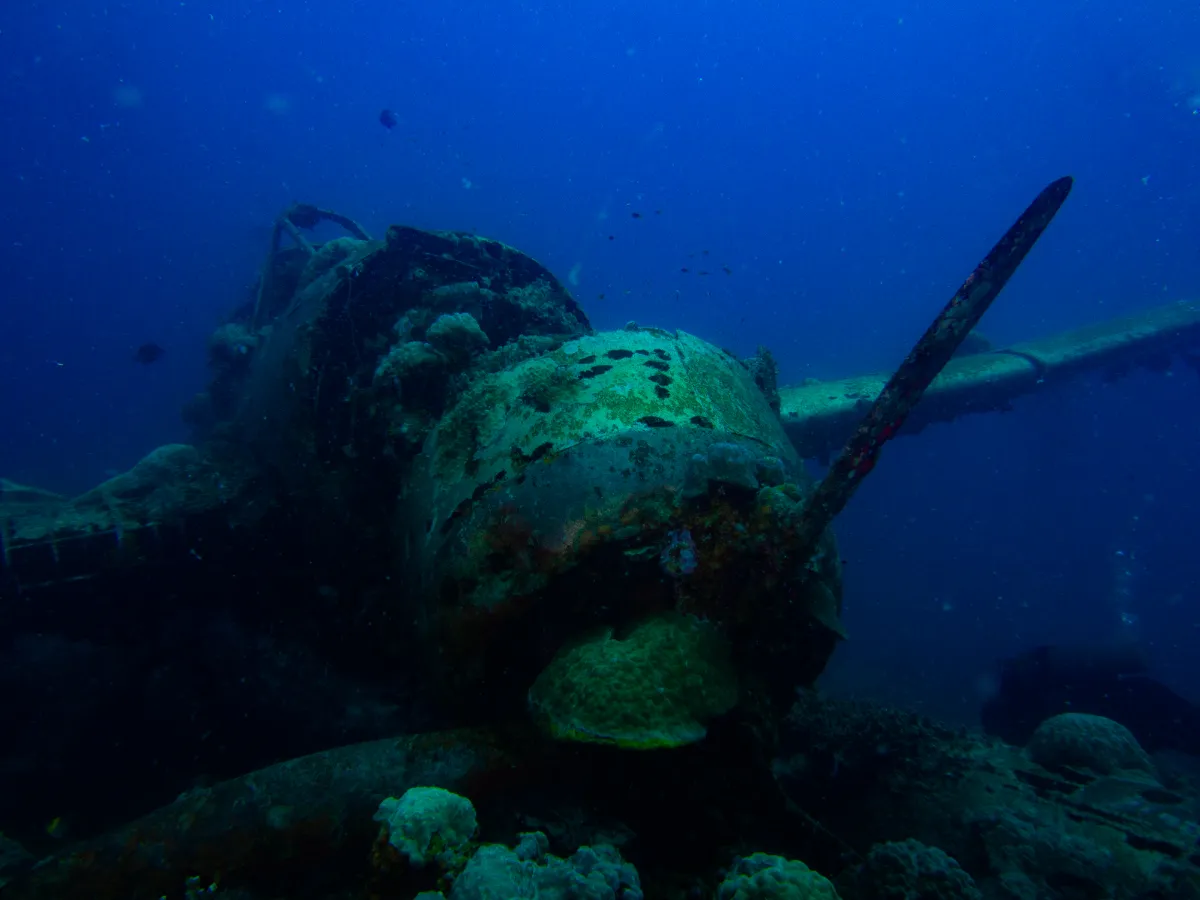
Jake Seaplane gave us a more relaxed daytime dive. The almost intact Japanese aircraft lay at about 12 meters, surrounded by glassfish, clownfish, and delicate corals. Excellent visibility and little current made it rewarding for underwater photography.
It also showed the range within our Palau diving days. Helmet Wreck had given us darkness and the narrow reach of dive lights. Here, we could see the aircraft and the marine life around it in clear daytime water.
Peleliu: Strong Currents in Southern Palau
Peleliu brought us to a challenging site in southern Palau, known for strong currents and large animals: sharks, tuna, and sometimes manta rays. The current demands experience and control. It was the more forceful side of the destination, compared with the gentle dives inside the lagoon.
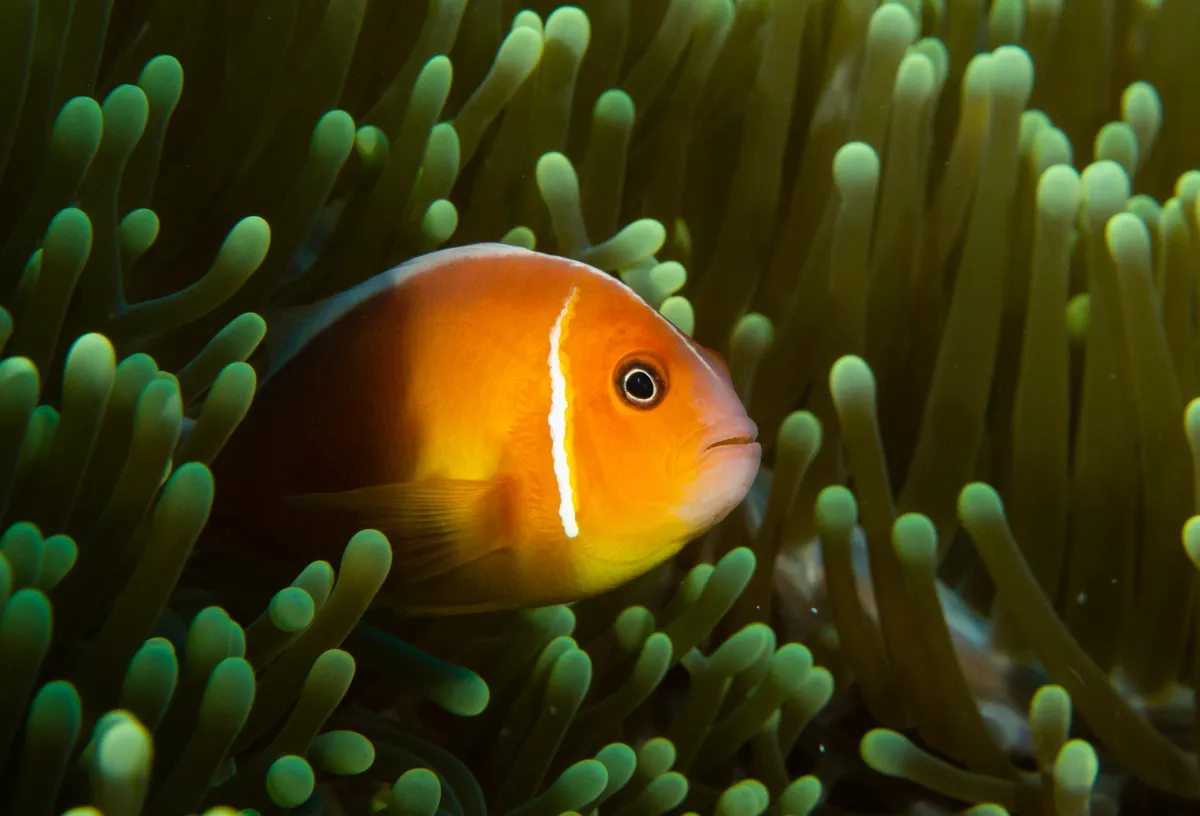
Large animals are only part of the visual memory, though. Among the photographs from Palau is this orange clownfish sheltering within an anemone. A small subject can hold the eye as firmly as a fish passing through open blue water.
Chandelier Cave: Formations in the Dive Lights
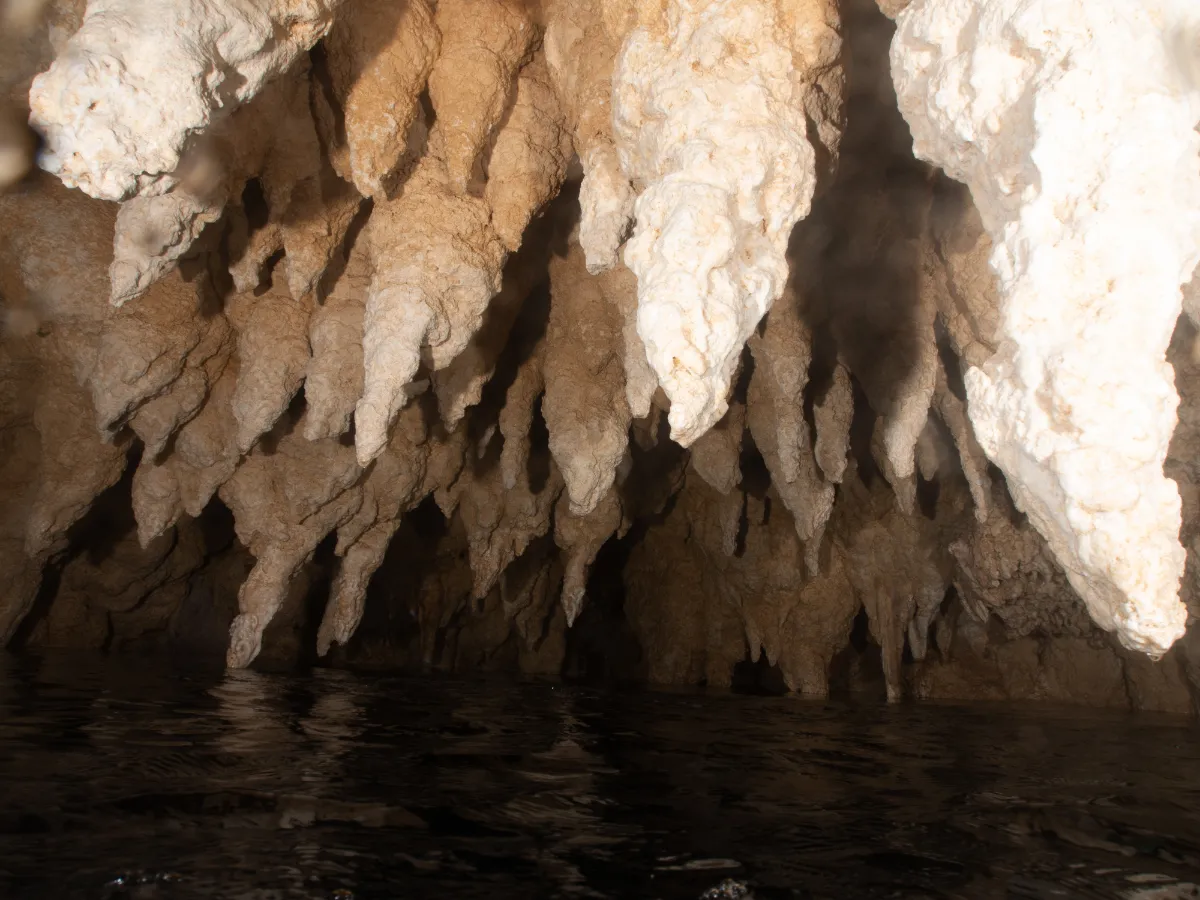
Chandelier Cave takes its name from the stalactites in its connected chambers. Dive lights reveal formations that resemble hanging chandeliers. Where Blue Holes was defined by sunlight entering from above, this cave’s details emerged in the lights we brought with us.
The formations made a different kind of photograph from the reef fish and wrecks. They are also part of an overhead environment, which brings its own training, equipment, and gas-planning requirements.
Jellyfish Lake: Golden Shapes Among the Rocks
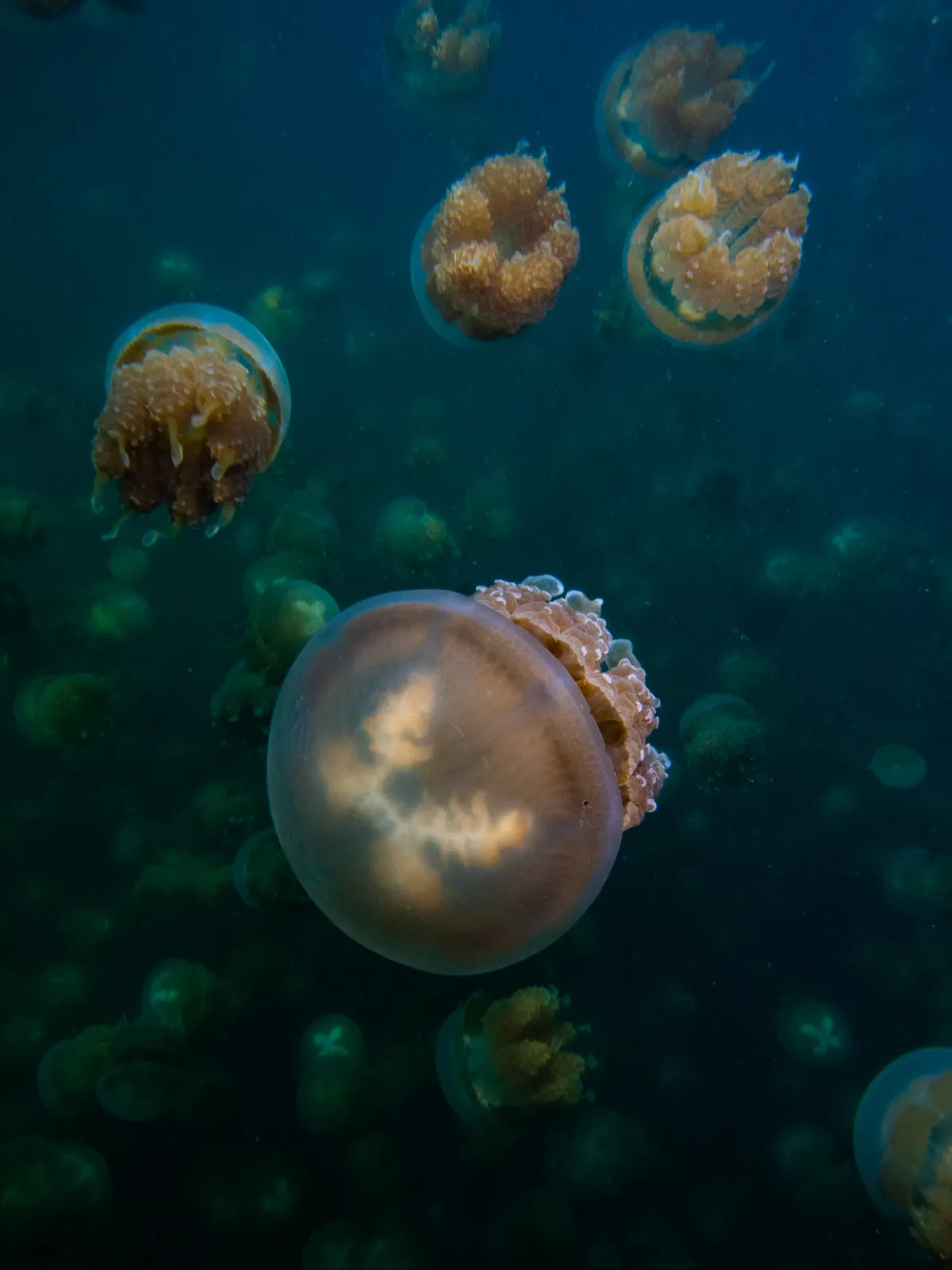
Reaching Jellyfish Lake meant climbing hundreds of steps through dense jungle to a lake tucked among the rocks. Floating among golden jellyfish during our visit felt far removed from the current-swept outer reefs.
The jellyfish have stinging cells, although their stings are usually mild for swimmers. Their numbers vary greatly with conditions. The scene in these photographs belongs to our visit, as do the memories of floating among them; it is not a promise of identical conditions on another trip.
A Final Day on Land
After five consecutive days of diving, we spent our final day on land before the flight. For divers without symptoms after multiple days of no-decompression diving, DAN’s flying-after-diving guidance recommends at least 18 hours between the last dive and flying. Dives requiring decompression stops call for substantially longer, and longer intervals reduce risk further.
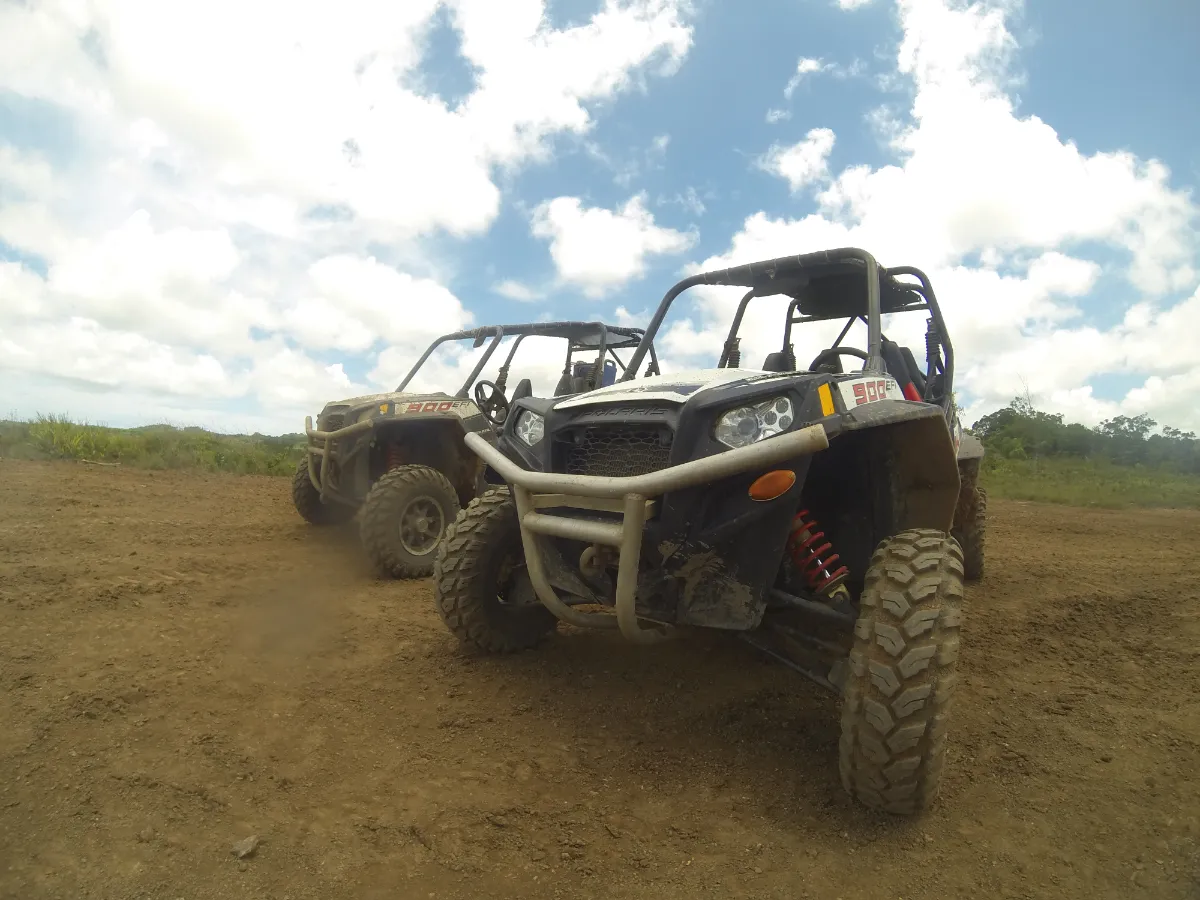
In the morning heat and humidity, we climbed into RZR buggies and followed a trail through jungle, beaches, and shallow water crossings. There were vivid greens, tropical birds, and glasses that fogged within seconds. Palau still had plenty to show us above the water.
By the time we returned to the hotel, the sun had set. We changed, shook off the dust, and settled down with a local beer. It was a calm farewell after days spent moving between very different underwater worlds.
Taking Palau Home
What stays with me about Palau diving is the variety: blue cavern light, reef fish moving through current, wreck details, and jellyfish suspended in the lake. The days belonged to one trip, yet each place asked us to look differently. Photographs preserve those differences better than a list of dive sites can.
Thank you to Wild Dive for planning the journey, to Fish and Fins for making us feel at home on the water, and to the people of Palau for their welcome.
If one of these images stays with you, the Blue Hole diver, Napoleon wrasse, and pink anemonefish photographs are available as canvas prints in the 2DIVE shop. More travel stories and photographs are on the diving blog.