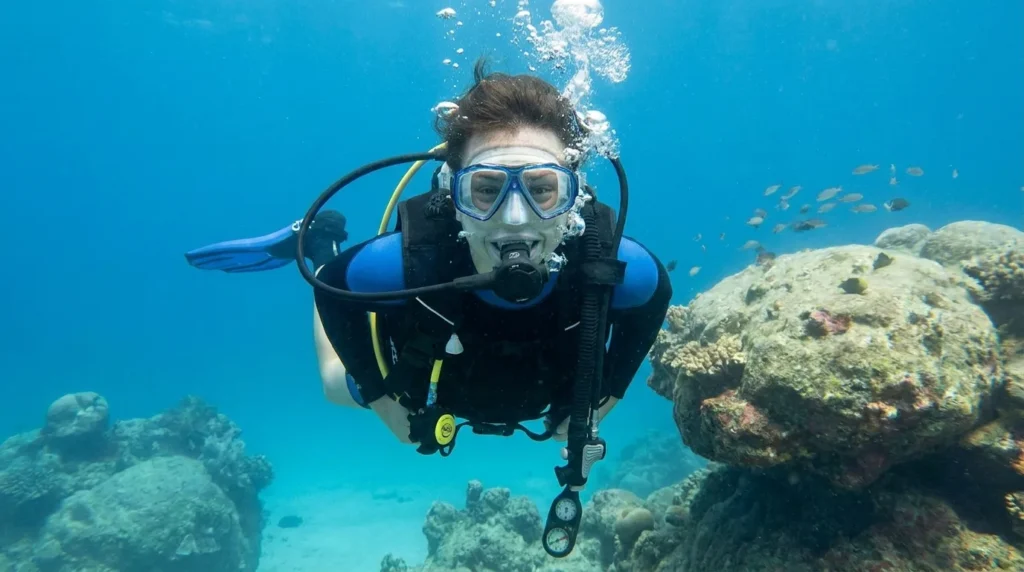
This guide to beginner diving mistakes explains how to check equipment, improve buoyancy and notice what your body and surroundings are telling you. These habits make dives more comfortable and help protect marine life. Learning them takes practice, but each gives you something specific to work on before and during your next dive.
On this page
Beginner Diving Mistakes Are a Starting Point for Learning
Even experienced divers began with unfamiliar equipment and skills that needed work. Carrying too much weight, making repeated adjustments or becoming absorbed in one task can be part of that learning process. Recognizing the problem is the first step toward changing the habit.
The three areas here connect to one another. A careful equipment check prepares you for entry. Steady control in the water leaves more attention for your buddy, your comfort and the animals around you.
1. Give the Buddy Check Your Full Attention
Excitement, time pressure or an assumption that everything will be fine can tempt you to skip the check. Training organizations such as PADI teach BWRAF, Begin With Review And Friend, to make it systematic.
Work through the BCD, weights, releases, air and secondary equipment with your buddy. A cylinder valve that is not fully open, a loose buckle or an inflator that does not work can become a serious problem underwater. Checking on the boat or shore gives you a chance to notice it first.
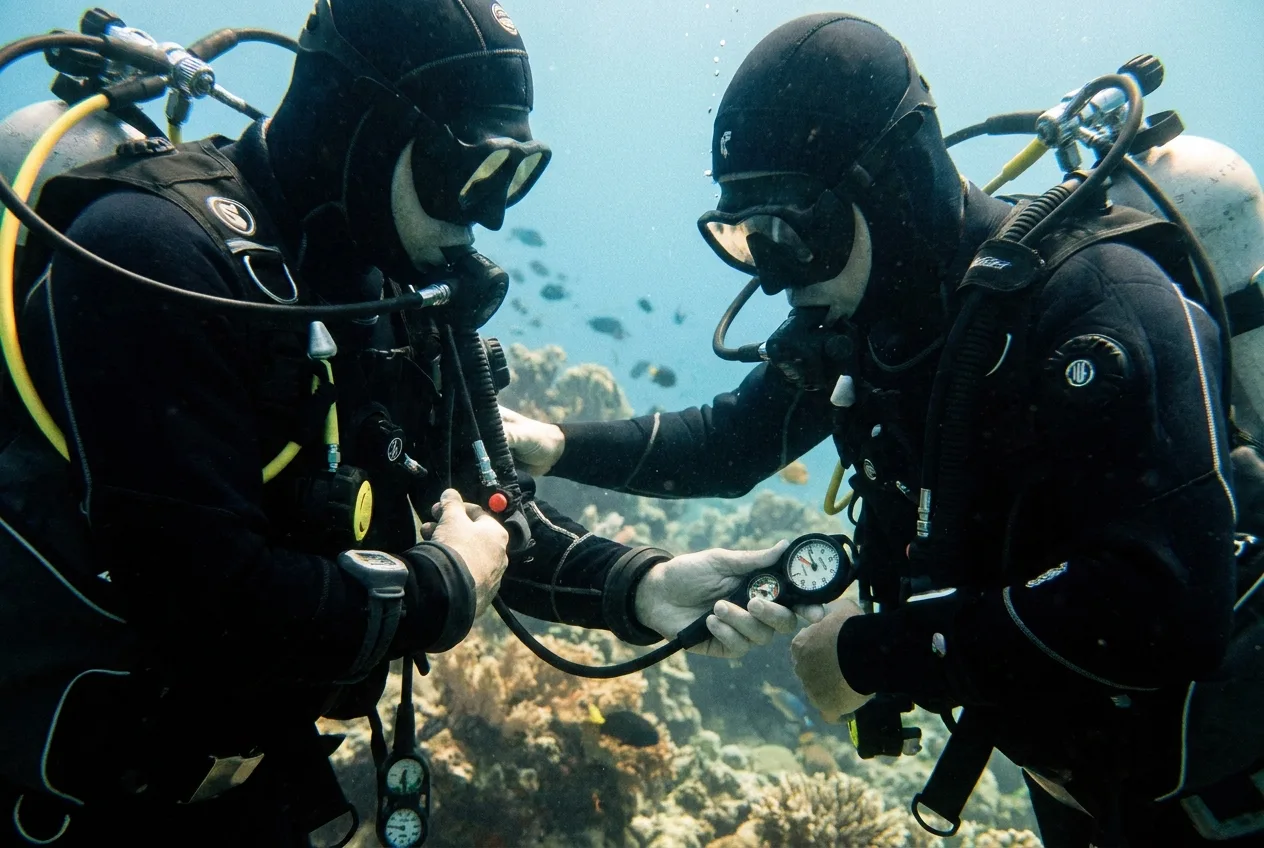
Take five minutes to give each step attention. The value comes from actually checking the equipment, not simply remembering the letters. You and your buddy both depend on the result, so make this a shared part of preparing for the dive.
2. Improve Buoyancy with Breathing, Weight and Small Adjustments
Uncontrolled rises and drops, often called yo-yo diving, show that buoyancy control still needs work. They use extra air, put coral and marine animals at risk, and can make the dive less enjoyable for people nearby.
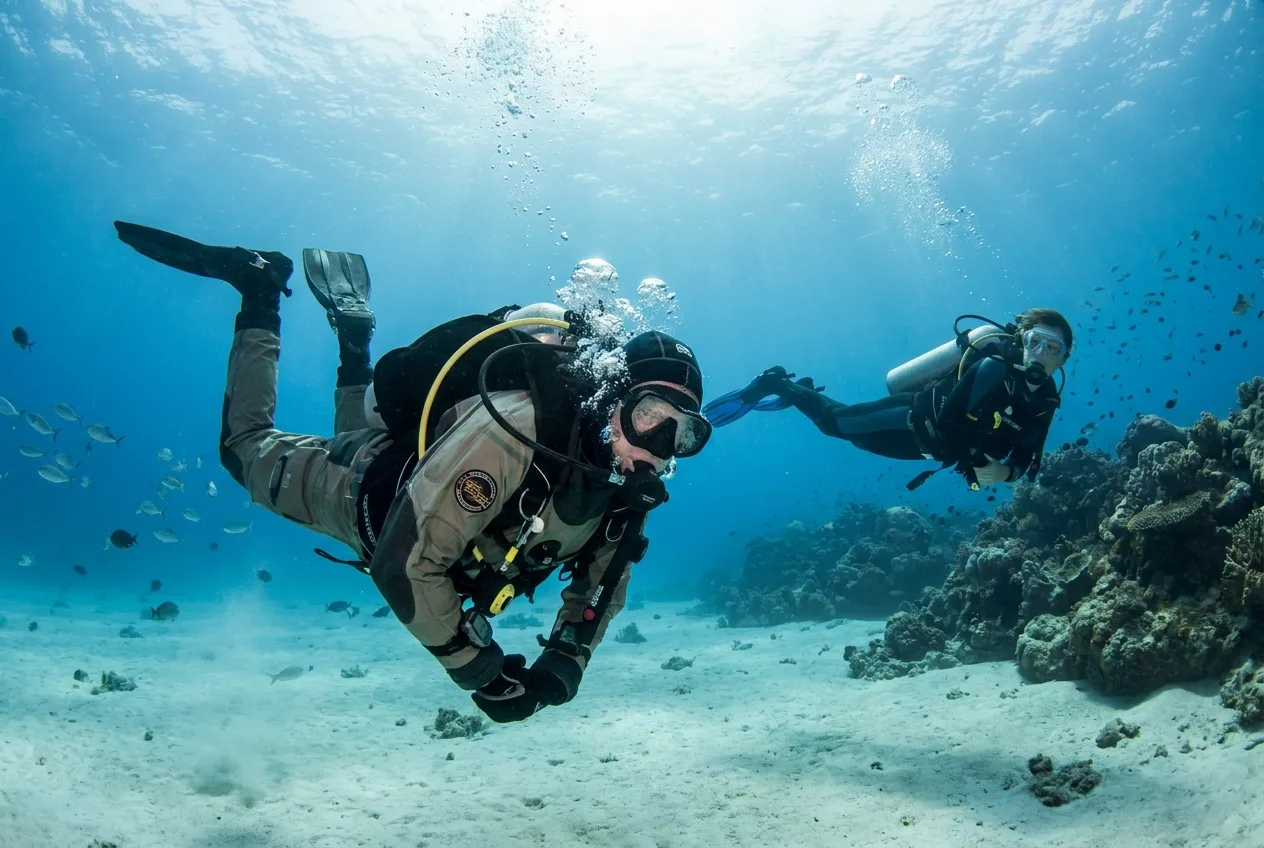
Focus on slow, steady breathing, the right amount of weight and small inflator adjustments. Use your lungs for fine control rather than constantly inflating and deflating the BCD. Practice in safe open water until holding depth becomes more familiar.
The diver suspended in Palau’s Blue Hole illustrates the calm posture you are working toward. For more on the skill itself, read our guide to neutral buoyancy and holding depth.
Among beginner diving mistakes, this one can be especially noticeable because it affects both your effort and your surroundings. Give the skill time. The aim is a steady hover, rather than a cycle of corrections that keeps drawing your attention back to the equipment.
3. Notice Your Comfort, Buddy and Surroundings
Equipment and breathing can take so much attention that you overlook cold, fatigue or a strengthening current. Pause to check your remaining air, assess your energy and make sure both you and your buddy feel comfortable.
Awareness also includes the animals you came to see. Never touch coral, chase fish or collect souvenirs from the seabed. Even a small injury can threaten a coral colony, and touching some animals can be dangerous for you too.
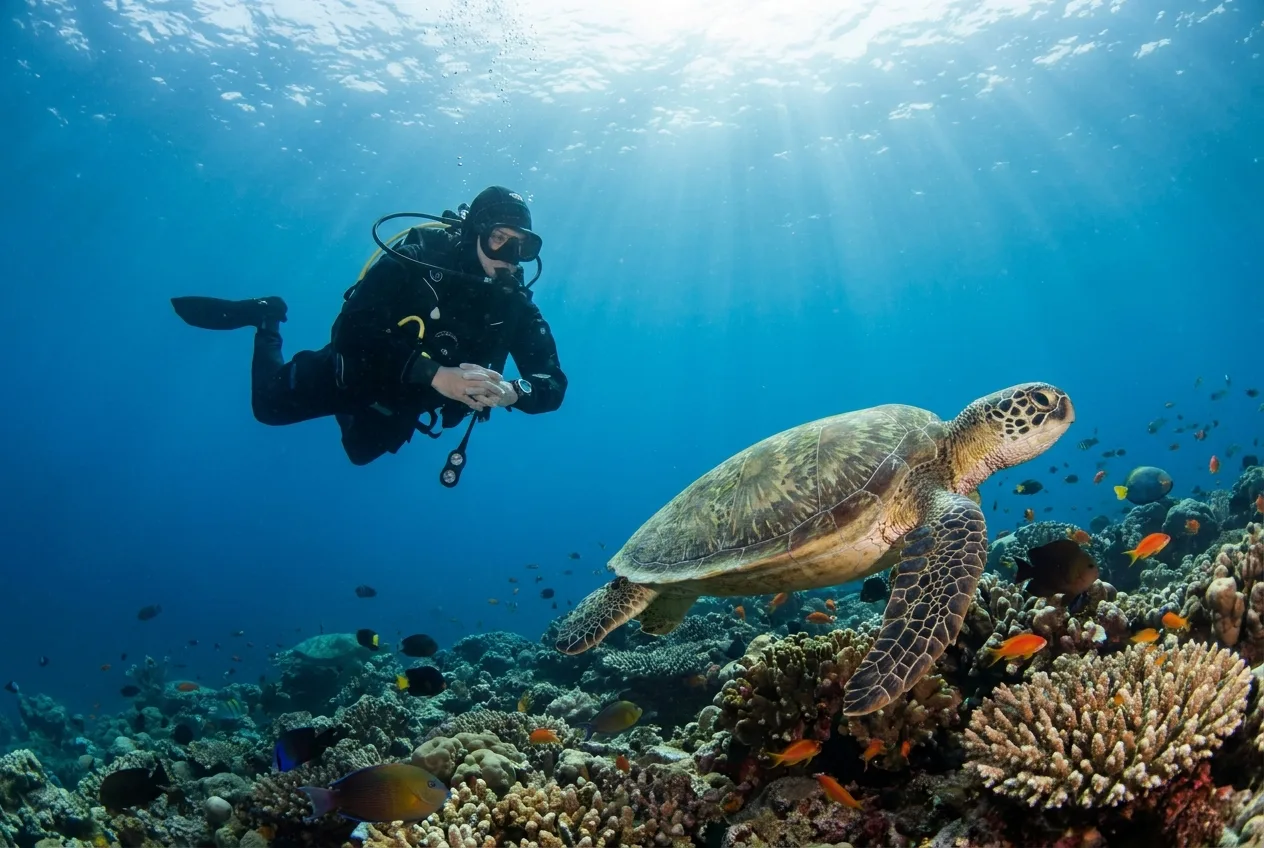
The familiar advice to leave only bubbles and take only pictures is useful because it applies throughout the dive. Observation does not require contact. PADI’s responsible marine life interaction guide explains this further.
Turn Awareness into a Repeatable Habit
Beginner diving mistakes become useful lessons when you connect them to an action. Check equipment together, practice holding depth and keep noticing how you and your buddy feel. Plan the dive, follow that plan and respect the underwater world around you.
Continue reading with diving tips and articles on the 2DIVE blog, or send a question about the articles. Developing these habits is an ongoing part of becoming a capable diver.