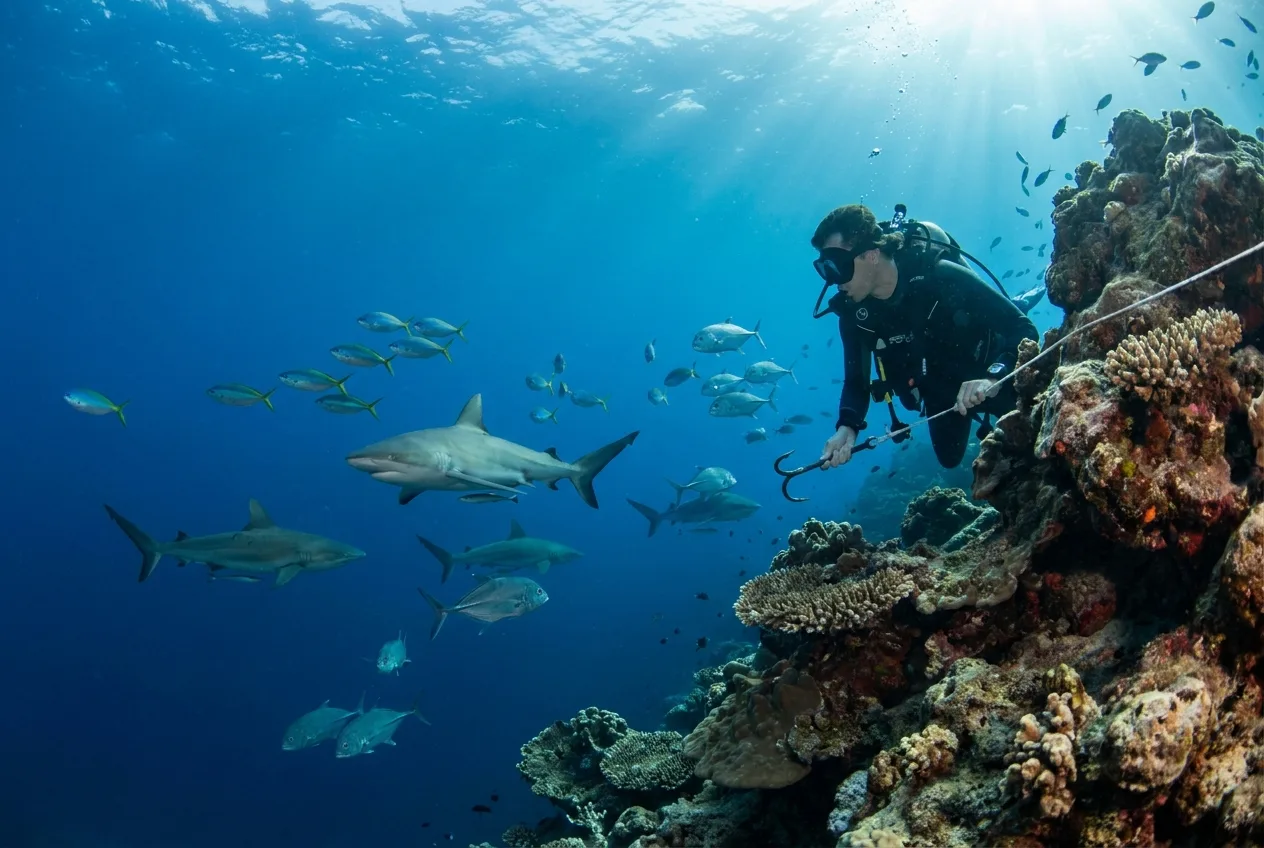
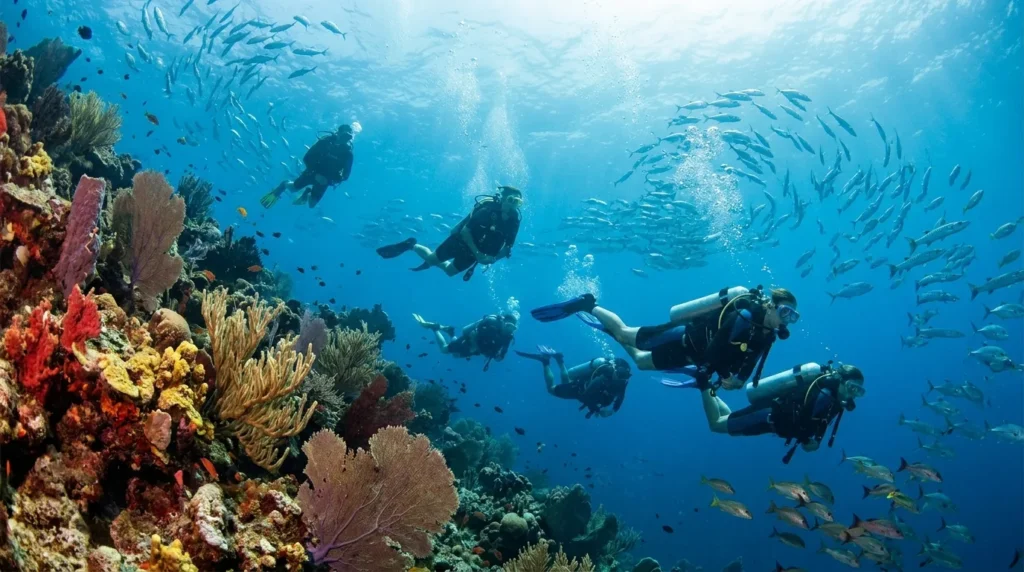
This drift diving guide explains five parts of preparation and technique: understanding the route, moving with the current, carrying signaling gear, staying together and choosing the setting. Letting the water carry you can be exhilarating, but the freedom depends on a plan. You need to know how the dive ends as well as where it begins.
On this page
Drift Diving Begins with a Pickup Plan
The appeal is easy to understand: you glide through the water while reef scenery passes beneath you. Instead of swimming back to the entry point, you finish elsewhere and the dive boat collects you. That change makes the briefing central to the experience.
1. Understand the Route and Signals
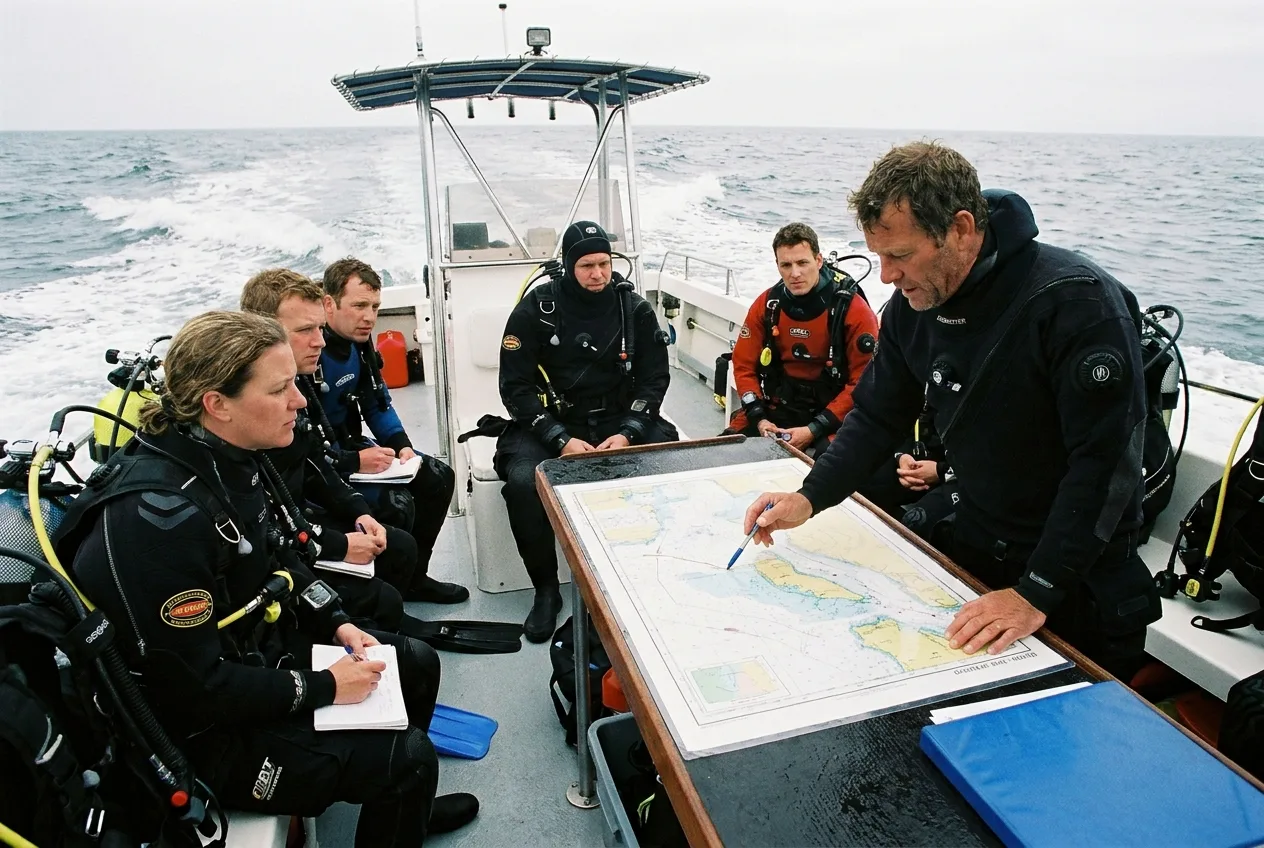
On a drift dive, the natural current provides your movement. Listen carefully to the dive leader’s briefing so you understand its direction, the planned route and the agreed hand signals. You and your buddy should also know what to do if you become separated.
Do not leave those details as something only the leader understands. Before entry, make sure the route and communication plan are clear to both you and your buddy. The plan gives you a shared way to respond as the water moves you through the site.
2. Move with the Water
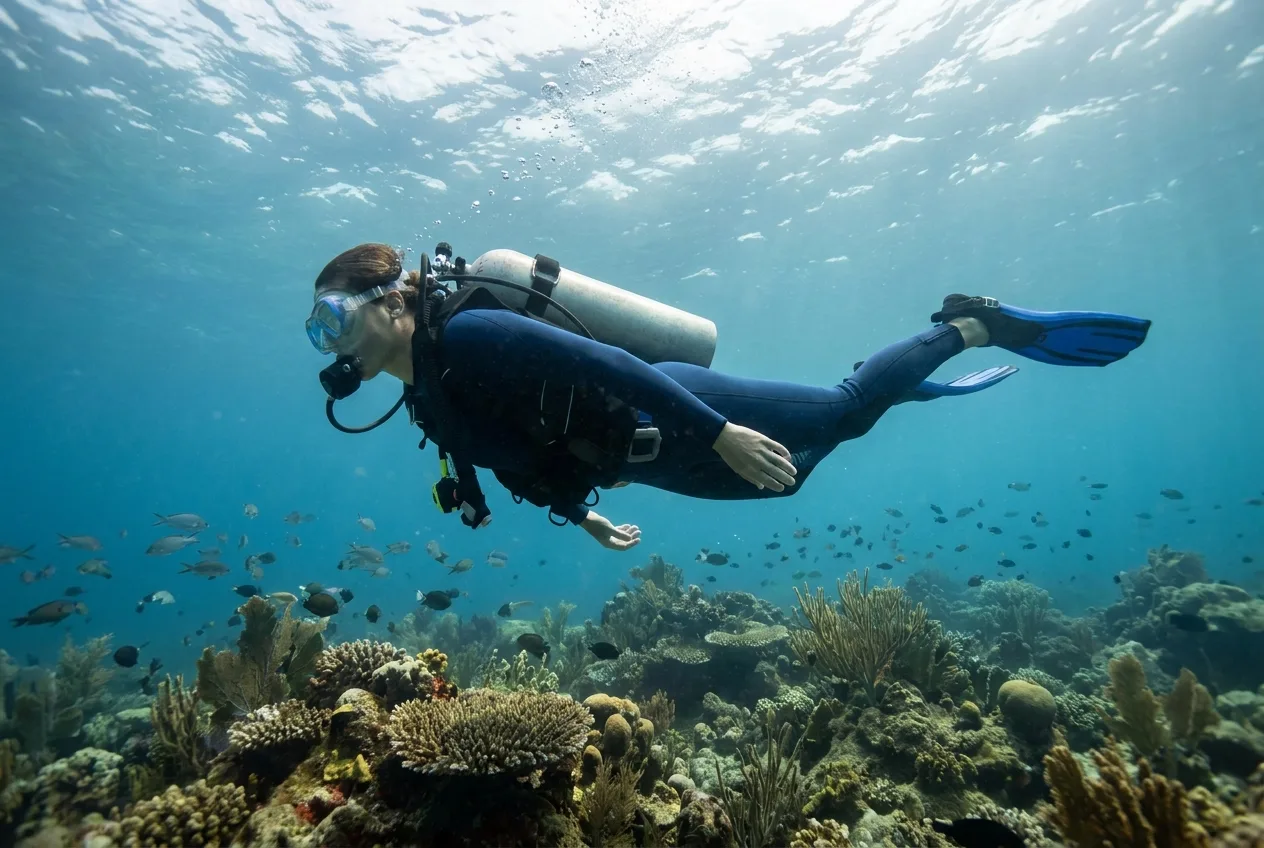
Stay calm and keep your body stable and streamlined. Swimming hard against the current wastes air and can leave you exhausted. Drift diving works with the movement of the water, using small buoyancy control device (BCD) adjustments to maintain control.
If you need to stop, never grab living coral. The distinction matters even when the current makes a handhold tempting: any careful hold should be on rock or nonliving substrate. Protecting the reef remains part of controlling your position.
For more on keeping that position steady, read our guide to neutral buoyancy and holding depth. Small corrections are part of making the movement manageable.
3. Carry Signaling Equipment
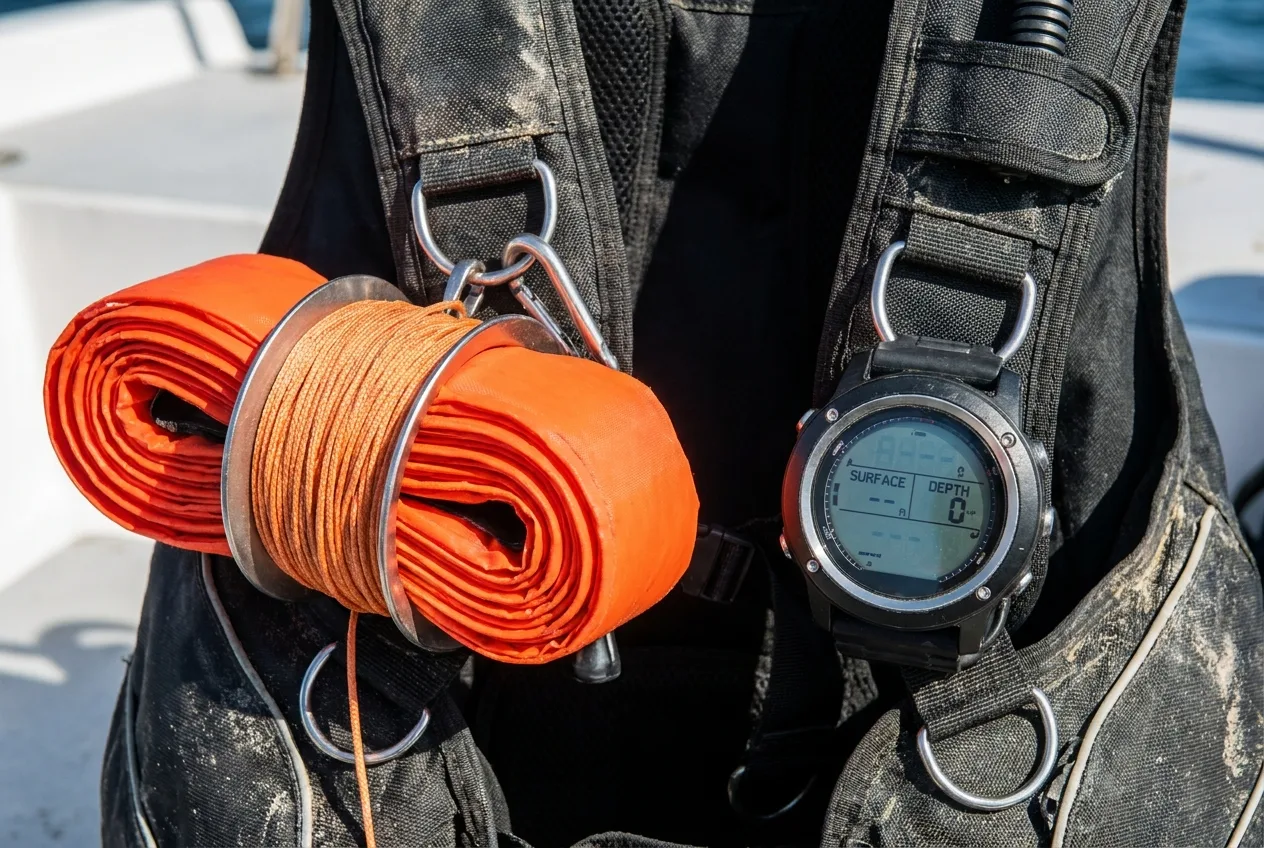
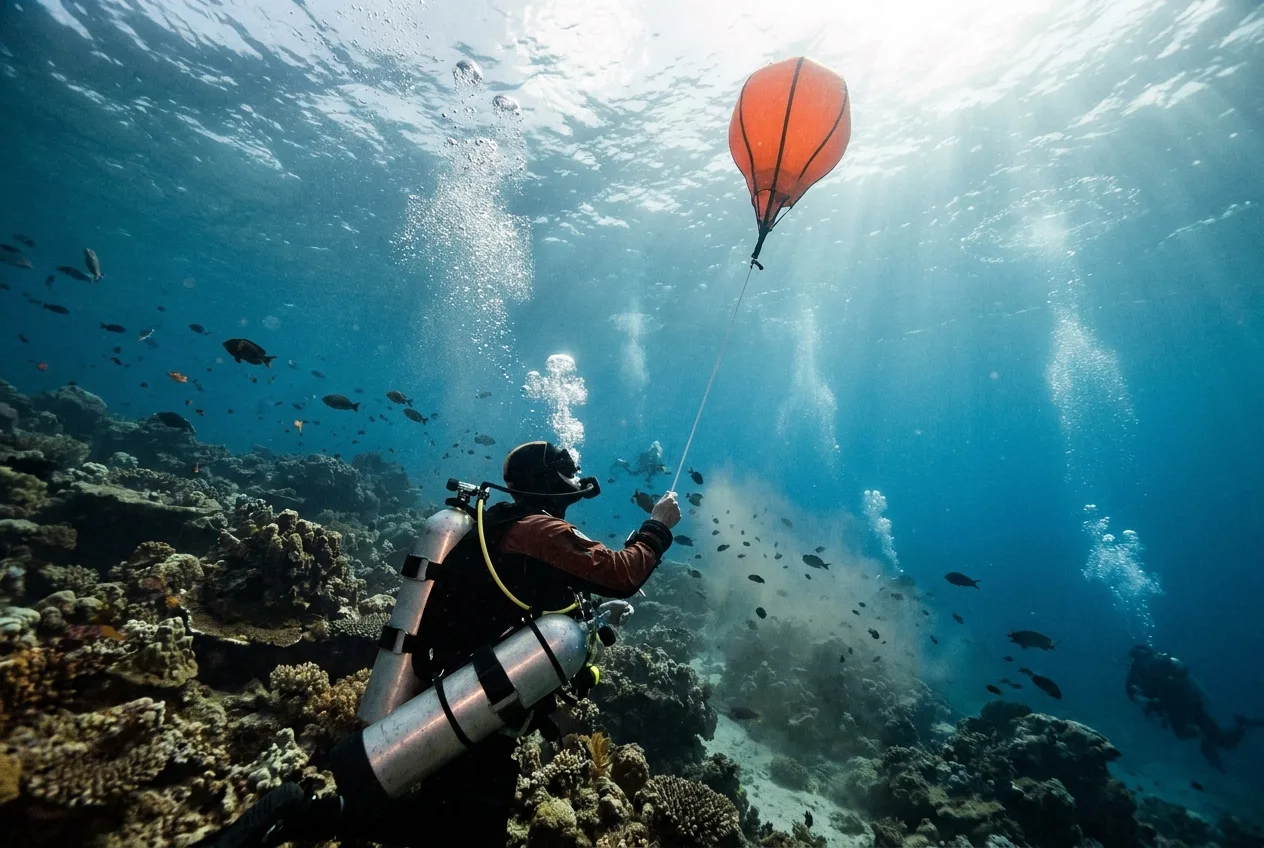
A surface marker buoy (SMB) and reel belong alongside your usual scuba gear. Near the end of the dive, the buoy goes to the surface so the boat can locate you. Drift diving depends on being found at the pickup, not merely on completing the underwater route.
A whistle or signal mirror attached to the BCD can also be vital if you surface far from the boat. Divers Alert Network’s account of divers stranded after a drift dive emphasizes the importance of signaling equipment.
4. Stay with Your Buddy and Group
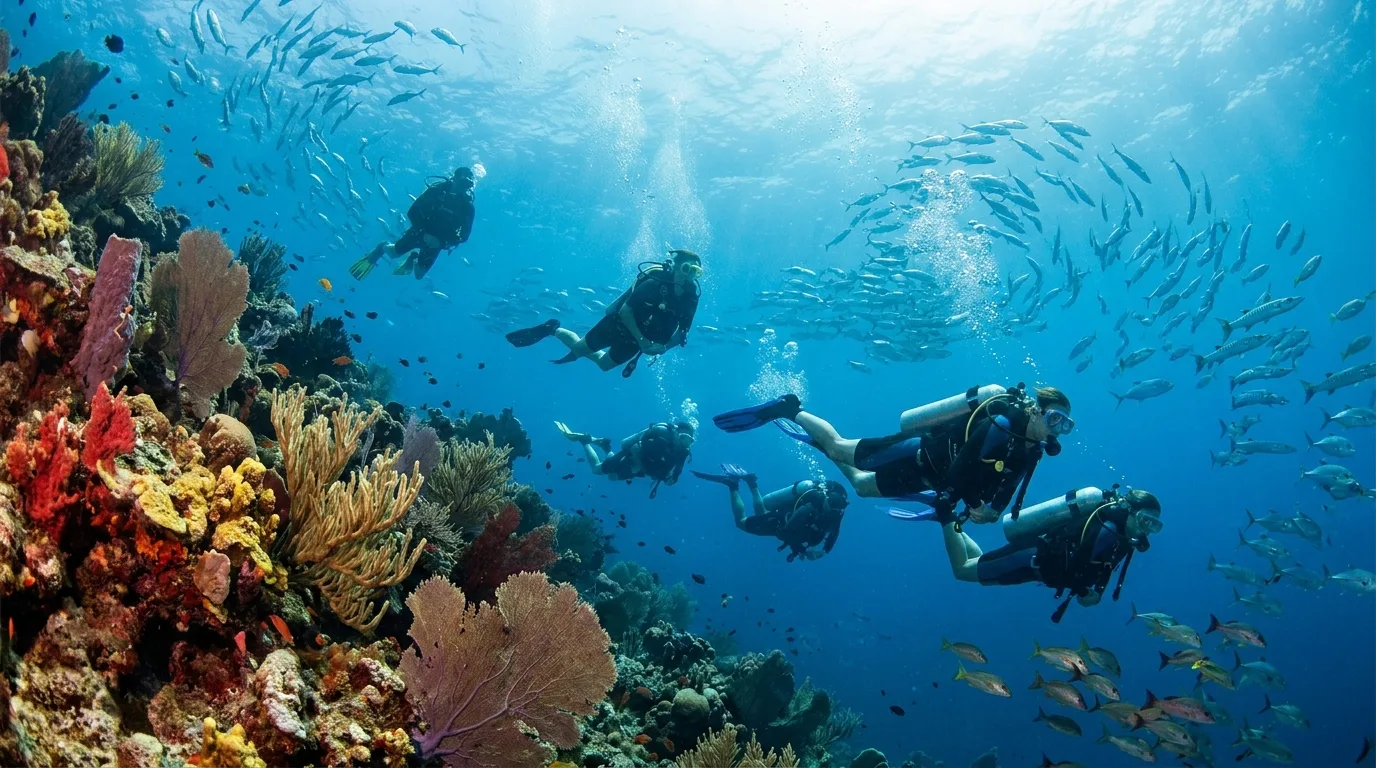
Keep your buddy and the group in sight. A current can separate divers quickly, so togetherness is an active part of drift diving. Ascend to the safety stop as a group and coordinate marker buoy deployment as briefed.
If the current feels too strong or you are losing control, signal the dive leader. Strong currents can be dangerous. Recognizing your limits is part of the dive, even when the scenery makes you want to continue watching.
5. Choose Your Drift Diving Setting
Palau draws drift divers to Blue Corner and Ulong Channel. The Maldives, Cozumel in Mexico and Rangiroa in French Polynesia also offer drift diving experiences. Their appeal is a reason to learn about the route and conditions, rather than to assume every current will feel the same.
Continue your reading on the 2DIVE diving blog. The underwater photography gallery offers a separate look at marine subjects; discuss the dive plan itself with your leader. For questions about the site, contact 2DIVE.