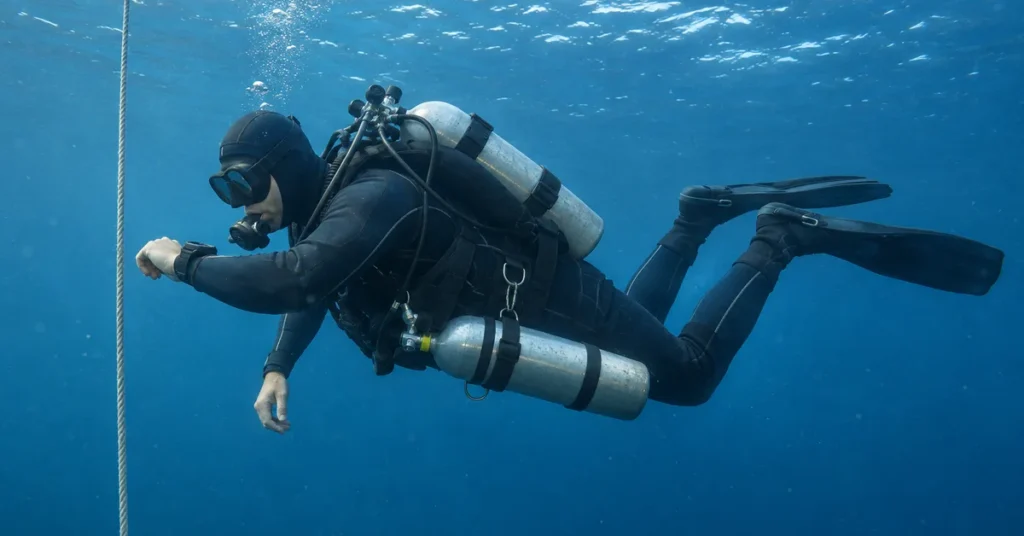
This technical diving comparison explains five differences that shape a dive: depth, the route to the surface, breathing gases, equipment, and training. A recreational dive stays within no-decompression limits and retains the option of a controlled direct ascent. Technical plans may involve greater depth, mandatory decompression, or an overhead environment that prevents that ascent. 1 2
On this page
You can use this comparison without intending to pursue technical training. Recreational diving is a complete discipline with its own limits, and there is no requirement to move beyond it. Understanding the differences helps you connect a diving objective with the preparation it requires. 3
What Defines Technical Diving?
The dividing line is not a single piece of equipment. Technical diving may involve greater depth, planned decompression, or an overhead environment with no direct access to the surface, and these objectives change the requirements for gas, equipment, training, and teamwork. 2
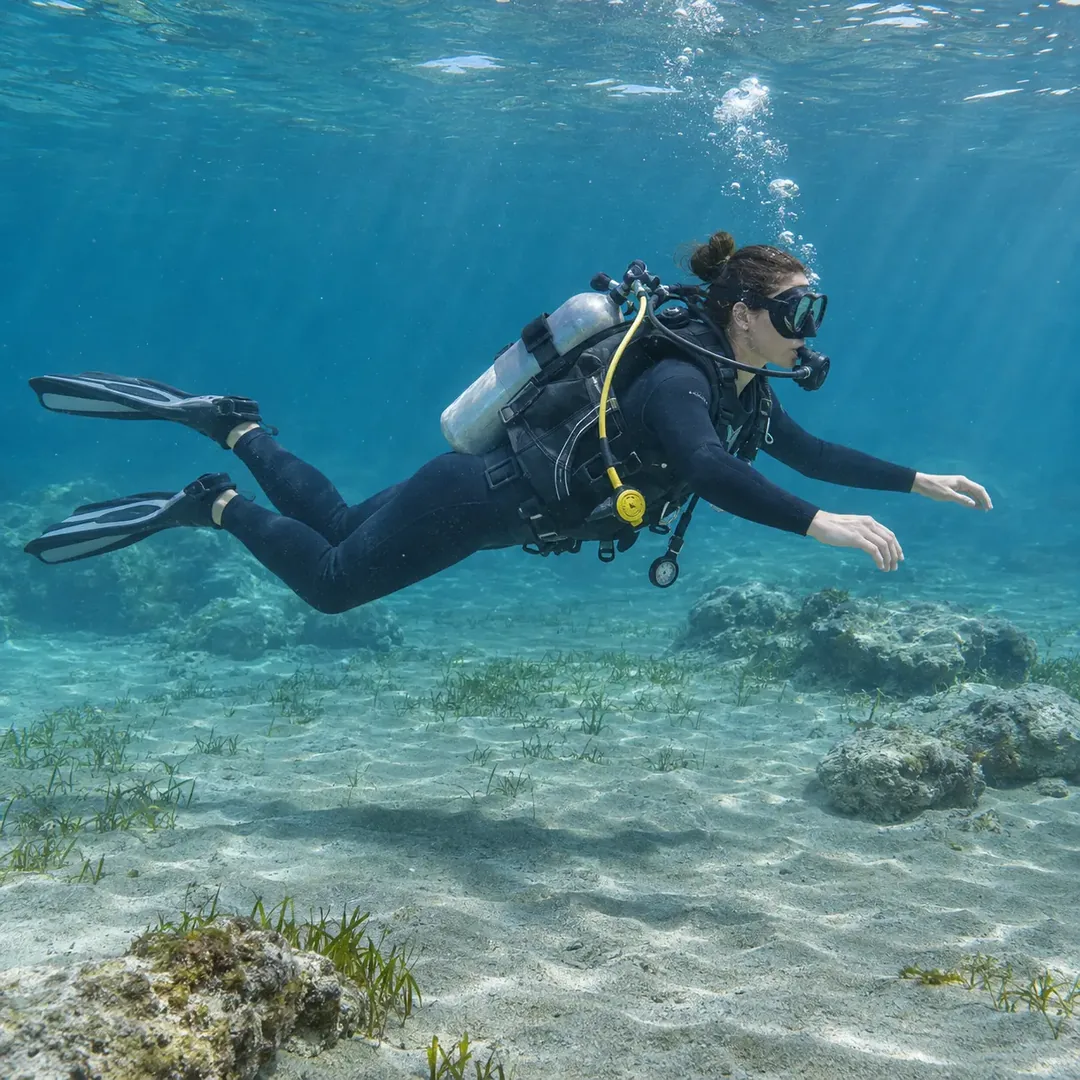
Recreational diving, by contrast, remains within depth and no-decompression limits so that a controlled direct ascent remains available. 2 Twin cylinders or a wing-style BCD associated with technical diving do not, by themselves, determine the type of dive; its planned profile and accepted obligations do. 2
1. Depth: Understand the Limits
The commonly accepted limit for recreational scuba diving is 40 meters, with dives beyond that entering the technical realm. 1 Technical dives can exceed 90 meters, although depth alone does not tell the whole story. 1
2. Ascent: Know What Stands Between You and the Surface
The next distinction lies in the return journey. When a technical dive plan includes a decompression obligation, stops are required before surfacing according to the dive profile. Whether an open-circuit or closed-circuit system is used does not alone determine whether stops are necessary. 1 Ascending too quickly carries a risk of decompression sickness, so the stops allow excess nitrogen to leave the tissues. 1
This changes how a diver responds to a failure. When decompression is mandatory, surfacing immediately may create another emergency, so the team must manage the problem while completing the required ascent. 2 Technical planning therefore emphasizes reserves, redundant systems, gas selection, and rehearsed team responses. 2
3. Gases: Match the Breathing System to the Plan
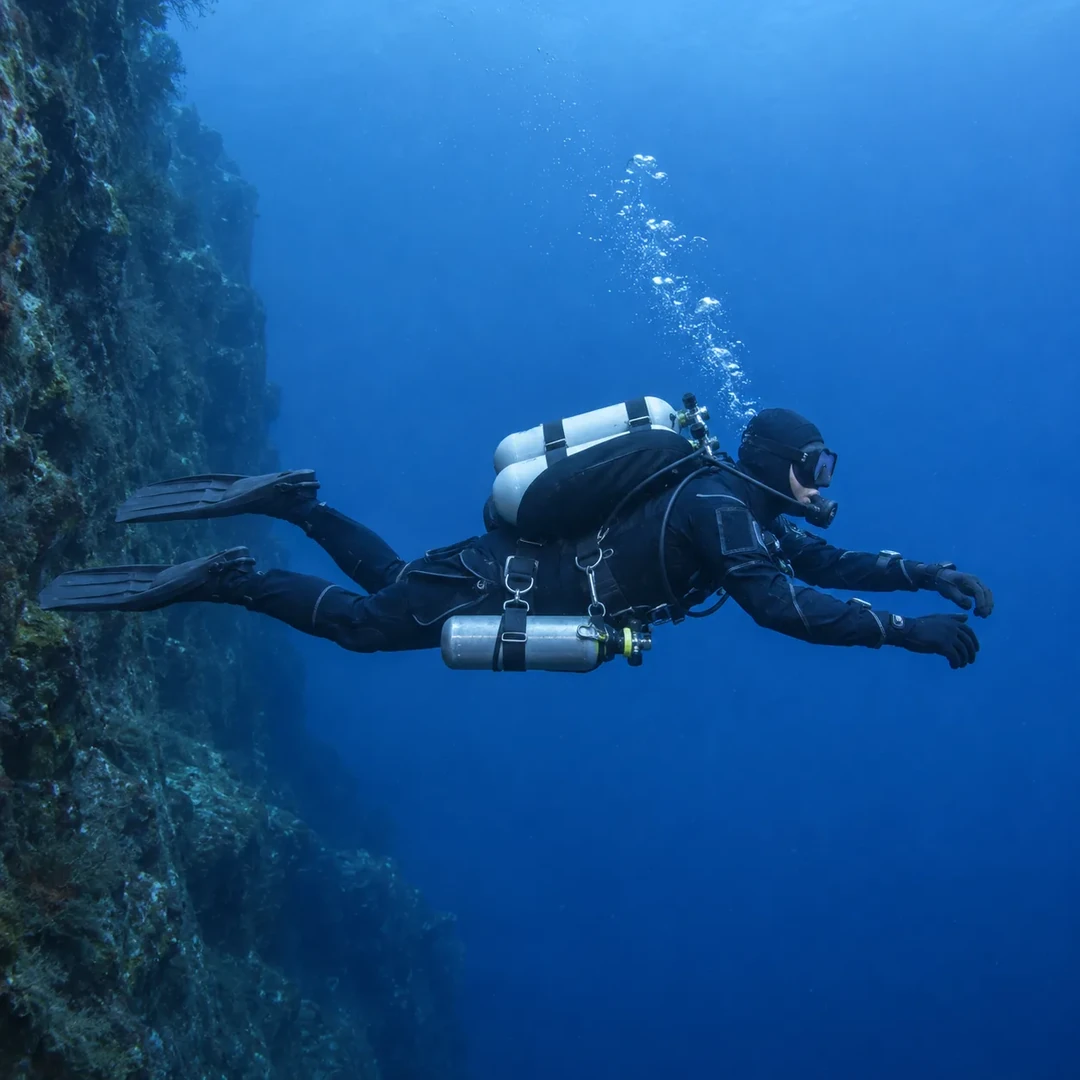
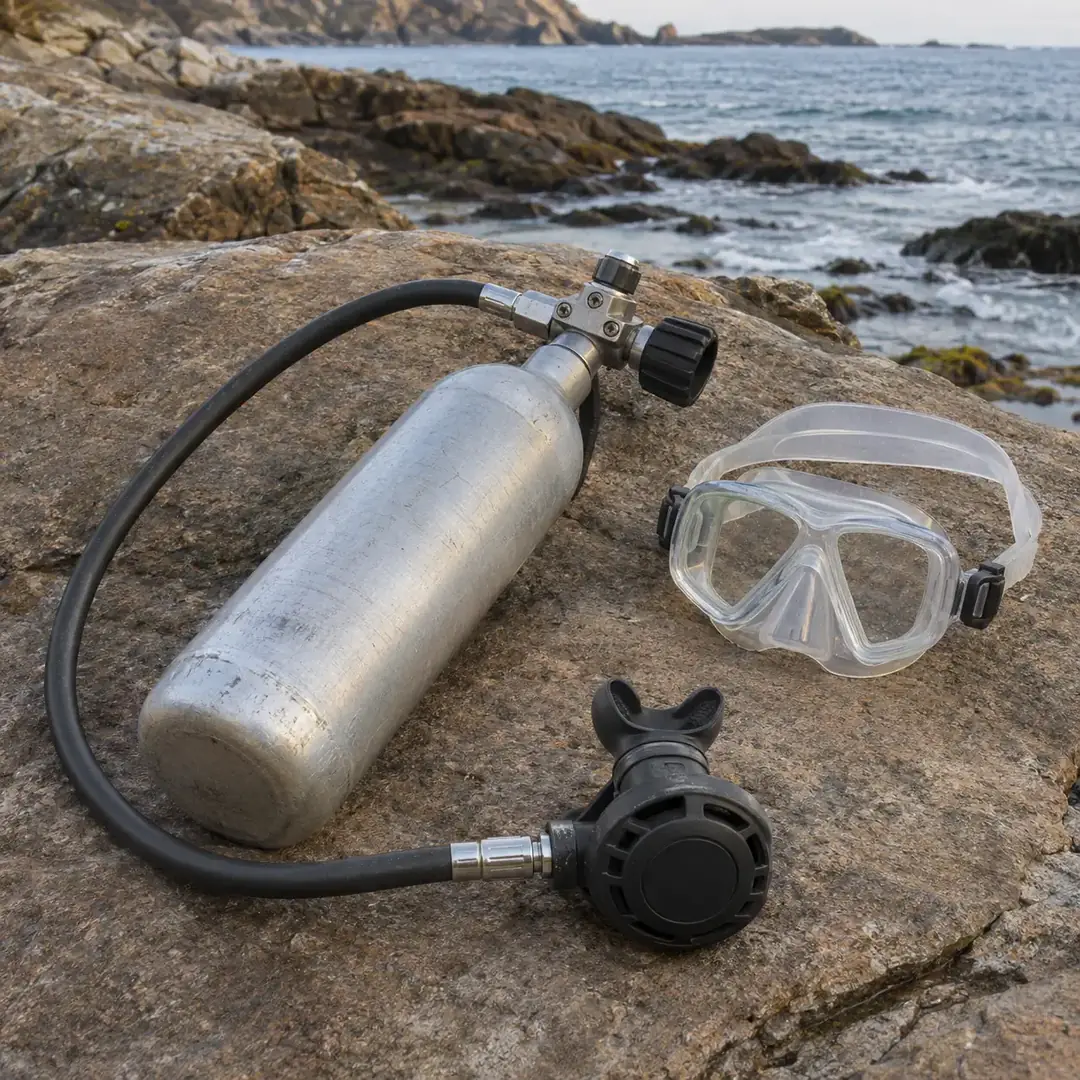
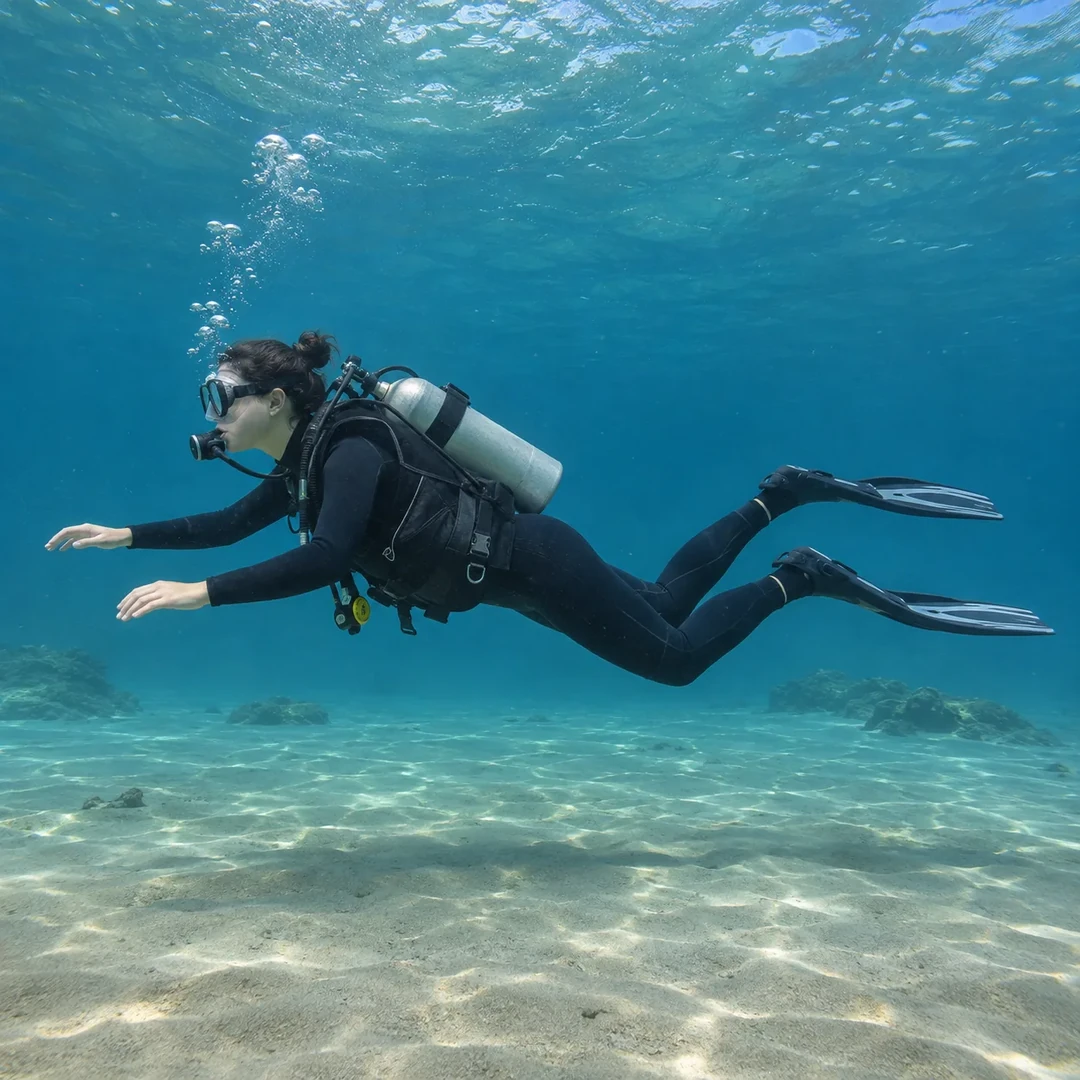
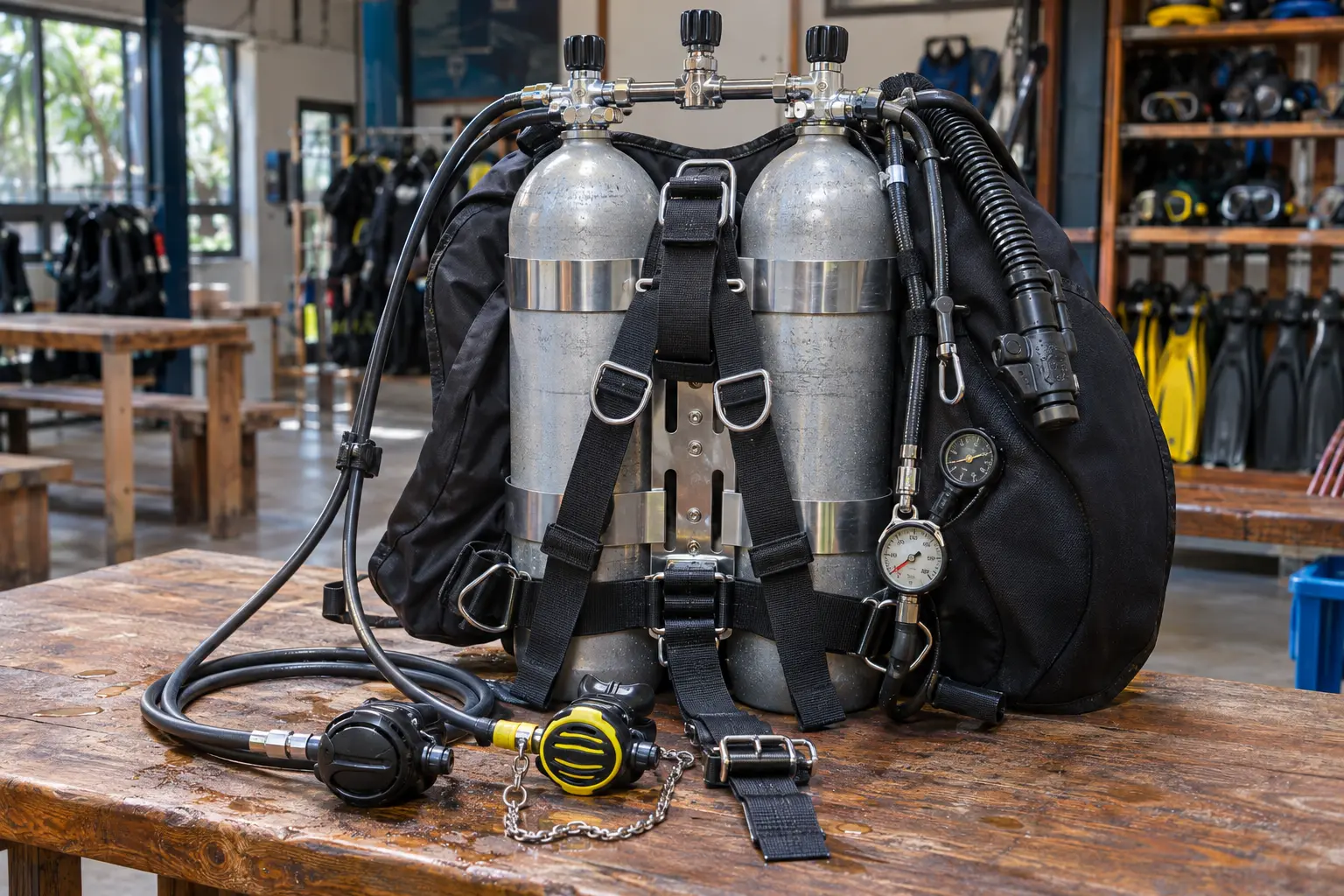
The recreational configuration described by NOAA uses a single cylinder and one gas: air or nitrox. 1 One common open-circuit configuration for technical diving uses a pair of back-mounted cylinders containing concentrations of oxygen, nitrogen, and sometimes helium selected for the planned depth and duration. 1
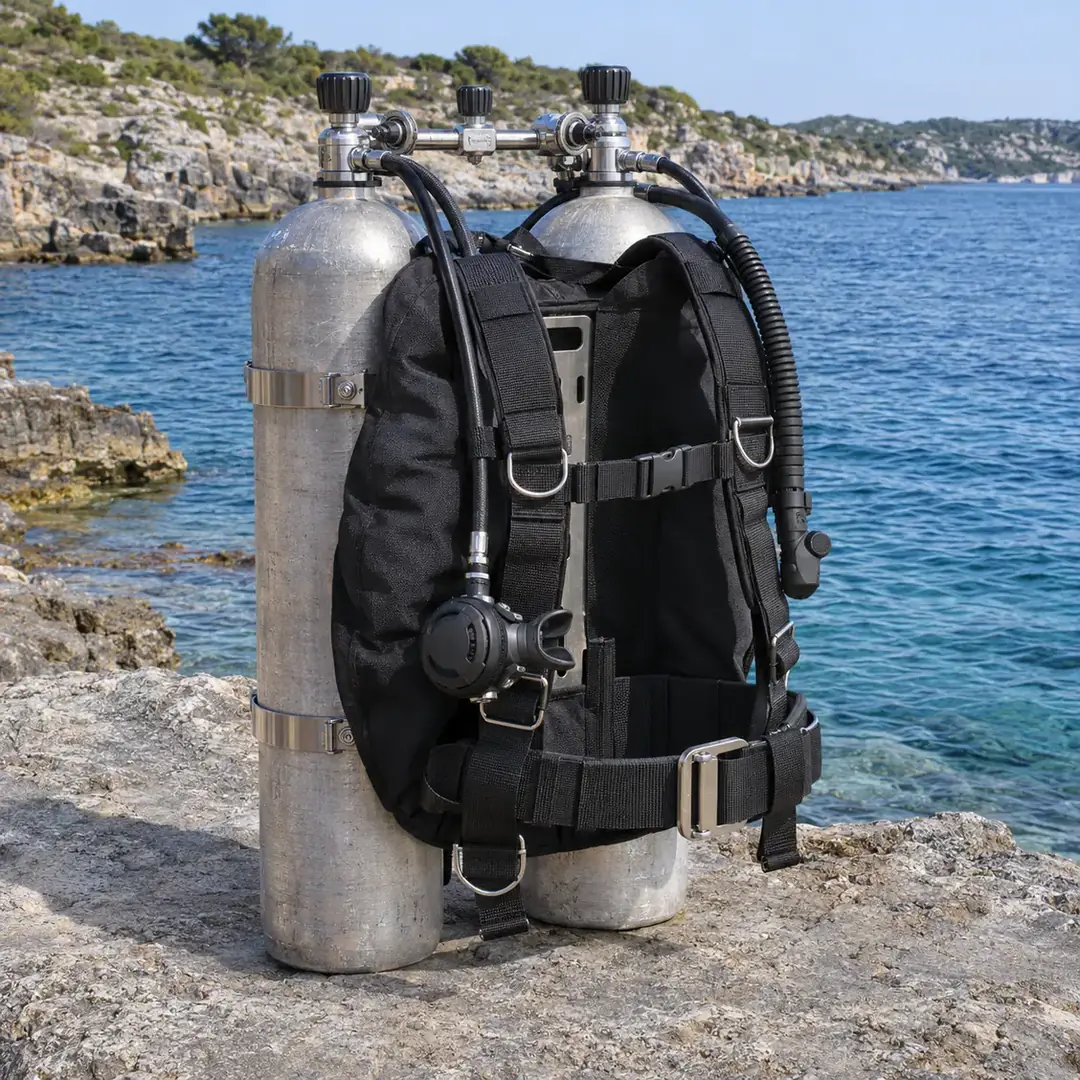
During ascent and decompression, an open-circuit diver may switch to a stage cylinder carried at the side with a mixture better suited to shallower depth. 1 A closed-circuit rebreather removes carbon dioxide, balances the gas mixture, and recycles much of the exhaled gas, but it is more complex and also depends on computers and sensors. 1
4. Equipment: Prepare for Failures Underwater
Backup equipment has a specific purpose in technical diving. NOAA describes spare masks, computers, lights, and regulators connected to alternate air sources to help divers manage equipment failures underwater. 1 Duplicate equipment also adds complexity and requires training, so a configuration should be chosen for the problem it solves and the diver’s ability to use it reliably. 2
5. Training: Build on Existing Experience
Basic scuba certification begins the recreational pathway, while entry into technical training builds on previous experience and certifications. 4 The cited PADI Tec 40 example lists Advanced Open Water, nitrox, and 30 logged dives among its entry requirements, with additional requirements related to deep dives. 4
Those are requirements for one pathway and should not be assumed to apply identically to every technical training program. 4 The shared principle in the sources is that technical diving demands considerable training, dive planning, redundancy, and accumulated experience. 1
Divers who are curious about the field do not need to rush across the line. Dive Otter recommends developing stable buoyancy, understanding gas consumption, paying attention to the team, and practicing situational awareness on dives within the diver’s existing certification. 2 An introductory technical course may provide a structured learning environment, but it does not by itself authorize decompression or overhead dives. 2
Choose Training for the Dives You Want to Make
Technical diving expands opportunities to explore greater depths, caves, and maritime heritage sites, but it does so through training, dedicated equipment, planning, and redundancy. 1 Where a direct ascent is impossible, the team must carry enough gas and workable equipment alternatives to handle foreseeable failures without relying on immediate access to the surface. 2
The choice between recreational and technical diving begins with the dive you want to make. A lifetime of worthwhile diving exists within recreational limits, and the complexity of an ascent plan does not determine how interesting a dive will be. 2 A diver whose objective requires additional depth, planned decompression, or an overhead environment needs suitable training; without such an objective, it is entirely reasonable to remain tech-curious and enjoy recreational diving without treating technical training as mandatory. 2
For more on developing those everyday skills, see how diving in different environments can make you a better diver. Additional experience can serve your recreational diving as well as inform a later decision about technical training.
Frequently asked questions
Does redundant equipment make a dive technical? 2
Not necessarily. Equipment such as twin cylinders may provide additional gas capacity and redundancy, but the dive type is determined by its plan, obligations, and the response required if something fails. 2
Is recreational experience required before technical training? 4
Yes. The PADI pathway described by the source requires earlier certifications and logged experience before Tec 40. 4 Exact prerequisites depend on the training pathway, so this example should not be treated as universal. 4
Must divers become technical divers to improve? 2
No. Divers can learn from technical diving’s emphasis on planning, buoyancy, gas management, and teamwork, then apply those lessons to become more capable on the recreational dives they already make. 2