
This guide to ear pressure explains why your ears need equalizing, compares three techniques and shows when to stop descending. Equalization helps match the air pressure in the middle ear to the water around you. Gentle, frequent adjustments help keep a descent comfortable; pain is a reason to stop, not something to push through.
On this page
Ear Pressure: Comfort Comes Before Depth
Equalizing is one of the first skills divers learn because pressure changes begin during the descent. Managing them reduces the risk of pressure injuries, known as barotrauma, that can keep you out of the water. The aim is to act before discomfort develops.
Depth control is part of that process. If keeping the descent steady is difficult, our guide to neutral buoyancy and holding depth addresses that separate skill.
Why the Middle Ear Needs Air
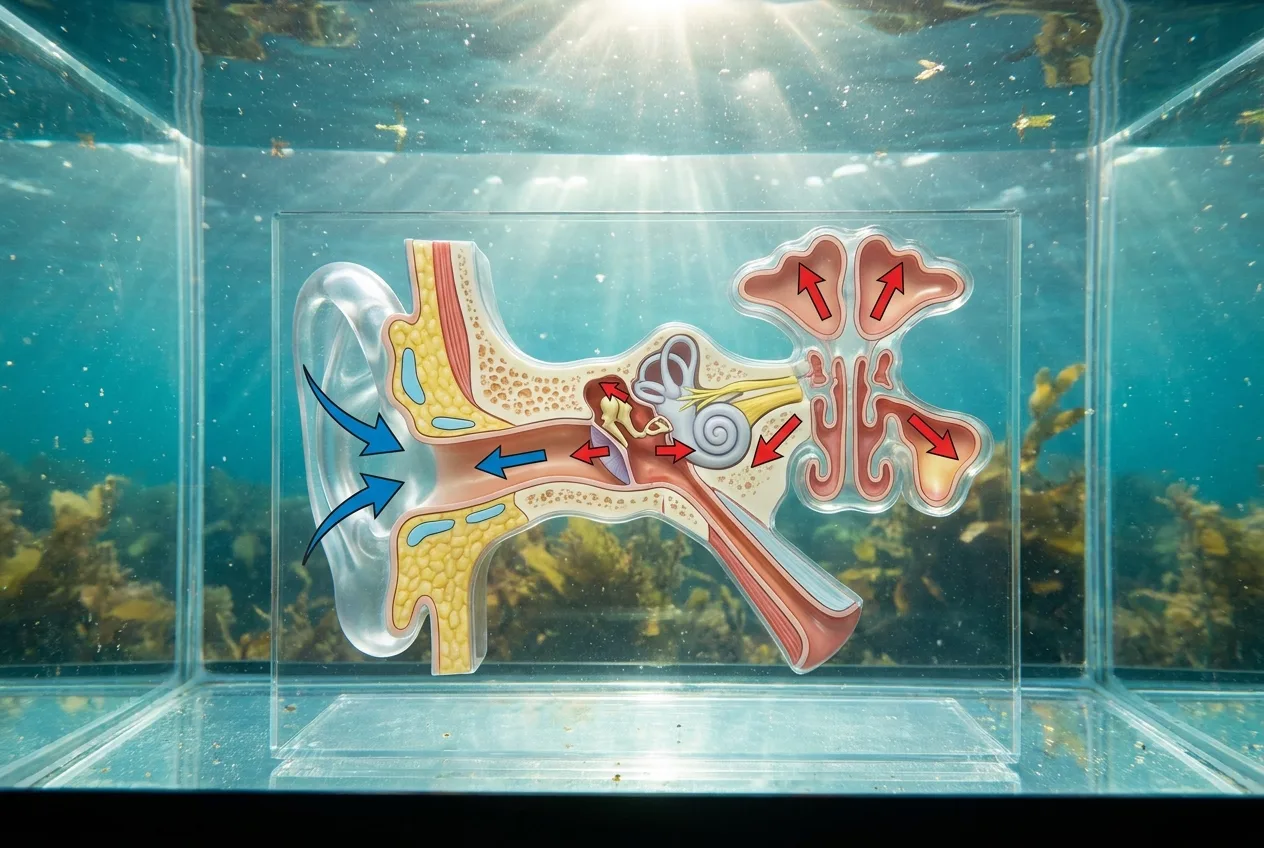
Water pressure increases as you descend. Most of your body consists of fluids that barely compress, but air spaces in the lungs, sinuses and middle ears respond to the change. The middle ear is a small air space separated from the outer ear by the eardrum.
The Eustachian tube connects that space to the back of the throat. Equalization opens the tube so higher-pressure air can enter the middle ear. Matching pressure on both sides of the eardrum helps avoid pain and injury.
Three Common Equalization Techniques
Several techniques can open the Eustachian tubes. The movements differ, but force is not the goal. Explore the methods gently and find the one that feels most comfortable.
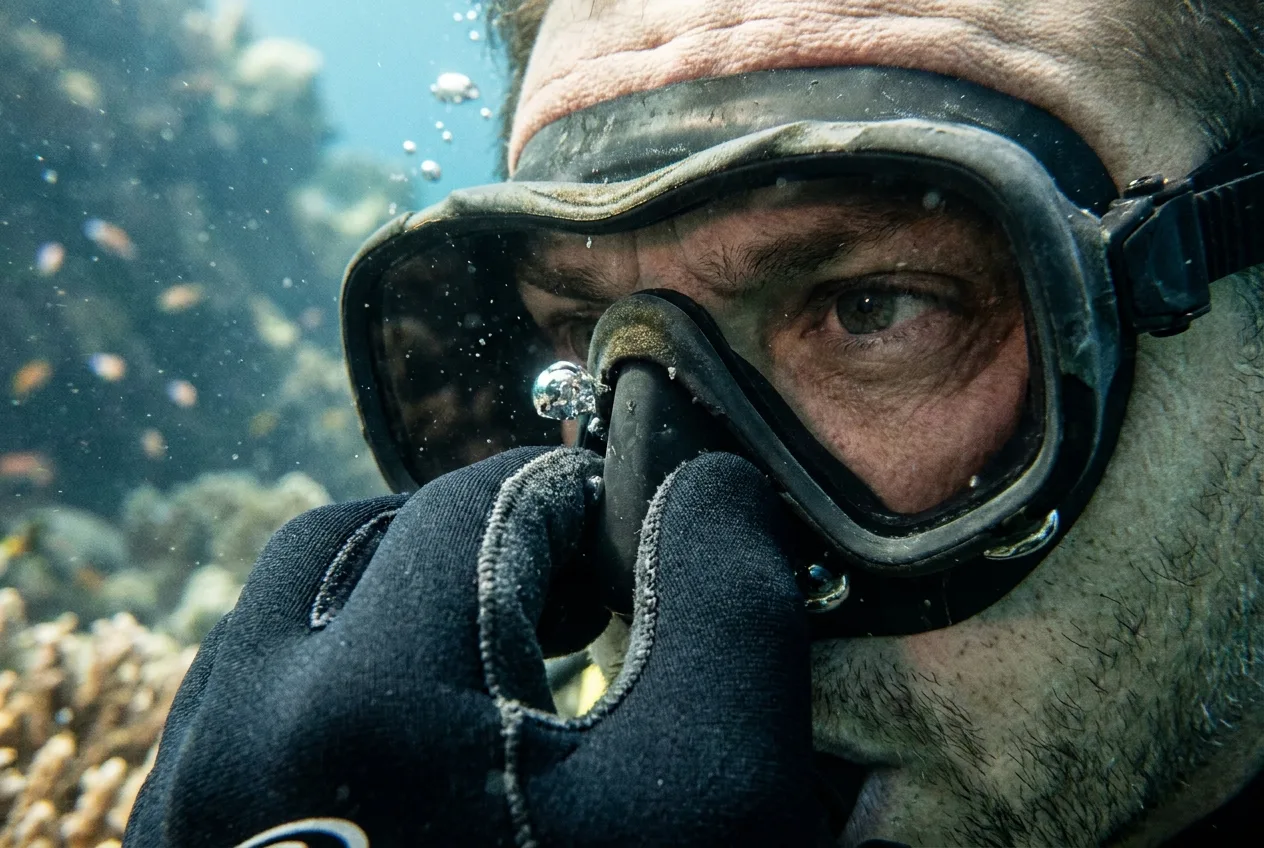
- Valsalva: Pinch your nose and gently try to blow through it. The method commonly taught in dive courses raises pressure in the throat. Keep the effort gentle to avoid injury.
- Frenzel: Close the nostrils and the airway at the back of the throat, then use tongue and throat muscles to push air upward. This more advanced technique is intended to work with less force.
- Toynbee: Pinch your nose and swallow. Swallowing opens the Eustachian tubes; this method can be particularly effective during ascent.
For more detail, consult Divers Alert Network’s guide to ear-clearing methods. Treat the descriptions as an introduction to the movements rather than a reason to apply more pressure when they do not work.
Start Early and Repeat Gently
Timing matters as much as technique. Do not wait until ear pressure becomes painful. Keep these habits in mind during preparation and descent:
- Equalize gently at the surface before your head goes underwater.
- Repeat every meter during descent, especially through the first ten meters.
- Descend feet first; an upright position makes opening the tubes easier.
- Do not dive with a cold. Nasal and sinus congestion can make clearing the ears difficult or impossible.
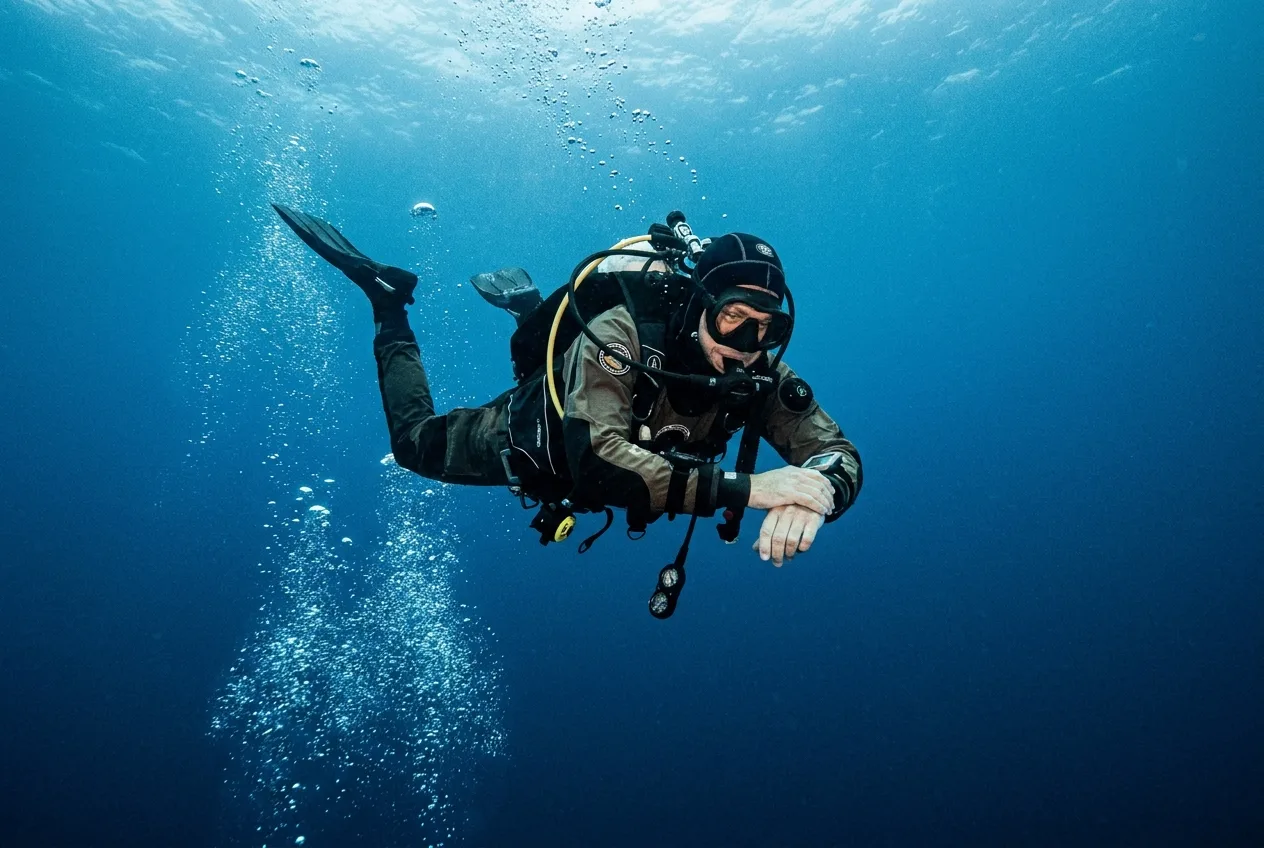
Calm, controlled movement is the aim. The diver’s silhouette in Palau’s Blue Hole illustrates stillness in the water; comfort during your own descent depends on responding to what your ears tell you.
Stop Descending if the Problem Persists
If ear pressure causes pain or persistent discomfort, stop descending immediately. Ascend a meter or two and try again gently. If the problem continues, signal your buddy and end the dive.
Pushing through pain can cause serious barotrauma, a ruptured eardrum or inner-ear injury. Reaching the planned depth is not a reason to keep descending with unresolved ear pressure. There will be another opportunity to dive.

Make Comfort Part of the Dive Plan
Understanding the mechanism, practicing the techniques and responding early all support comfortable diving. Keep the movement gentle and pay attention to changes during descent. Equalization is a skill to practice, not a test of how much discomfort you can tolerate.
Find more articles on the 2DIVE diving blog, or contact 2DIVE about the article. This guide does not replace advice from a physician trained in diving medicine.