
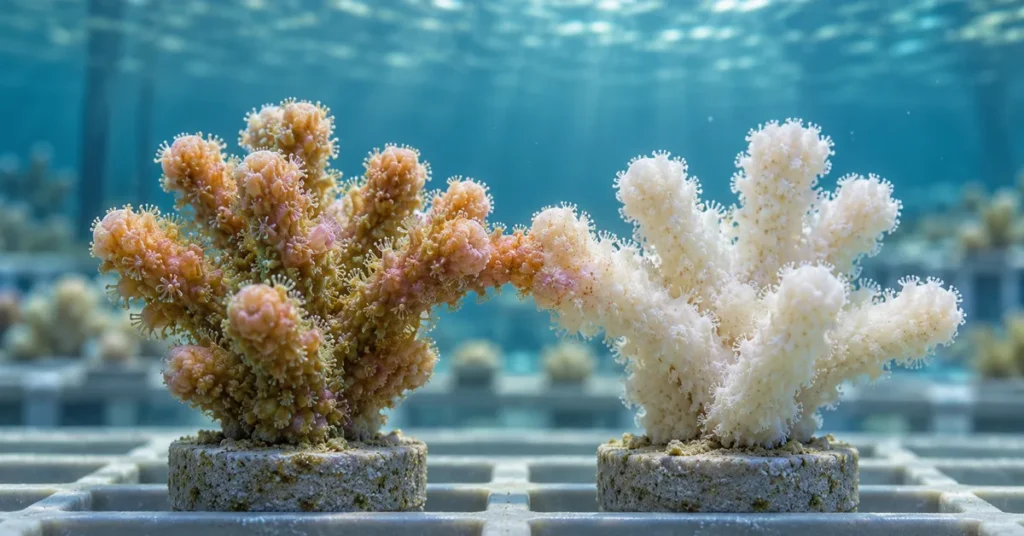
Healthy corals helped bleached fragments recover in a Stanford University laboratory study, revealing how direct contact can transfer symbiotic algae. The crucial condition was genetic identity: the paired fragments came from the same colony. For divers trying to understand a bleached reef, the experiment explains a recovery mechanism and why its success in a tank does not make it a treatment for an entire reef.1
On this page
Published in Science Advances, the research focused on fragments of Pocillopora damicornis.2 For divers, its value lies not in suggesting an underwater intervention, but in offering a closer look at the complex recovery processes taking place inside a coral after bleaching.1
Healthy corals and bleaching: why the algae matter
Coral bleaching occurs when environmental stress, often warming of the surrounding water, disrupts the relationship between coral polyps and the symbiotic algae living in their tissues.1 Through photosynthesis, these algae provide much of the energy the coral needs and also contribute to its color.1
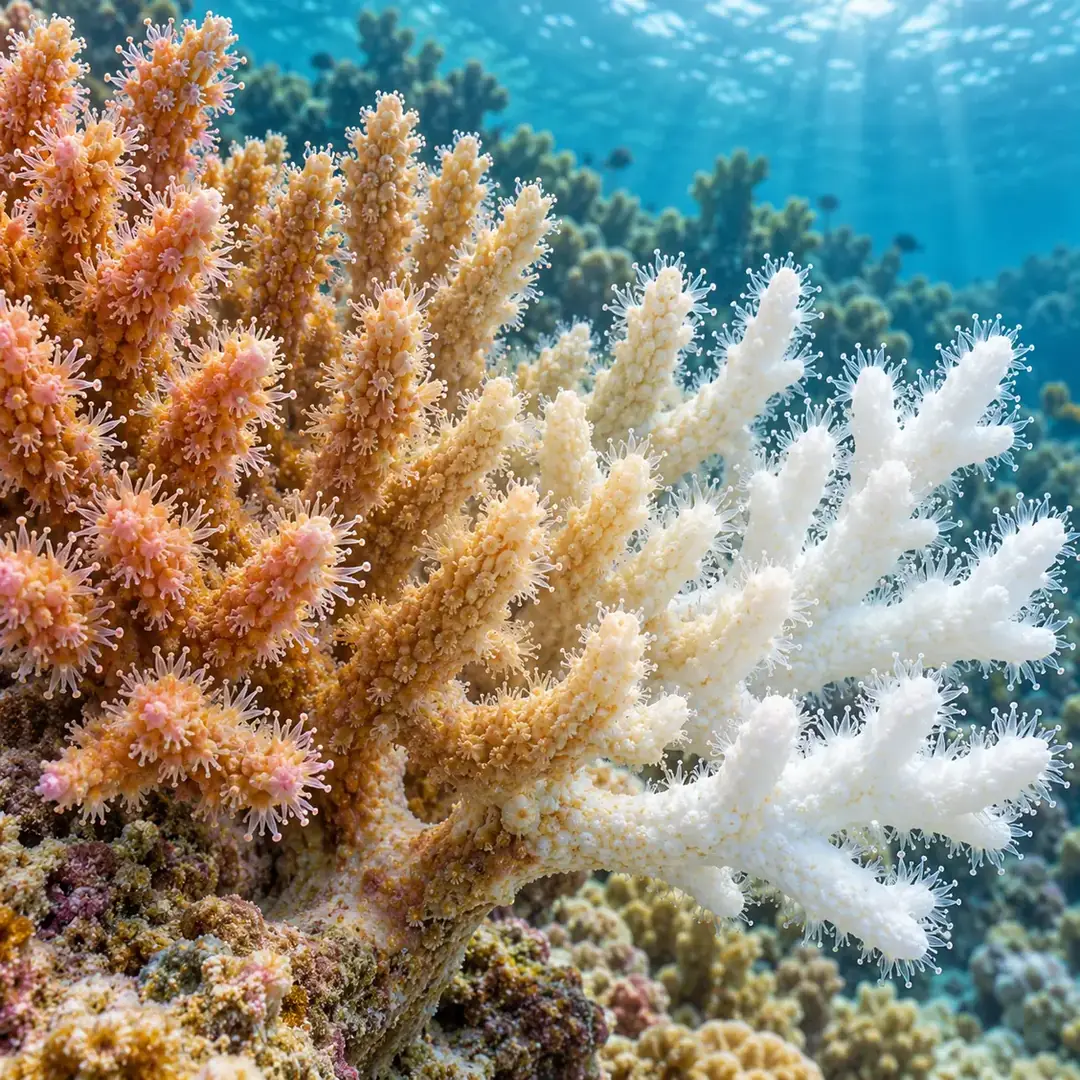
When the algae are expelled, the pale skeleton beneath the tissue becomes visible, giving the coral its characteristic bleached appearance.1 Bleaching does not necessarily mean immediate death, but recovery may be prolonged and can leave the coral vulnerable to further stress and disease.1
The study began with an accidental observation in a laboratory tank in 2025. A healthy coral fragment fell onto a bleached fragment, and color began returning around the point where they touched.1 This prompted the researchers to test whether physical contact could restore the algae lost by bleached coral.1
Ten pairs: contact versus a small gap
The experiment used ten pairs of genetically identical Pocillopora damicornis fragments.1 Each pair contained one healthy and one bleached fragment taken from the same coral colony, meaning that both belonged to the same genetic individual.2
Five pairs were placed in direct contact. In the other five, the fragments were kept a few millimeters apart.2 This allowed the researchers to compare fragments able to connect with nearby fragments that never touched.2
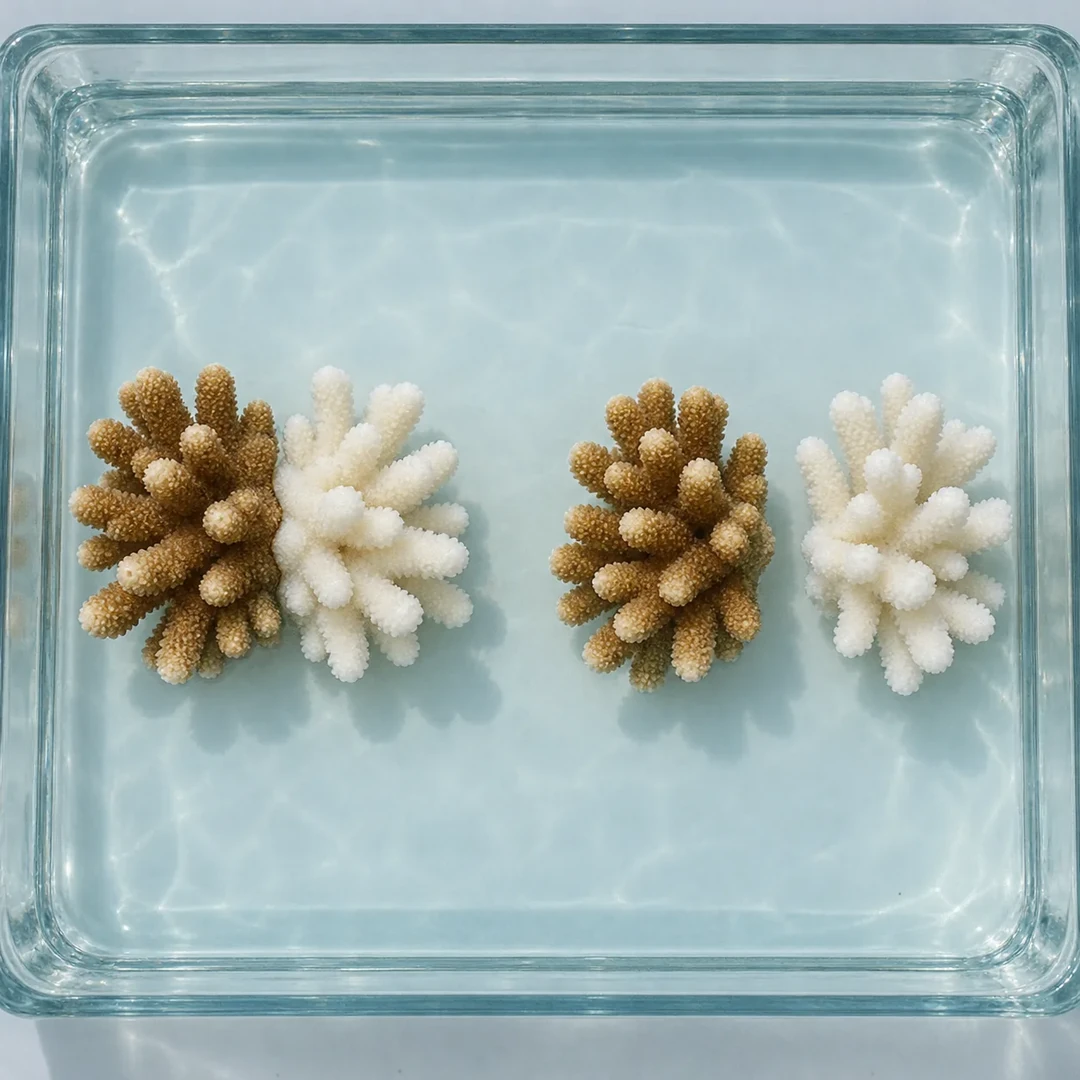
All five bleached fragments touching healthy neighbors recovered within seven to eight weeks.1 The separated fragments did not recover and eventually died.1 An additional account of the research reported complete recovery in the contact group within seven weeks.2
How algae moved into bleached coral
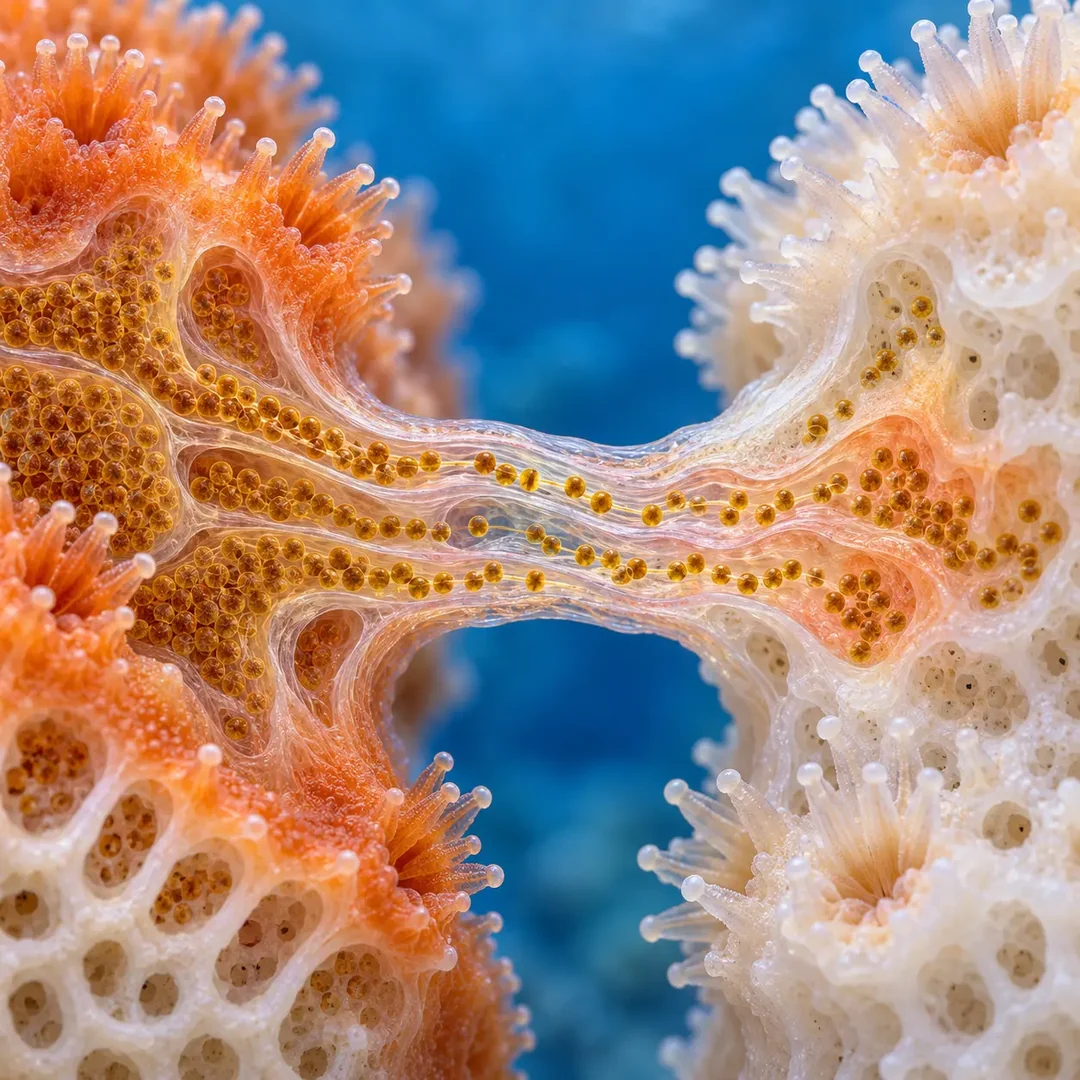
The researchers found that genetically identical fragments can fuse their tissues when they touch.2 This connection formed microscopic channels through which beneficial algae and the nutrients they produce could pass into the bleached fragment.1
Algae were observed entering damaged fragments within three days.2 During the second week, their numbers inside the bleached coral approximately doubled every four days, around ten times faster than the rate observed during natural recovery in wild corals.2
The contact did not need to last throughout recovery.2 One week of connection transferred enough algae for complete recovery, while in some cases five days produced a similar result.2 After separation, the algae continued multiplying inside their new host, allowing the fragments to complete their recovery independently.2
Genetic identity limits the result
The striking result applied to fragments taken from the same coral and therefore genetically identical.1 When fragments from different colonies were placed together, even when they belonged to the same species, the corals produced stinging filaments to reject the foreign tissue.1
In some cases, the healthy coral grew over the bleached fragment instead of helping it.1 This rejection response currently makes fragment pairing impractical for restoring large reef areas, where corals have different genetic backgrounds.1
The experiment therefore does not show that any healthy coral can heal any bleached neighbor.1 It describes a controlled laboratory experiment, and the researchers stress that the approach is not yet ready for broad reef restoration.2
What the researchers want to test next
The Stanford team is now investigating whether beneficial algae can be collected from healthy corals, cultivated and then introduced into bleached colonies.1 Such an approach might eventually avoid the need to connect two living coral fragments physically, but the sources do not present it as an available or proven method for large-scale restoration.1
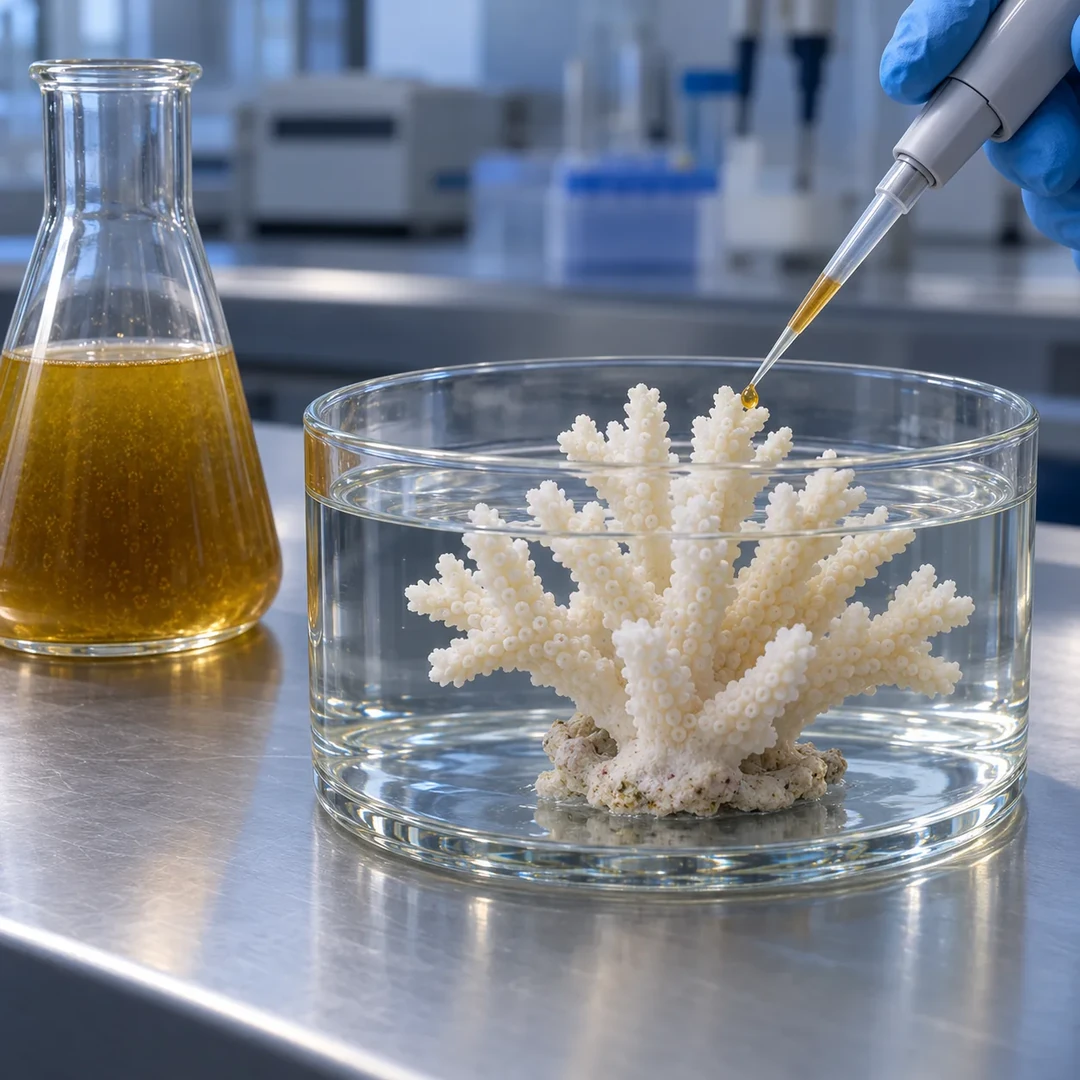
The study’s immediate significance is primarily scientific: it demonstrates that symbiotic algae can cross fused tissues and multiply rapidly inside bleached coral.2 It also points toward the possibility of keeping damaged corals alive while slower recovery processes, including growth, reproduction and the formation of new colonies, take place.1
What divers can learn from the experiment
The experiment does not suggest that divers should join corals together, move fragments or attempt to restore a reef themselves.1 Because successful contact depended on genetic identity and incompatible fragments responded with rejection, uncontrolled intervention does not follow from the study’s evidence.1
For divers encountering a bleached reef, the research offers a more precise way to understand what they are seeing. A white coral may be severely damaged, but bleaching does not necessarily mean it is already dead.1 The hope emerging from this work is not a miracle cure, but a better understanding of algae transfer and the limited conditions under which it supported recovery in the laboratory.2
For a wider look at how research changes the way divers understand marine habitats, read our account of manta research at Nusa Penida. Here, the essential distinction is between a controlled result in compatible coral fragments and the much harder task of supporting recovery across a living reef.