Compare Gozo diving with Malta and Comino through five sites: HMS Maori, Blue Hole, Inland Sea, MV Karwela and Santa Maria Caves. Their wrecks, limestone arches, tunnels and rocky entries offer different experiences. Choosing among them means matching the planned route, depth and conditions to your training, rather than choosing a familiar name from a photograph.1
On this page
The differences between sites can be substantial. HMS Maori is a shallow wreck with shore access, while MV Karwela lies at around 40 meters and is intended for experienced divers with appropriate training.1 Even a site that appears accessible on paper can present another challenge, as the rocky Blue Hole entry does when the swell increases.1
Gozo diving and nearby sites: compare the actual route
A useful site comparison begins with four details found in the source descriptions: depth, access method, entry and exit conditions, and whether the planned route matches the diver’s training.1 These factors distinguish a shallow shore site such as HMS Maori from a site with a broad depth range such as Inland Sea and a deep wreck such as MV Karwela.1
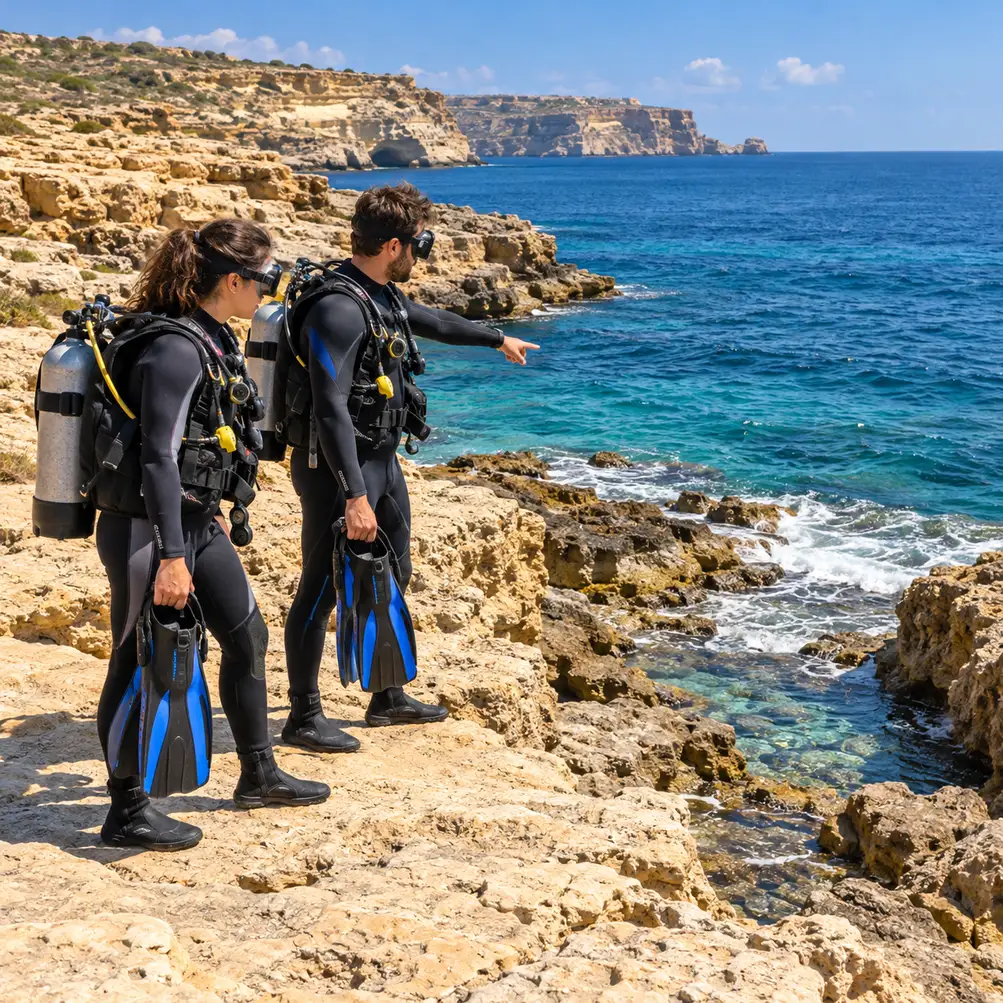
Ask in advance which part of the site the dive will cover, because a single site may contain several depths and different types of passages.1 At Blue Hole, for example, depths begin at around 5 meters and extend beyond 35 meters, while the site also includes a cave, chimney, and rocky swim-throughs.1
1. HMS Maori: a shallow first wreck dive
HMS Maori, a British destroyer resting near Valletta’s harbor, lies at approximately 12–16 meters.1 The source describes it as shallow enough for newer certified divers and as a popular first wreck dive in Malta.1
Easy shore access is central to the character of the site and sets it apart from wrecks that require divers to descend much deeper.1 For someone seeking an introduction to a wreck structure without immediately choosing a deep site, HMS Maori is the more suitable of the two wrecks described here.1
2. Blue Hole: rocky access and a varied route
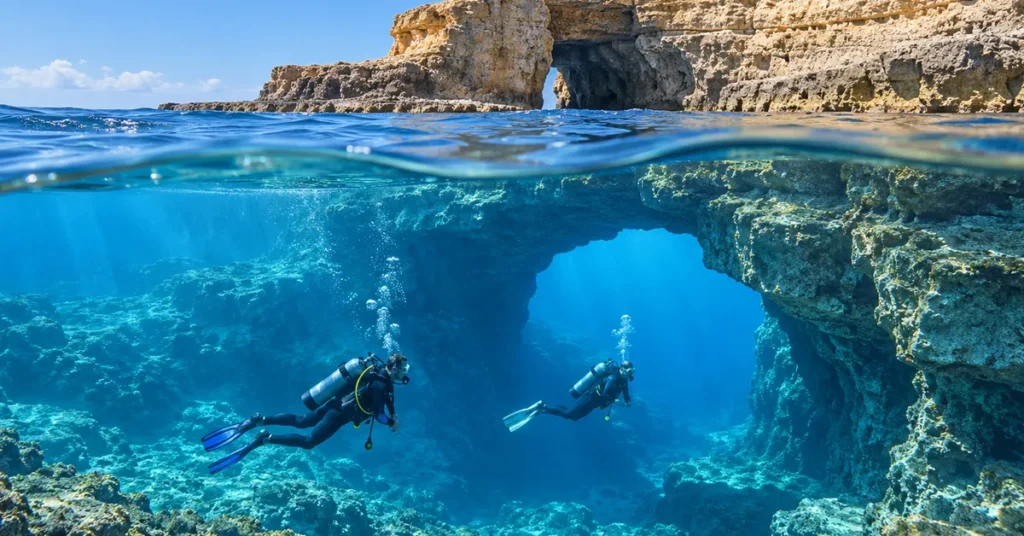
Blue Hole, near Dwejra on Gozo, is rated by the source as a site for advanced divers.1 Divers enter through a limestone pool that opens into a broad underwater arch, and the route may include a cave, chimney, and rocky swim-throughs.1
Depths range from around 5 meters to more than 35 meters, so the site name alone does not define how deep a particular route will go.1 When the swell picks up, managing the entry and exit over limestone becomes more difficult, making sea conditions an essential detail to check before choosing this dive.1
3. Inland Sea: check the tunnel route and depth
Inland Sea on Gozo features an approximately 80-meter tunnel leading from the enclosed area to the Mediterranean.1 Typical dive depths range from 5 to 30 meters, and the source says the site can suit many certification levels when conditions are favorable.1
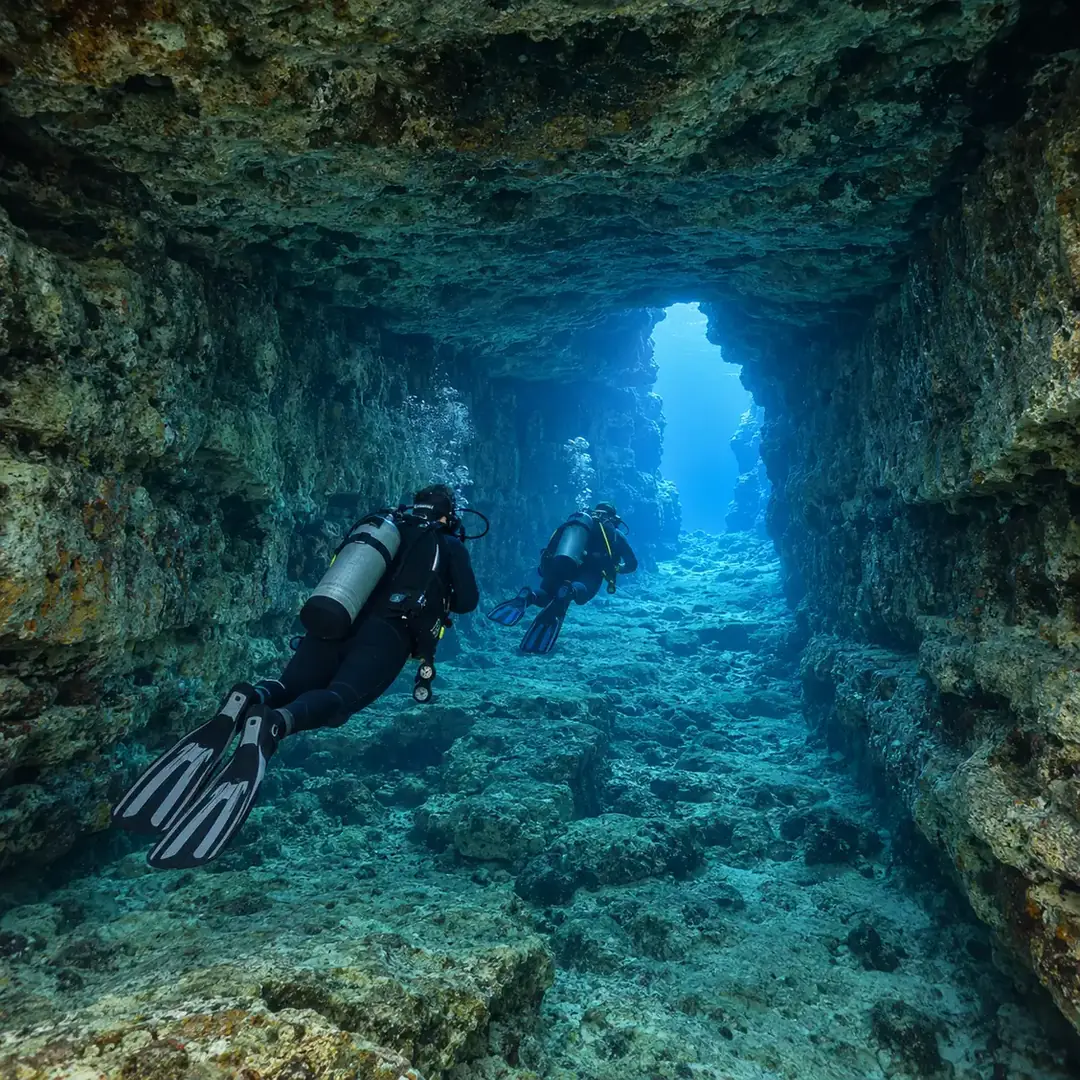
That broad suitability does not mean every route is appropriate for every diver, because the depth range is wide and the dive includes a tunnel.1 When discussing the dive plan, identify the intended route and depth rather than relying only on the Inland Sea name or its general description.1
4. MV Karwela: a deeper wreck for trained divers
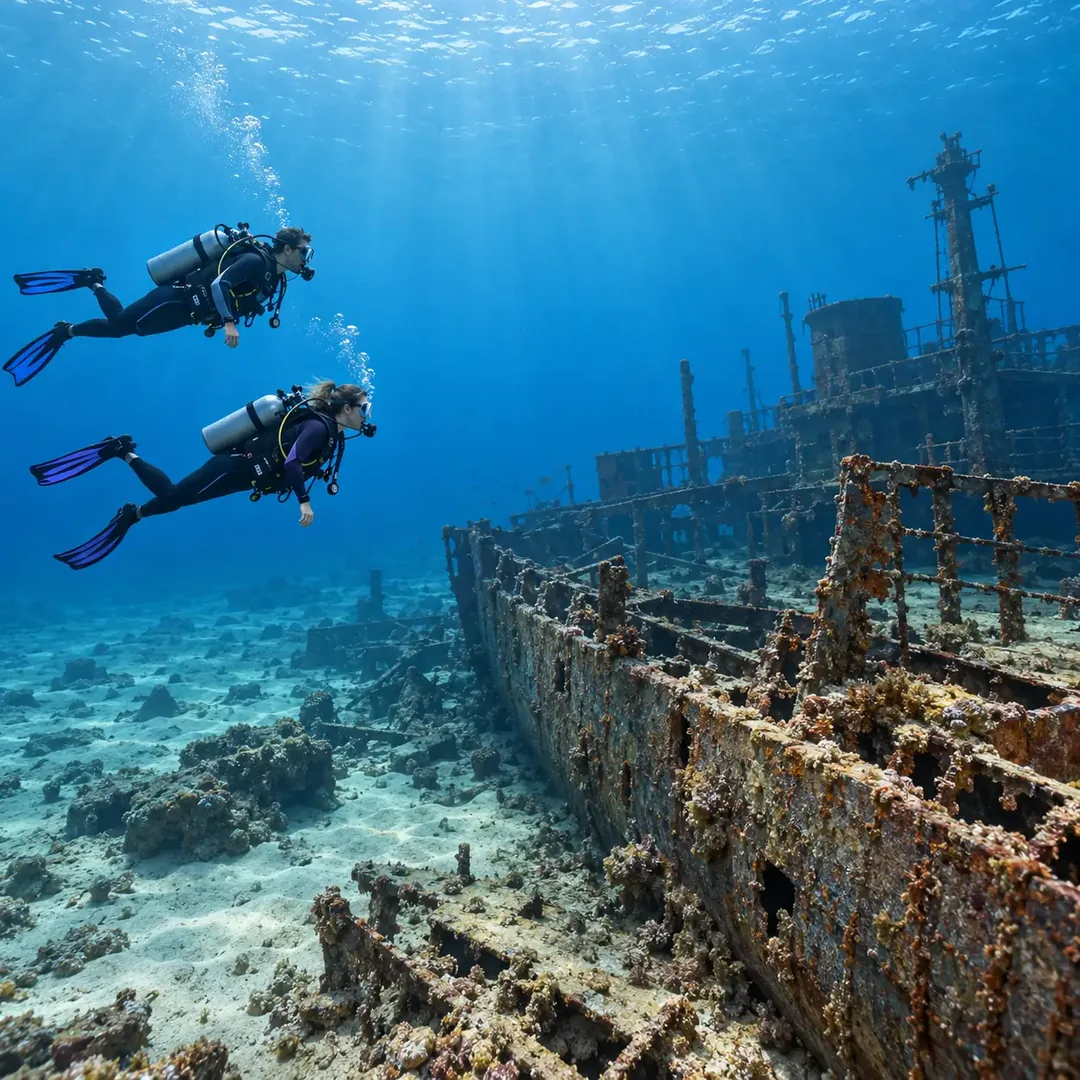
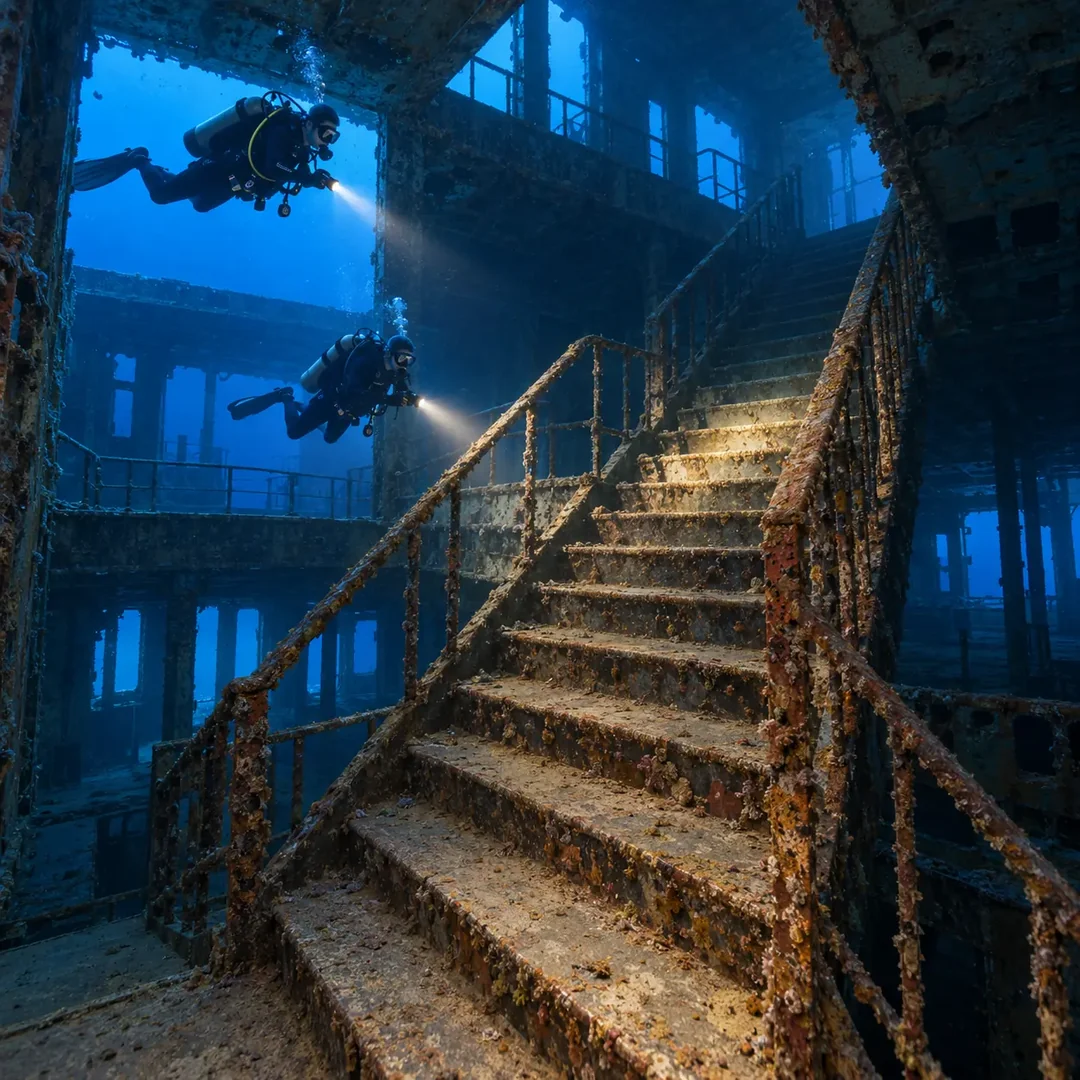
MV Karwela, a ferry scuttled near Xatt l-Ahmar, rests upright at around 40 meters, with its upper decks beginning near 30 meters.1 According to the source, this depth makes the wreck best suited to experienced divers with appropriate training.1
The ferry’s grand staircase has become a recognizable photographic subject, and the source also describes descending through the heart of the wreck.1 That description does not make wreck penetration a beginner route; the choice must reflect both the planned depth and the training appropriate to the dive.1
5. Santa Maria Caves: passages must match training
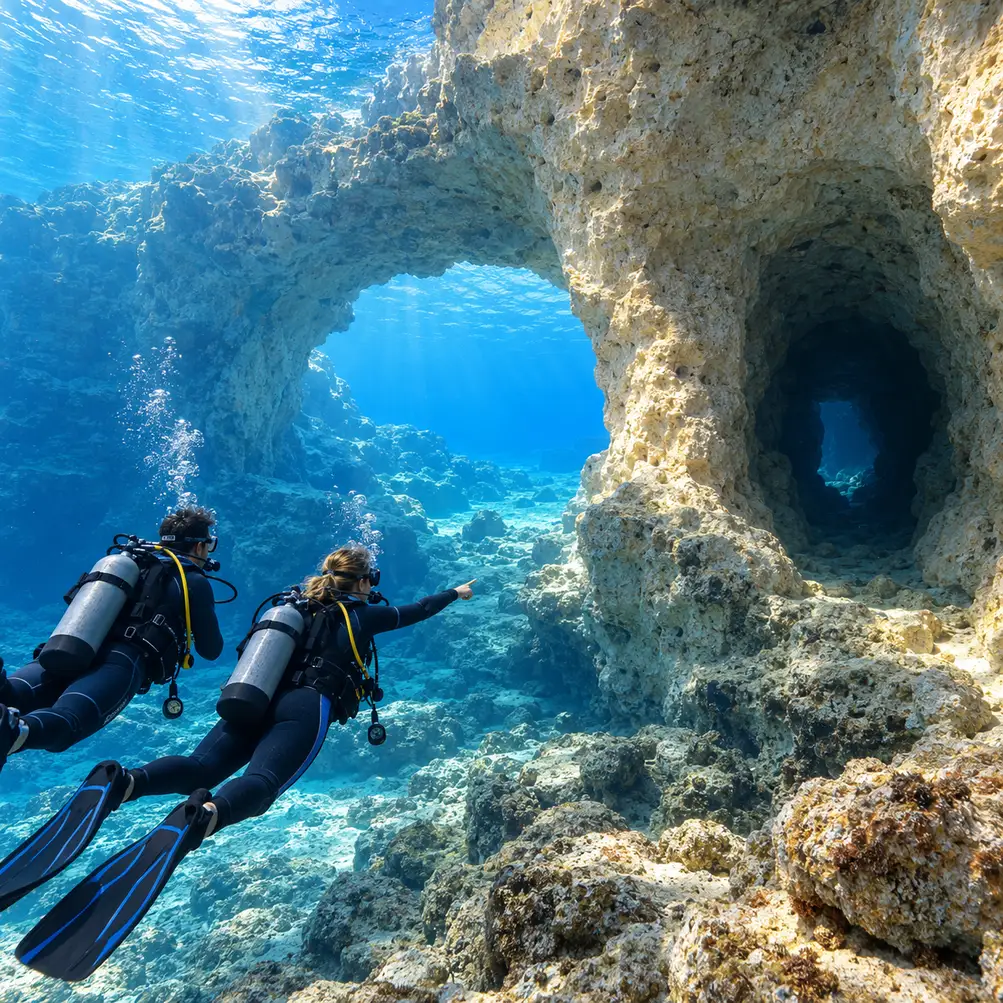
Santa Maria Caves along the coast of Comino include caverns, arches, tunnels, and narrower passages.1 The site ranges from 6 to 20 meters and can suit many certified divers when the selected route matches their training.1
This distinction matters because suitability cannot be judged by depth alone: matching the route to the diver’s training is an explicit part of the source’s assessment.1 Divers considering the site should therefore establish which caves, tunnels, or passages are included in the proposed route.1
Compare access, depth and overhead passages
The source presents conditional suitability rather than blanket assurances: Blue Hole is rated for advanced divers, MV Karwela for experienced divers with appropriate training, and Inland Sea for many certification levels only when conditions are favorable.1 At Santa Maria Caves, suitability likewise depends on whether the route matches the diver’s training.1
A practical comparison should therefore include the planned depth, access method, entry and exit conditions, and whether the route involves a tunnel, cave, or passage inside a wreck.1 This separates ease of access from technical suitability: a nearby site may be simple to reach while still requiring specific experience or training.1
Frequently asked questions
Which site is suitable for a first wreck dive? 1
HMS Maori is described as a popular first wreck dive because it lies at around 12–16 meters and offers easy shore access.1
Is every Gozo site suitable for every certification level? 1
No. Blue Hole is rated for advanced divers, MV Karwela suits experienced divers with appropriate training, and Inland Sea can suit many certification levels when conditions are favorable.1
What should you check before booking a dive? 1
The site descriptions indicate that divers should check the planned depth, access method, entry and exit conditions, and the types of passages included in the route.1 These details make it possible to compare a shallow shore wreck, a cave route matched to training, and a deep wreck instead of choosing by site name alone.1
For the broader learning question behind a site choice, read how different diving environments develop different skills. A Gozo diving plan can include very different routes under a single site name. Ask what you will actually do there, then match that answer to the experience you bring.